NEWS

29 Apr 2025 - The Future of Transport: Innovations transforming how we move
|
The Future of Transport: Innovations transforming how we move Magellan Asset Management April 2025 |
|
Technologies ranging from electric vehicles and self-driving cars to drones and hyperloop systems are redefining how people and goods move. The implications are enormous. While these innovations promise greater efficiency, sustainability and convenience, they pose disruptive challenges to traditional transport sectors and adjacent industries. And like every major technological shift, there will be winners and losers. Investors who spot the right opportunities early stand to make the most, while those who ignore these trends will miss the bus. The rise of electric vehicles: A market on the move The transition from internal combustion engine (ICE) vehicles to electric vehicles (EVs) is no longer a question of "if" but "when". Governments worldwide are setting targets to phase out the sale of new ICE vehicles, with Norway leading the way and set to achieve this goal in 2025. The Australian Capital Territory is aiming for 2035. Automakers from Ford and Volkswagen to Mercedes Benz and Tesla are investing billions into the technology. For investors, the EV market is often synonymous with Tesla, but this market opportunity is much broader than just the automakers. Battery manufacturers are critical participants in the industry, helping to meet the growing demand for longer-lasting and faster-charging batteries. Meanwhile, charging infrastructure is a crucial adjacent industry to support the adoption of EVs globally, while electricity utilities will also play an instrumental role in this transition. The era of autonomous vehicles: A reality, not science fiction For years, self-driving cars were a concept confined to sci-fi movies. Today, they're real, and companies like Waymo (owned by Alphabet), Tesla, Wayve, BYD and a host of others are advancing at a rapid pace. Accomplishing self-driving has been a decades-long endeavour with two key 'problems' to solve - the software problem (aka the 'brain') and the hardware problem (aka the 'eyes and ears'). Solving the software problem has necessitated the development of a complex computing system with the ability to process information and make the right decisions under unique driving scenarios in an ever-changing external environment - an excruciatingly difficult task. Meanwhile, solving the hardware problem has required innovation in sensor technology (including camera, lidar1, radar2 and audio receivers) to bring costs down from astronomically high levels3. We are now closer than ever to solving both problems. Take industry leader Waymo for instance. Waymo already operates fully autonomous fleets of robotaxis in Phoenix, San Francisco and Los Angeles (and is expanding to 10 more cities, including Tokyo, in 2025). It is serving over 200,000 fully autonomous paid rides every week - 20x growth in less than two years. Importantly, Waymo's technology is already safer than human drivers with 78% fewer injury-causing crashes4. This safety record is a critical factor in achieving regulatory approvals in future markets. The implications? Enormous. Once freed from manual driving responsibilities, passengers in autonomous vehicles (AVs) have time to allocate as they please - likely benefiting entertainment and social media platforms like Netflix, Spotify, YouTube and Meta. Owning an AV means it could act as your personal chauffeur, ferrying family members to work or school or from one extra-curricular activity to the next, freeing up yet more time. Meanwhile, fleets of robotaxis will not only disrupt the taxi and ridesharing market operators but potentially forms of public transport too. As robotaxi adoption rises, personal car ownership could decline, hitting traditional automakers, dealers, car insurers and maintenance and repair services. Real estate (particularly parking) will be repurposed, while the value of residential property further from cities may rise. AVs will result in improved safety and fewer road accidents, affecting towing services and emergency services. As the hardware costs continue to fall and the software capabilities continue to improve, we believe mass adoption and commercial viability of AVs is inevitable. Urban air mobility and drones: Investing in the skies If roads become too congested, why not take to the skies? That's exactly what companies in the Urban Air Mobility (UAM) sector5 are planning. Delivery drones, flying taxis and cargo aircraft are set to reshape logistics and transportation. In the case of drone delivery, your dinner, medications and last-minute gifts could be at your doorstep in minutes, disrupting gig economy workers, as well as how we engage with brick-and-mortar retail. Companies like Wing (owned by Alphabet) and Amazon Prime Air are pioneers in drone logistics and stand to benefit if cost efficiencies can be achieved, particularly within last-mile delivery where over half of the total supply chain costs can often lie. The second-order effects could see reduced road congestion and infrastructure needs at the expense of greater air traffic. Flying taxis and cargo aircraft (with vertical take-off and landing) are the next extension of this technological break-through, with several emerging companies already servicing this market. Major airlines, automotive manufacturers and tech companies are investing in the technology. Hyperloop and high-speed rail: The long shot bets
For investors, this is a high-risk, high-reward play. If a company successfully commercialises hyperloop technology, it could disrupt air travel and even freight and trucking industries. However, there are massive regulatory and infrastructure challenges ahead. Investing in hyperloop is like investing in early-stage space travel, or perhaps supersonic or hypersonic travel - exciting, but with significant uncertainty. Innovation will continue to make transportation safer, faster, more convenient and more reliable. And with this innovation will come disruption. As investors of client funds, our focus is on identifying where such impactful disruption creates opportunities for attractive returns. 1 Light detection and ranging |
|
Funds operated by this manager: Magellan Global Fund (Hedged), Magellan Core Infrastructure Fund, Magellan Global Fund (Open Class Units) ASX:MGOC, Magellan High Conviction Fund, Magellan Infrastructure Fund, Magellan Infrastructure Fund (Unhedged) Important Information: Important Information: This material has been delivered to you by Magellan Asset Management Limited ABN 31 120 593 946 AFS Licence No. 304 301 ('Magellan') and has been prepared for general information purposes only and must not be construed as investment advice or as an investment recommendation. This material does not take into account your investment objectives, financial situation or particular needs. This material does not constitute an offer or inducement to engage in an investment activity nor does it form part of any offer documentation, offer or invitation to purchase, sell or subscribe for interests in any type of investment product or service. You should obtain and consider the relevant Product Disclosure Statement ('PDS') and Target Market Determination ('TMD') and consider obtaining professional investment advice tailored to your specific circumstances before making a decision about whether to acquire, or continue to hold, the relevant financial product. A copy of the relevant PDS and TMD relating to a Magellan financial product may be obtained by calling +61 2 9235 4888 or by visiting www.magellangroup.com.au. Past performance is not necessarily indicative of future results and no person guarantees the future performance of any financial product or service, the amount or timing of any return from it, that asset allocations will be met, that it will be able to implement its investment strategy or that its investment objectives will be achieved. This material may contain 'forward-looking statements'. Actual events or results or the actual performance of a Magellan financial product or service may differ materially from those reflected or contemplated in such forward-looking statements. This material may include data, research and other information from third party sources. Magellan makes no guarantee that such information is accurate, complete or timely and does not provide any warranties regarding results obtained from its use. This information is subject to change at any time and no person has any responsibility to update any of the information provided in this material. Statements contained in this material that are not historical facts are based on current expectations, estimates, projections, opinions and beliefs of Magellan. Such statements involve known and unknown risks, uncertainties and other factors, and undue reliance should not be placed thereon. No representation or warranty is made with respect to the accuracy or completeness of any of the information contained in this material. Magellan will not be responsible or liable for any losses arising from your use or reliance upon any part of the information contained in this material. Any third party trademarks contained herein are the property of their respective owners and Magellan claims no ownership in, nor any affiliation with, such trademarks. Any third party trademarks that appear in this material are used for information purposes and only to identify the company names or brands of their respective owners. No affiliation, sponsorship or endorsement should be inferred from the use of these trademarks. This material and the information contained within it may not be reproduced, or disclosed, in whole or in part, without the prior written consent of Magellan. |

 While self-driving cars and drones are already in development, high-speed rail and hyperloop technologies are more speculative. The theoretical Transatlantic Tunnel is a high-speed, underwater rail project that would connect New York and London in under an hour, using vacuum tube technology and hyperloop trains to reach speeds of over 5,000 kph by eliminating air resistance.
28 Apr 2025 - First Do No Harm
|
First Do No Harm Airlie Funds Management April 2025 |
|
Management should try to not forget the hippocratic oath. An alternative working title for this note was "management teams behaving badly", but we felt it more apt to invoke the Hippocratic oath, the cornerstone of medicine that emphasises the importance of avoiding harm to patients above all else. If we consider the 'patients' in this context as public companies, management teams across Australia would do well to consider their own Hippocratic oath to shareholders: first, don't do anything dumb. This should go without saying, and yet these past 12 months feel littered with the fallout of dumb decisions from management teams, primarily regarding the pursuit of large-scale M&A. Is this a bit too harsh? Let's examine the evidence.
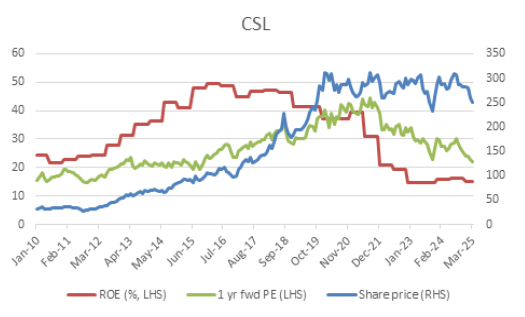
The most topical current example of a management team violating the Hippocratic oath to shareholders has to be James Hardie's proposed $8.75bn1 acquisition of Azek, which we will return to later on in this piece. All of this begs the question as to why. Why does large-scale M&A typically destroy value? The answer is because of its deleterious impact on the returns of the acquirer's business. Over the long term, a company's share price will follow the return on capital it generates. The issue with large-scale M&A is that it typically enshrines a low return on capital from day one, as the acquirer must pay a takeover premium to "win" the target. Picking on CSL as an example, much has been made of the extraordinary de-rate in CSL shares over the last five years as the share price has gone nowhere. However, when viewed through the lens of the returns the company generates, the derate makes a lot more sense.
Source: FactSet, Airlie Research CSL enjoyed a phenomenal run-up in its share price over the decade 2010-2020, as improving return on equity (from 24% in 2010 to a peak of 47% in 2018) drove a PE re-rate from 15x to a peak of 45x earnings. ROE has since declined to 15%, primarily due to the combination of covid-era donor fee inflation shredding CSL's plasma business gross margin, and the acquisition of Vifor, which we estimate generates a ROIC of c3% on the initial A$17.2bn invested. Hence, the derate CSL has experienced makes sense in the context of some external misfortune and some capital allocation own goals. The good news, and why we own CSL in the fund today, is that we believe incremental returns should improve from here, as gross margins improve in Behring and the company shows more discipline on capex. The value destruction from the acquisition of Vifor is a one-and-done phenomenon, which is why we are so focused on avoiding harm (dumb acquisitions) in the first place, as we believe the CSL share price would be much higher today if they had not done this deal. Applying this framework to the Hardie acquisition of Azek highlights the likely immediate value destruction of the deal, one that tarnishes Hardie's reputation as one of the cleanest, high-returning organic growth stories listed on the ASX. Consensus estimates have James Hardie generating EBIT of $865m for FY25, from an invested capital base of just $2.8bn, for a pre-tax return on invested capital of 32%. This is an extraordinarily high return for a manufacturing business. The $2.8bn of invested capital mostly represents the sum of the capital invested over several decades in building up the company's largest division, North American Fibre Cement, comprising 19 manufacturing plants globally, three R&D centres, the working capital tied up in the channel, and the historic goodwill associated with the acquisition of Fermacell. With the proposed US$8.75bn acquisition of Azek, a new(ish) management team (CEO Aaron Erter was appointed only twoand-a-half years ago) has seen fit to add an extraordinary $8.75bn to the existing capital base of Hardie' - a 312% increase in the company's invested capital base overnight. Consensus forecasts have Azek earning US$270m EBIT in FY25. This would imply a day one pre-tax return on invested capital of 3% for James Hardie shareholders. For Azek to generate an acceptable return for shareholders of, say, 10-12% pre-tax, you would have to believe Azek can earn a sustainable EBIT of US$875m-1bn; that is, a trebling of the current forecast EBIT. This seems highly unlikely. If we take the earnings base of US$270m and give management the benefit of the doubt on all outlined cost synergies of US$125m, this is a $395m EBIT base. For the business to generate an acceptable return of 10-12% pre-tax, Hardie's would have had to have paid US$3.3bn-$4bn for Azek; that is, the deal looks immediately value destructive to the tune of US$4.5-5bn. Now obviously if management can achieve the outlined $500m in revenue synergies from the deal, this will offset some or all of this value destruction. However, that will be proven out over the medium to long term. Incidentally, two weeks before the deal was announced James Hardie had a market cap of US$14bn, which has fallen to cUS$10bn today - indicating the market has been quick to price in this value destruction. Now the bigger question is where to from here - the value destruction of this deal has been spotted by an efficient market very quickly. The extent to which James Hardie "makes good" on this deal (from the new, lower share price starting point) will come down to execution. Azek is by no means a bad business, and there appears to be logic to putting these products together under one manufacturer when selling into the same US R&R channel. As with any acquisition, the long-term success will be a function of the extent to which one plus one equals something more than two. However, when you pay up to begin with, one plus one must equal something more than three for value to eventually accrue to James Hardie shareholders. Markets are efficient, no doubt, which is why we ask (beg?) Australian management teams to adhere to the Hippocratic oath when considering M&A: first, don't do anything dumb. And we'd take it so far to suggest that most large deals, no matter what the bankers cook up regarding synergies, EPS accretion, multiple re-rates, etc., are simply dumb deals for acquirers - an immediate value transfer to target shareholders that will sit on returns and immediately torch value. By Emma Fisher, Deputy Head of Australian Equities & Portfolio Manager Funds operated by this manager: Airlie Australian Share Fund, Airlie Small Companies Fund Important Information: This material has been delivered to you by Magellan Asset Management Limited ABN 31 120 593 946 AFS Licence No. 304 301 trading as Airlie Funds Management ('Airlie') and has been prepared for general information purposes only and must not be construed as investment advice or as an investment recommendation. This material does not take into account your investment objectives, financial situation or particular needs. This material does not constitute an offer or inducement to engage in an investment activity nor does it form part of any offer documentation, offer or invitation to purchase, sell or subscribe for interests in any type of investment product or service. You should obtain and consider the relevant Product Disclosure Statement ('PDS') and Target Market Determination ('TMD') and consider obtaining professional investment advice tailored to your specific circumstances before making a decision about whether to acquire, or continue to hold, the relevant financial product. A copy of the relevant PDS and TMD relating to an Airlie financial product or service may be obtained by calling +61 2 9235 4760 or by visiting www.airliefundsmanagement.com.au. Past performance is not necessarily indicative of future results and no person guarantees the future performance of any financial product or service, the amount or timing of any return from it, that asset allocations will be met, that it will be able to implement its investment strategy or that its investment objectives will be achieved. This material may contain 'forward-looking statements'. Actual events or results or the actual performance of an Airlie financial product or service may differ materially from those reflected or contemplated in such forward-looking statements. This material may include data, research and other information from third party sources. Airlie makes no guarantee that such information is accurate, complete or timely and does not provide any warranties regarding results obtained from its use. This information is subject to change at any time and no person has any responsibility to update any of the information provided in this material. Statements contained in this material that are not historical facts are based on current expectations, estimates, projections, opinions and beliefs of Airlie. Such statements involve known and unknown risks, uncertainties and other factors, and undue reliance should not be placed thereon. No representation or warranty is made with respect to the accuracy or completeness of any of the information contained in this material. Airlie will not be responsible or liable for any losses arising from your use or reliance upon any part of the information contained in this material. Any third party trademarks contained herein are the property of their respective owners and Airlie claims no ownership in, nor any affiliation with, such trademarks. Any third party trademarks that appear in this material are used for information purposes and only to identify the company names or brands of their respective owners. No affiliation, sponsorship or endorsement should be inferred from the use of these trademarks. This material and the information contained within it may not be reproduced, or disclosed, in whole or in part, without the prior written consent of Airlie. |

24 Apr 2025 - Are we there yet?!

23 Apr 2025 - Quarterly State of Trend report - Q1 2025
|
Quarterly State of Trend report - Q1 2025 East Coast Capital Management April 2025 In this update, we present the quarterly State of Trend report for Q1, 2025. Our report covers the performance of Trend Following systems compared with traditional investments such as the S&P/ASX 200 Total Return index, and the Australia "60/40" portfolio. Trend Following provides exposure to a diverse pool of underlying instruments, and implements trading strategies systematically and without emotional biases. Tariff turmoil impacts global markets In Q1 2025, escalating trade tensions impacted equity markets and Q4 2024's theme of US Dollar strength. Trend following systems were impacted by such sharp reversals, although diversified exposures such as Natural Gas, Coffee, and Metals (such as Gold, Silver, and Copper) were strong performers over the quarter. Key market movements in Q1 2025
continue to see value in a consistent and methodical approach to navigate the volatility and identify the next themes to take hold Featured chart - Gold
See the full report at our website. Funds operated by this manager: |

22 Apr 2025 - Manager Insights | Canopy Investors
|
Chris Gosselin, CEO of FundMonitors.com, speaks with Michael Poulsen, Co-founder and Portfolio Manager at Canopy Investors. Michael shares insights into Canopy's global small and midcap investment strategy, its long-term, quality-driven approach, and how the partnership with Bennelong enables the team to focus on delivering strong returns through concentrated, high-conviction portfolios.
|

17 Apr 2025 - Tariffs: Stagflation in the US, RBA to cut deeper
|
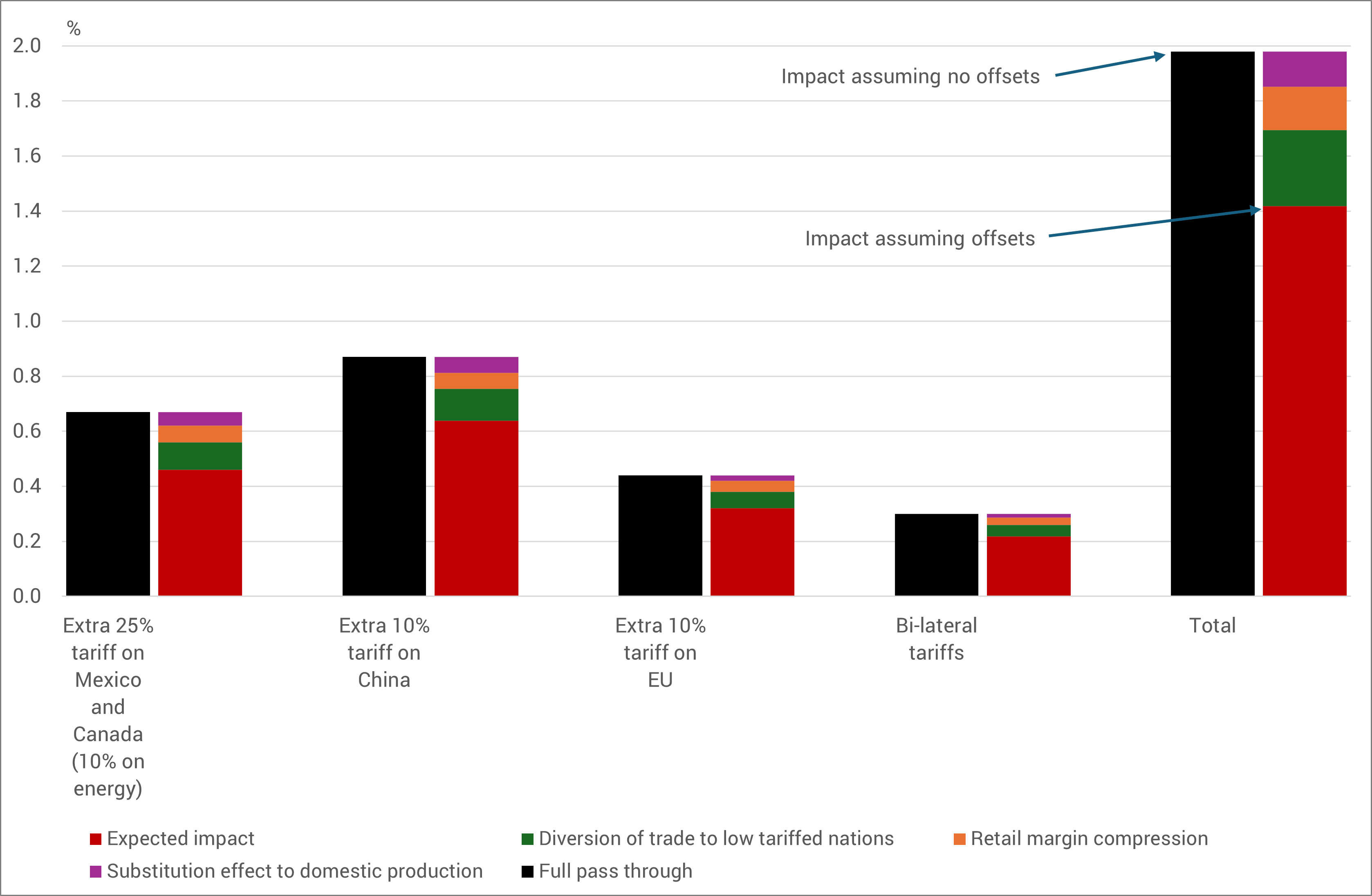
Tariffs: Stagflation in the US, RBA to cut deeper Yarra Capital Management April 2025 In our December 2024 economic outlook we noted: "It is highly likely that the next four years will bring heightened volatility as markets return to being reactive to Trump's predilection to make shock announcements. "If Trump's plan was implemented in full, we believe US inflation would be ~1% higher than the baseline scenario and US economic growth would be ~0.75% lower in 2025-26. The impacts are smaller if the US only impose tariffs on China, but there is no scenario in which an escalation in trade restrictions boosts economic growth and lowers inflation. If fully implemented, we believe Trump's US$7.5 trillion in election promises will push government debt to economically unsustainable levels over the next decade. "We believe that financial markets are underestimating Trump's intentions." Liberation Day has just reinforced President Trump's reputation as a shock agent. When faced with an array of choices, history tells us that his instinct is to choose the most extreme option on the table. After floating the idea that it was down to a choice between a universal tariff or country specific tariffs, financial markets actively positioned for a watered-down tariff policy announcement. However, financial markets were again under estimating Trump's intent and once again Trump took not only the extreme option, he took an option that was not even really on the table at all. Financial market surveys revealed that market participants were expecting the effective US tariff rate to rise no more than 12-15%. The results of today's announcement are to raise the US effective tariff rate to 28% (before exclusions), essentially doubling market expectations and returning US tariffs to levels not seen since the first Model T Ford rolled off the production line in 1908. Our initial calculations in December were based on 10% universal tariff and a 60% tariff on China (the policy Trump campaigned upon). Including wholesale and retail margin compression and substitution effects we arrived at an estimate of just over a 1% additional boost to US core inflation, pushing US core inflation to around 3.5% if fully implemented. However, what was announced today was different. It certainly had the 10% universal tariff and an effective tariff on China that is 54% - close to the 60% Trump campaigned upon - however, it's the bi-lateral tariffs on other nations that has really upped the ante for inflation. On our calculations, we are now staring at a US core inflation impact that in the absence of a materially weaker US economy would take US core inflation to in excess of 4%. But here's the rub. The US economy will be weaker. Much weaker than US economists are currently estimating. The impact of sharply reduced demand will take some of the heat out of inflation pressures, but not all of it. So here is the basic math. We have looked at a range of studies and the experience of Trump's first term tariffs to gauge the size of any offsets from the full and permanent application of the various tariff rates to individual countries' trade with the USA. These offsets include estimates of likely substitution to domestic US production, retail margin compression inside the US and diversion of trade impacts to other low tariff nations. In Chart 1 below, we show both the full impact by selected region (black bars) and our estimate of the likely impact upon core PCE (red bars) once these offsets are accounted for. In short, we estimate that today's announcement will add 1.4% to core PCE inflation in 2025-26. If nothing else changed, this would take the current rate of core PCE from 2.8% to 4.2%. Chart 1 - Estimated impact of permanent tariff increases on core PCE inflation
Source: YarraCM. However, this forecast is based on the assumption that everything else remains largely unchanged. But in reality, things can and inevitably will change:
Chart 2 - Inflation expectations are skyrocketing
Source: University of Michigan, YarraCM.
This also appeared well advanced ahead of today's announcement and one can only assume the news flow sentiment from both consumers and businesses is going to lurch lower in coming days. If rising unemployment expectations (refer Chart 3) are matched with actual unemployment increases, it will be difficult to conclude that the US could avoid a recession in coming months. President Trump may well learn that sometimes there are limits to his shock and awe approach. Chart 3 - Unemployment expectations are following
Source: University of Michigan, YarraCM. Stagflation is a word that financial markets love to throw around at will, when, in reality, it is a rare economic event requiring special initial conditions. Nevertheless, financial markets are going to be uttering that word ad nauseum in coming months as the real economy impacts unfold. For our part, we revised down our US growth forecasts to 1.75% in 2025 and 1.25% in 2026 back in December 2024 fearing Trump would enact his election promises. Today he went further, and we are revising US economic growth to 1.0% in 2025 and leaving our 2026 forecast at 1.25%. We are explicitly forecasting that weak US activity will force a severe bout of margin compression as firms are forced to clear inventory and weak sales growth translates through to weaker wages growth and rising unemployment. Outside of a full recession scenario there are limits to this process and we estimate that the inflationary offset from a weaker US growth scenario reduces the inflationary impact from tariffs by ~0.7% in 2025-26 year, taking our estimate of the actual impact of the tariff policy from 1.4% to 0.7% (refer Chart 4). Note this is still sufficient to take core inflation to 3.5% in 2025-26 and importantly this is assuming minimal retaliation from other countries. In other words, it could still be worse. Chart 4 - Estimated impact of permanent tariff increases on core PCE inflation
Source: YarraCM. To state the obvious, this is far from a good scenario for risk markets, especially given the starting point for 2025 of expensive markets embedding overly optimistic US economic growth and earnings estimates. From a multi-asset perspective, we have been recommending a cautious approach to markets since late 2024 and we are currently materially overweight fixed income and cash, neutral credit and underweight equities and real assets. We are awaiting material revisions to both US growth expectations, inflation and earnings together with any signs of a policy pivot by Trump or the Fed before shifting to a more risk friendly stance. Unfortunately, given Trump's stubborn belief and the Fed's focus on inflation expectations it is likely to take an uncomfortable amount of time before someone blinks. For the RBA, our view has been that they will cut in May and again in August 2025 before re-engaging in 2026 with additional easing. However, the events of today give greater impetus for the RBA to act - Trump's policies present a clear attack on our region and our major export nations. Figure 1 - US Government's Tariff Agenda
Source: YarraCM. It is notable that the tariffs on much of Central and South America are set at or close to 10% but Australia's near neighbours and significant trading partners are being targeted far more aggressively. There is a clear bias to punish China and countries in which China has large surrogate manufacturing bases. Vietnam, Taiwan, Thailand, Cambodia, Bangladesh and Sri Lanka have all been slated with tariff increases in the mid-30% range for additional tariffs. For each of these countries the US is between 18-30% of their exports and the #1 export market. From Australia's perspective we are likely to see Asian export trade diverted from the US to our shores, so we can expect cheaper clothing, textiles, computer and telco equipment, steel and auto parts to flood our shores in coming months. However, this will represent massive competitive threats to local manufactures in these industries. It was notable that Taiwan received a hefty 34% increase and Japan copped a 24% tariff hike. Australia exports A$37bn in coal and $30bn in gas to these two nations. Including China, which is now facing a 54% tariff and where we send a further $30bn in coal and gas and a massive $116bn in iron ore, the risks to our export markets are clear. If economies in the Asia region cannot find a way to stimulate sufficient domestic demand in a short timeframe, then Asia will clearly bear a disproportionate impact from Trump's trade announcements. |
|
Funds operated by this manager: Yarra Australian Equities Fund, Yarra Emerging Leaders Fund, Yarra Enhanced Income Fund, Yarra Income Plus Fund |


16 Apr 2025 - Investment Perspectives: Not another US recession
15 Apr 2025 - Trump's Tariffs: A game changer or investment opportunity?
|
Trump's Tariffs: A game changer or investment opportunity? Magellan Asset Management April 2025 |
|
Head of Global Equities and Portfolio Manager Arvid Streimann, along with Investment Director Elisa Di Marco, discuss Trump's latest tariff announcements and their implications for investment markets. Arvid provides his perspective on the escalating trade tensions, their impact on portfolios, and highlights opportunities for long-term investors amid the market volatility. |
|
Funds operated by this manager: Magellan Global Fund (Hedged), Magellan Core Infrastructure Fund, Magellan Global Fund (Open Class Units) ASX:MGOC, Magellan High Conviction Fund, Magellan Infrastructure Fund, Magellan Infrastructure Fund (Unhedged) Important Information: Important Information: This material has been delivered to you by Magellan Asset Management Limited ABN 31 120 593 946 AFS Licence No. 304 301 ('Magellan') and has been prepared for general information purposes only and must not be construed as investment advice or as an investment recommendation. This material does not take into account your investment objectives, financial situation or particular needs. This material does not constitute an offer or inducement to engage in an investment activity nor does it form part of any offer documentation, offer or invitation to purchase, sell or subscribe for interests in any type of investment product or service. You should obtain and consider the relevant Product Disclosure Statement ('PDS') and Target Market Determination ('TMD') and consider obtaining professional investment advice tailored to your specific circumstances before making a decision about whether to acquire, or continue to hold, the relevant financial product. A copy of the relevant PDS and TMD relating to a Magellan financial product may be obtained by calling +61 2 9235 4888 or by visiting www.magellangroup.com.au. Past performance is not necessarily indicative of future results and no person guarantees the future performance of any financial product or service, the amount or timing of any return from it, that asset allocations will be met, that it will be able to implement its investment strategy or that its investment objectives will be achieved. This material may contain 'forward-looking statements'. Actual events or results or the actual performance of a Magellan financial product or service may differ materially from those reflected or contemplated in such forward-looking statements. This material may include data, research and other information from third party sources. Magellan makes no guarantee that such information is accurate, complete or timely and does not provide any warranties regarding results obtained from its use. This information is subject to change at any time and no person has any responsibility to update any of the information provided in this material. Statements contained in this material that are not historical facts are based on current expectations, estimates, projections, opinions and beliefs of Magellan. Such statements involve known and unknown risks, uncertainties and other factors, and undue reliance should not be placed thereon. No representation or warranty is made with respect to the accuracy or completeness of any of the information contained in this material. Magellan will not be responsible or liable for any losses arising from your use or reliance upon any part of the information contained in this material. Any third party trademarks contained herein are the property of their respective owners and Magellan claims no ownership in, nor any affiliation with, such trademarks. Any third party trademarks that appear in this material are used for information purposes and only to identify the company names or brands of their respective owners. No affiliation, sponsorship or endorsement should be inferred from the use of these trademarks. This material and the information contained within it may not be reproduced, or disclosed, in whole or in part, without the prior written consent of Magellan. |
14 Apr 2025 - Manager Insights | Digital Asset Funds Management
|
Chris Gosselin, CEO of FundMonitors.com, speaks with Richard Grace, Head of Digital Asset Strategy at Digital Asset Funds Management. They discussed the evolving landscape of digital assets, exploring trends, opportunities, and the challenges faced by investors in this rapidly changing sector.
|

11 Apr 2025 - Data is (still) the "new oil"
|
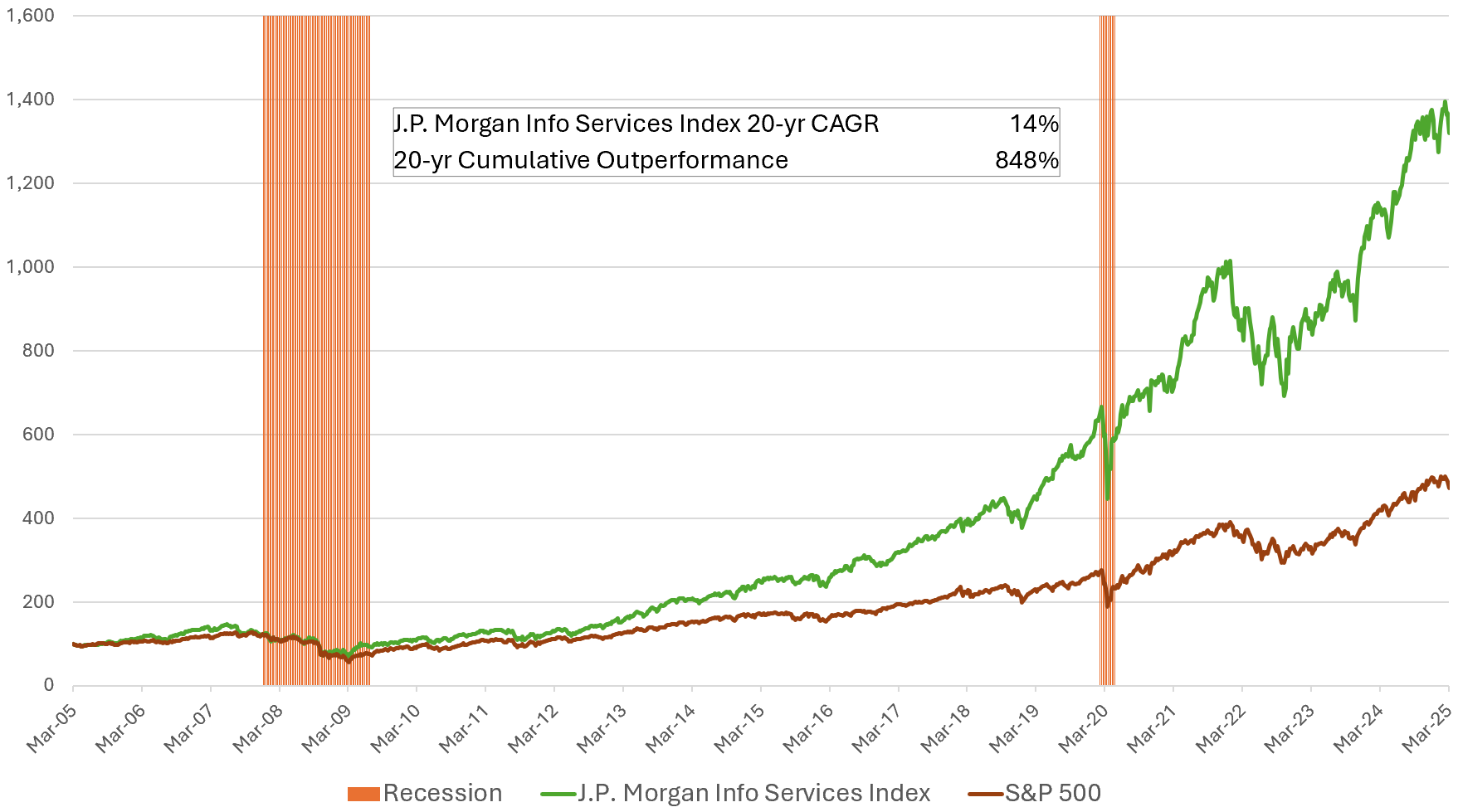
Data is (still) the "new oil" Janus Henderson Investors March 2025 Exploring the transformative power of data in the digital age, we uncover the strategic advantages that position data asset companies for unprecedented growth in the AI-driven economy, while simultaneously displaying compelling sustainability alignment. IntroductionJust as oil once propelled the engines of the global economy, powering everything from vehicles to industries, data today fuels the intricate mechanisms of the digital world, driving advancements and dictating the pace of technological progress. This shift marks a profound transformation in how we perceive value and utility in the modern economy. Both oil and data are essential resources in their respective economies. Information can be extracted from data, similar to energy from oil. Data powers new technologies like driverless cars, just as oil powered traditional transportation. However, unlike oil, data is not finite, and it has lower transfer and storage costs. Data's lifecycle is also defined by relationships, while oil's is defined by processes. In this article, we delve into a journey of understanding these parallels, which sheds light on the investment opportunities of sustainable data asset companies and their influence on our future. The value of data asset companies in an AI-driven worldThe world's most valuable companies, including tech giants like Microsoft which we own in our portfolio, have set a precedent in utilising data to cement their dominance across various sectors. These data asset companies possess a unique blend of characteristics that not only allow them to thrive in today's economy but also position them to be even more valuable in an AI-driven future. One of the key attributes of these companies is their possession of extensive, proprietary data sets. Whilst some data is commoditised in nature1, in the context of an increasingly AI-centric world, the demand for high-quality, proprietary data has surged. AI and machine learning technologies require vast amounts of reliable data to train algorithms and improve their accuracy and efficiency. Public data, often plagued with issues of reliability and legal risks, such as copyright infringement, falls short of meeting these demands. As a result, companies with large and rich data troves find themselves at a strategic advantage, with the ability to fuel AI innovations. This can lead to breakthroughs in critical fields like medical diagnostics, where it can enhance accuracy, reduce errors, and democratise access to advanced medical support. Furthermore, ownership of proprietary business-to-business (B2B) data grants these companies significant pricing power, enabling them to unlock new revenue streams by monetising latent data through cross-selling, new product development, and subscription software services. The "build it once, sell it many times" database business model not only drives operating leverage but also ensures consistent and rising earnings per share and free cash flow generation for these companies. Figure 1: Information Services sector stock performance
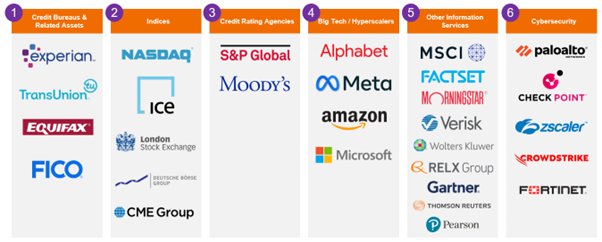
Source: J.P. Morgan and Bloomberg Finance L.P., as of 7 March 2025. CAGR = Compound annualised growth rate, which is essentially the cumulative 20-year performance represented as a return per year. Note: The firms included in the index are DNB, EFX, EXPN, FICO, MCO, MSCI, REL, SPGI, TRI, TRU, VRSK, and WKL. Recent high-profile deals and legal challenges highlight the growing recognition of the value of proprietary data for training AI models. Google's US$60 million per year agreement with Reddit2 and OpenAI's partnership with Axel Springer3 showcase the burgeoning demand for unique data sets to feed the insatiable appetite of AI algorithms. Conversely, legal disputes, such as The New York Times' lawsuit against OpenAI and Microsoft, underscore the complexities and challenges of navigating the data landscape in an AI-driven era. These developments underline the critical role of exclusive data assets in powering the next generation of AI technologies and reinforce why companies rich in these assets are poised to become even more valuable as we advance further into the AI frontier. Defining the data asset ecosystemData stands as the backbone of innovation. From tech giants harnessing big data to optimise their services, to those leveraging analytics for market insights, the ecosystem of data-related companies is as diverse as it is dynamic. Figure 2 shows one way in which we have endeavoured to segment a cross-section of these businesses into five broad verticals with a few representative examples, some of which we are exposed to in our strategy. Cybersecurity has been added as a sixth vertical, since this area is concomitant with the proliferation of data. Some of the common attributes among these verticals include exposure to recurring revenue models, critical workflow-embedded service propositions, scalability, high incremental margins, customer captivity, generally low capital expenditure requirements, and high cash flow predictability. These are all features that we value in quality businesses, which gives us some confidence that businesses of this kind could positively answer one of the two vital questions comprising our investment process: will this company compound wealth? Figure 2: Segmentation of data-related companies
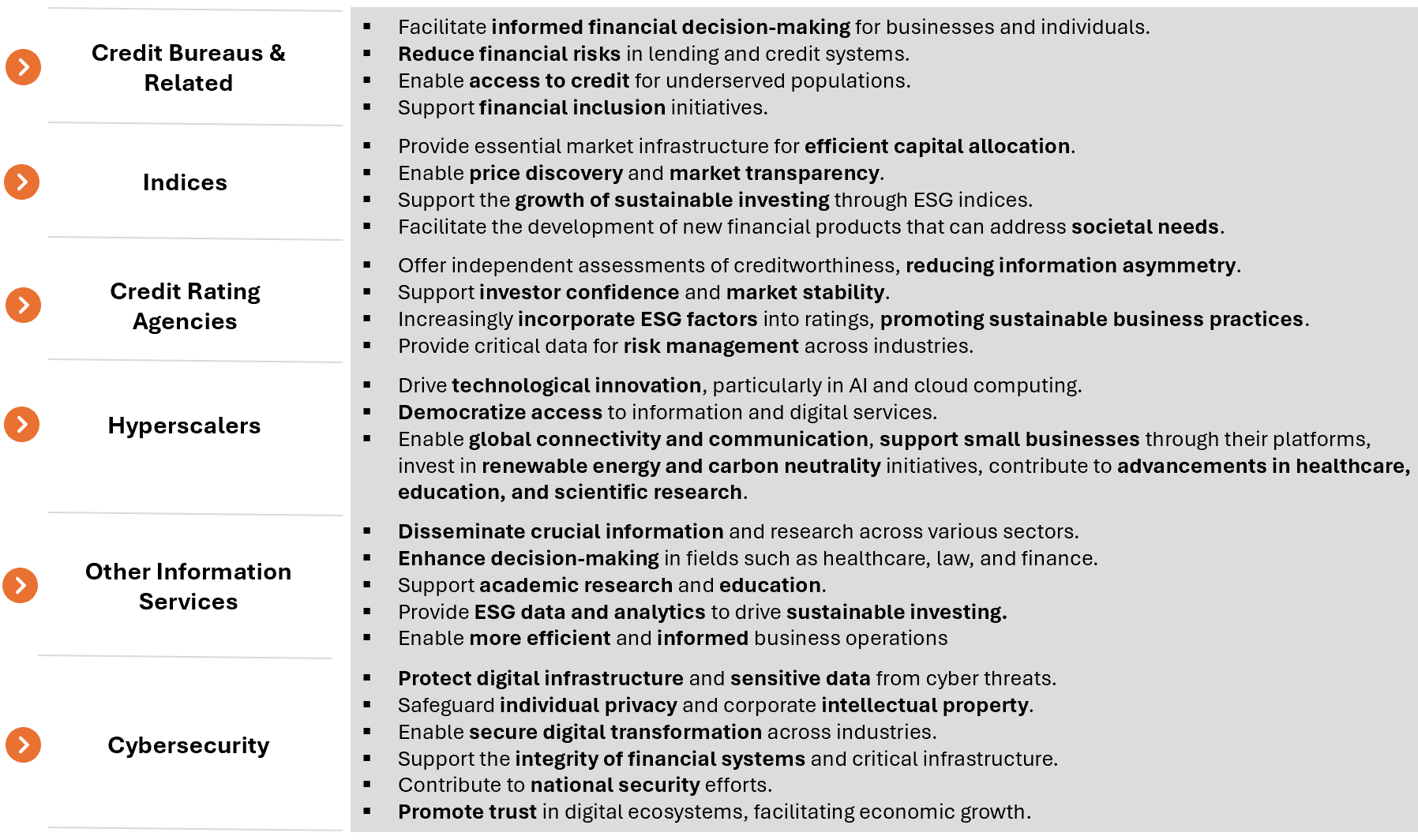
Source: Janus Henderson Investors Note: these are representative examples of companies, some of which may not fulfil the Janus Henderson Global Sustainable Equity strategy's sustainability requirements, so they should not be interpreted as an investable universe of stocks for our strategy, but rather as illustrative of the types of business models that fit into the verticals defined. The verticals defined are not exhaustive. We do deep due diligence on the sustainability profiles of companies before they enter our investable universe and abide by our exacting standards. As a team, we believe there is an inextricable link between sustainability, innovation, and long-term compounding growth. Therefore, we want to invest in compounding businesses that also answer the second question in our investment process: is the world a better place because of this company? Our research suggests that characteristics of the broad verticals that we have outlined align well with the ideals that we typically seek out in sustainable businesses, including mitigating financial risks, fostering financial inclusion, promoting market transparency, as well as democratising access to information, among others. Figure 3 highlights some of the factors that showcase the environmental and social impacts of these areas, making this entire complex an exciting place to explore from an investment research perspective. Figure 3: Sustainability alignment: Why do they make the world a better place?
Source: Janus Henderson Investors How are we playing the data-asset companies?Apart from Microsoft, our strategy is exposed to companies within the Credit Rating Agencies and Other Information Services verticals, notably, S&P Global and Wolters Kluwer. S&P Global exemplifies how data can serve as both a competitive advantage and a moat while fostering positive global outcomes. The company's extensive databases, built over decades, provide credit ratings, market intelligence, and unparalleled insights that are trusted globally. Its ability to deliver accurate, reliable, and actionable data creates high barriers to entry for competitors, solidifying its position as a leader in the financial information industry. The acquisition of IHS Markit on 28 February 2022 further enhanced S&P Global's data capabilities, enabling deeper analysis across sectors like commodities, climate change, and supply chain management. This synergy allows the company to scale its offerings and cross-sell services effectively, reinforcing its defensible business model. Moreover, S&P Global leverages advanced technologies such as AI and machine learning to innovate its analytics platforms, ensuring clients can make informed decisions efficiently. Beyond its business success, S&P Global positively impacts the world through initiatives aligned with sustainability and economic development. It supports the energy transition by providing data that helps businesses and governments address climate challenges. Additionally, its philanthropic efforts include funding job training programs for underrepresented communities and aiding vulnerable populations in adapting to climate realities. By facilitating efficient capital flows toward impactful investments, S&P Global drives innovation, job creation, and inclusive growth globally. In essence, S&P Global's mastery of data not only fortifies its competitive edge but also empowers stakeholders to tackle critical global issues, embodying the dual role of a profitable enterprise and a force for good. Wolters Kluwer is another prime example of a company leveraging data as an edge while being closely aligned with sustainability. With roots dating back to 1836, the company has evolved from traditional publishing to providing mission-critical digital solutions for professionals in healthcare, law, finance, and accounting. Its ability to manage vast amounts of data with precision and accuracy, enhanced by AI technologies, creates high barriers to entry for competitors and ensures customer trust. The company's Corporate Performance and ESG division exemplifies its data-driven strategy. By integrating financial and non-financial reporting tools, Wolters Kluwer helps businesses navigate complex ESG regulations, ensuring compliance and fostering sustainable practices. Solutions like Enablon and CCH® Tagetik empower organisations to streamline processes, enhance decision-making, and quantify ESG impacts on business performance. Wolters Kluwer also prioritises sustainability and social responsibility. It has set science-based targets to reduce greenhouse gas emissions and optimises its global office footprint with eco-friendly standards. Initiatives like solar lamp assembly for underprivileged communities highlight its commitment to societal impact. Additionally, its Risk Reporter app promotes workplace safety, showcasing innovative ways to address global challenges. By combining advanced data capabilities with a focus on sustainability and governance, Wolters Kluwer not only maintains a strong competitive advantage, but also contributes to health, justice, prosperity, and environmental protection worldwide. ConclusionThe rise of data asset companies, underscored by their strategic utilisation of proprietary data sets and their pivotal role in the advancement of AI technologies, marks a significant shift in the source of economic and technological power. These companies not only lead the charge in the current digital revolution but also lay the groundwork for a future where AI's potential can be fully realised, impacting everything from medical diagnostics to personal and business decision-making processes. The journey through the similarities and contrasts between oil and data, and the deep dive into the value and impact of data asset companies, highlights the critical importance of navigating the data landscape with foresight and strategic acumen. As we stand on the brink of an AI-driven era, the decisions made today by businesses, investors, and policymakers regarding data acquisition, usage, and governance will shape the technological advancements and societal norms of tomorrow. As W. Edwards Deming remarked - "In God we trust, all others must bring data". |
|
Funds operated by this manager: Janus Henderson Australian Fixed Interest Fund, Janus Henderson Australian Fixed Interest Fund - Institutional, Janus Henderson Cash Fund - Institutional, Janus Henderson Conservative Fixed Interest Fund, Janus Henderson Conservative Fixed Interest Fund - Institutional, Janus Henderson Diversified Credit Fund, Janus Henderson Global Equity Income Fund, Janus Henderson Global Multi-Strategy Fund, Janus Henderson Global Natural Resources Fund, Janus Henderson Tactical Income Fund All opinions and estimates in this information are subject to change without notice and are the views of the author at the time of publication. Janus Henderson is not under any obligation to update this information to the extent that it is or becomes out of date or incorrect. The information herein shall not in any way constitute advice or an invitation to invest. It is solely for information purposes and subject to change without notice. This information does not purport to be a comprehensive statement or description of any markets or securities referred to within. Any references to individual securities do not constitute a securities recommendation. Past performance is not indicative of future performance. The value of an investment and the income from it can fall as well as rise and you may not get back the amount originally invested. Whilst Janus Henderson believe that the information is correct at the date of publication, no warranty or representation is given to this effect and no responsibility can be accepted by Janus Henderson to any end users for any action taken on the basis of this information. |