|
On the Road with Alphinity Global: The Rising Premium on Certainty Alphinity Investment Management May 2025 |
|
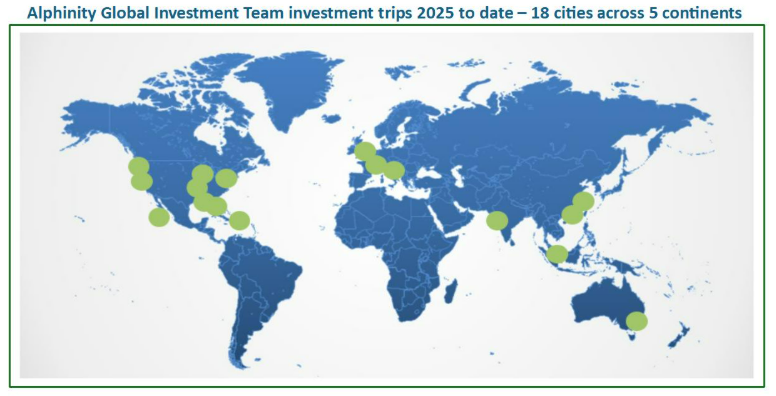
Over the past several months, our global investment team has embarked on a series of research trips across multiple continents, meeting more than 250 companies in five countries to gain first-hand insights and identify emerging trends. All six team members recently completed another round of visits to the United States ahead of the 1Q25 reporting season. In today's highly volatile environment, this on-the-ground perspective has proven indispensable for staying ahead of rapidly unfolding developments.
Our conversations with management teams spanning Singapore's financial centres and San Francisco's tech corridors to Mumbai's manufacturing hubs and Beijing's policy circles have revealed a striking shift in corporate sentiment. The optimism that characterized the start of the year has been replaced by widespread operational uncertainty, especially since March, as executives navigate unpredictable policy changes and ongoing supply chain disruptions. This environment has prompted many companies to withdraw forward-looking statements, narrow their guidance ranges, or append new disclaimers to their 1Q25 earnings releases considering persistent macroeconomic volatility. In this note, we outline some of the key themes emerging from our recent travels and discuss how our on-the-ground insights are helping us refine our portfolio-balancing a more defensive stance with selective growth opportunities that have been unjustly discounted.
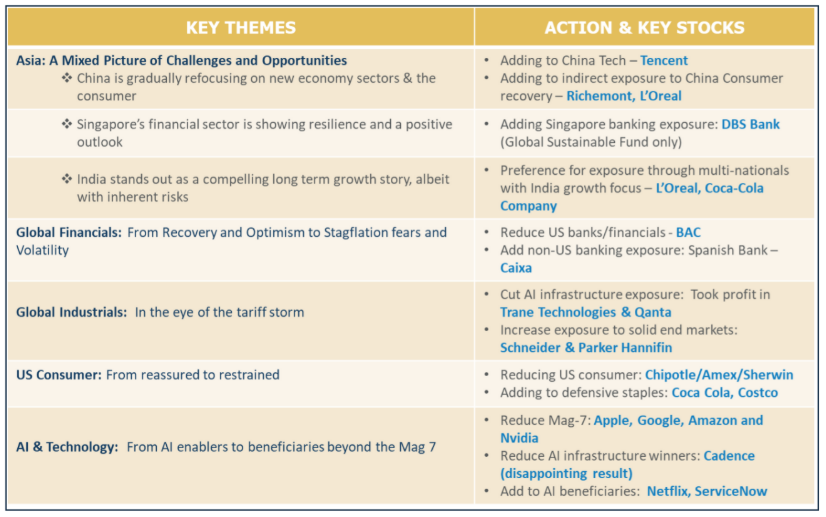
Asia: A Mixed Picture of Challenges and Opportunities
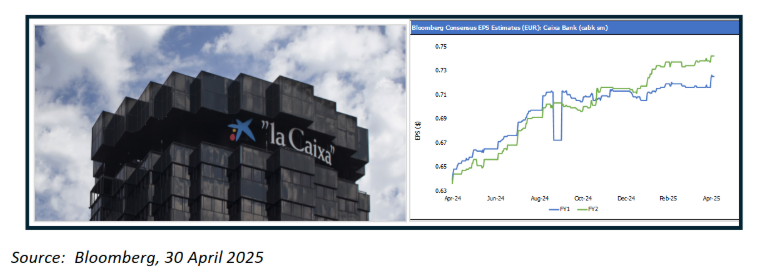
Global Financials: From Recovery and Optimism to Stagflation fears and Volatility Post-election optimism for deregulation and tax cuts initially fuelled a global banking rally at the end of 2024, buoyed by robust deal pipelines and corporate engagement. However, stagflation fears and plunging consumer confidence reversed sentiment by mid-February 2025, freezing corporate activity. Recent 1Q25 results and CEO commentary show limited numerical impact to date, with tariff-driven front-loaded spending creating sporadic activity and heightened volatility boosting trading desks like Morgan Stanley's. On the real estate side, CBRE's result reflected a continued, yet sensitive commercial real estate recovery cycle. The business was buoyed by the strength of its resilient business lines and continued benefit from scarcity within the office sector for capital markets and leasing. Across the Atlantic, Germany's €1 trillion defence and infrastructure package represent a structural break from decades of austerity. A potential growth tailwind for Eurozone banks, including Spanish lenders like CaixaBank. Spain's economy is already outpacing EU peers with 2.5%+ GDP growth likely, and we expect that CaixaBank will be a key beneficiary given its market-leading positions in mortgages, payroll services, and wealth management--sectors poised to compound gains from digital transformation and demographic tailwinds. That said, the spectre of U.S. tariffs on EU goods looms large, potentially offsetting 20-30% of Germany's stimulus benefits and introducing cross-sector vulnerabilities. CaixaBank - Leading retail bank exposed to relative strength of the Spanish economy & seeing strong earnings upgrades
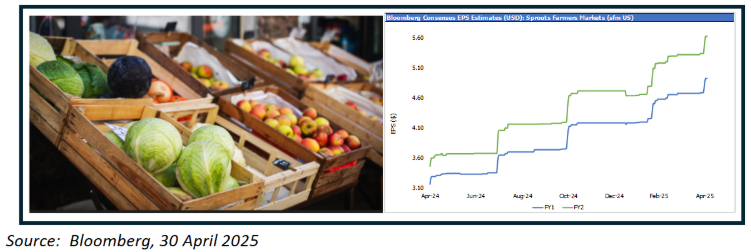
US Industrials - in the eye of the tariff storm The prevailing sentiment among US industrial players in February 2025 closely echoed what we observed during our September 2024 visit. The sector remains on a path toward gradual, measured recovery, rather than a rapid resurgence. Management teams were however cautious, reflecting uncertainties about inflation, tariffs, political instability, and the Chinese economic landscape. While there were some signs of emerging positive momentum, a "low and slow" industrial rebound is more likely. Notably, regions outside the US - particularly Europe and China - may see stronger recoveries, given their steeper prior declines. End markets continue to matter, with aerospace, electric grid and waste operators all remaining relatively positive, while in contrast the environment remains tough for agriculture, transportation and residential housing. Two key themes stood out: tariffs and a short-cycle manufacturing recovery. Companies are preparing for tariff-related cost increases, with some already passing on surcharges and viewing tariffs as an opportunity to raise prices, which likely drives inflationary pressures. A fragile short-cycle recovery was noted despite scepticism regarding the underlying causes, with inventory buildup ahead of tariffs largely dismissed by management teams. Amid these conditions, we remain focused on defensive industrial names such as Waste Connections, the third-largest US waste operator, which recently exceeded 1Q25 estimates and reiterated its FY25 guidance, reporting no material impact from recent macro volatility. Whilst our current exposure to US industrials remains aligned with resilient, high-quality industrials underpinned by resilient end markets, the recent market weakness is starting to throw up exciting opportunities at more reasonable valuations. US Consumer - From reassured to restrained During our US visit in January 2025, consumer management teams described the business environment as "generally positive" with expectations of faster policy execution under a new Trump administration. Supply chains have already notably shifted away from Chinese reliance since the previous Trump administration and any potential impact of tariffs was expected to be partially absorbed by Chinese manufacturers, maintaining competitive pricing for US retailers. The mood had shifted somewhat by March 2025, where our conversations with management were more cautious. Companies were generally reluctant to provide any detail on potential tariff impacts given the changing external goalposts and messaging from the government. There were no clear broad-based trends across the consumer aside from a continuation of the low- and high-income divergence, with the unusually cold start to the year also muddying the data. Whilst consumer confidence has since plummeted to 2022 lows, spending has been more resilient, but often more value-driven with consumers seeking the best bang for their buck and being selective about where to splurge or cut back. In response we have reduced some of our consumer facing holdings, such as Chipotle and Sherwin Williams, but added to Costco given its relatively defensive growth profile underpinned by a loyal membership base. We also added a new position in our Sustainable Fund to Sprouts Farmers' Market, a specialty grocer with a scarce growth profile within the Consumer Staples sector. We believe Sprouts should benefit both from near term consumer preferences for food at home (vs food away from home) and structural tailwinds of attributes-based healthy foods. Sprouts Farmers Market - Specialty organic grocer with multiple drivers supporting strong earnings growth
AI & Technology: From AI enablers to beneficiaries beyond the Mag 7 There was a striking disconnect during Technology meetings between the upbeat tone from technology management teams and the turbulence sweeping through equity markets. Enthusiasm around AI remains robust as functionality pushes deeper into business models, unlocking both revenue opportunities and operational efficiencies. "Agentic AI" is the next step in AI evolution where autonomous systems are created that can make decisions and executing complex, multi-step tasks with minimal human oversight. On top of AI technological advancement, there were three key themes emerged from company discussions:
Reflecting these shifts, we have steadily reduced our exposure to the Mag-7 and taken some profits in other AI capex exposed plays, such as Cadence Design Systems, and Nvidia. The capital has been reallocating towards AI software beneficiaries such as ServiceNow, while also establishing a position in Chinese champion Tencent, where growth is rebounding on the back of a revitalised gaming pipeline, surging advertising on WeChat Video Accounts, and expanding opportunities in fintech and cloud. TSMC and Netflix also remain favoured holding given the relative resilience of the business models.
In conclusion, our extensive global research travels have proven essential in navigating today's rapidly shifting landscape, allowing us to gain direct, actionable insights from management teams grappling with unprecedented uncertainty. As policy volatility and trade tensions reshape corporate strategies and outlooks, the value of certainty has never been higher for leaders making critical decisions. By grounding our portfolio positioning in these first-hand observations, we are better equipped to follow new earnings leadership and remain agile and well-informed as new challenges and opportunities emerge. Author: Elfreda Jonker - Alphinity Client Portfolio Manager |
|
Funds operated by this manager: Alphinity Australian Share Fund, Alphinity Concentrated Australian Share Fund, Alphinity Global Equity Fund, Alphinity Global Sustainable Equity Fund, Alphinity Sustainable Share Fund This material has been prepared by Alphinity Investment Management ABN 12 140 833 709 AFSL 356 895 (Alphinity). It is general information only and is not intended to provide you with financial advice or take into account your objectives, financial situation or needs. To the extent permitted by law, no liability is accepted for any loss or damage as a result of any reliance on this information. Any projections are based on assumptions which we believe are reasonable but are subject to change and should not be relied upon. Past performance is not a reliable indicator of future performance. Neither any particular rate of return nor capital invested are guaranteed. |