|
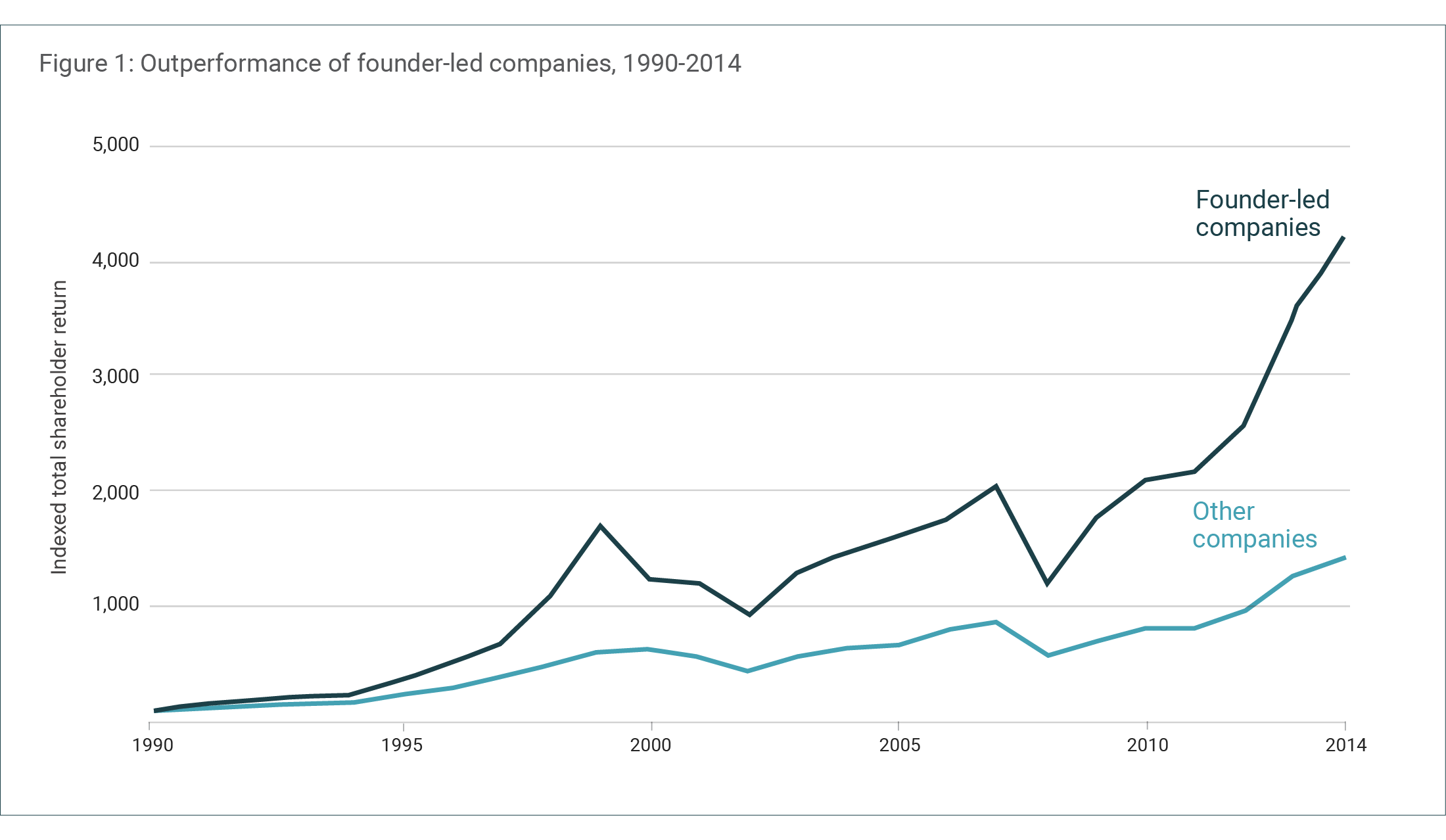
Skin in the game Canopy Investors October 2025 5 min read 'Show me the incentive and I'll show you the outcome.' Investing in a company means putting your capital in the hands of managers who decide how it's used. Managers have access to information you don't, and their personal incentives may differ from yours. Since people naturally act in their own self-interest, ensuring managers' interests align with yours is critical. At Canopy, we believe the most effective alignment comes through meaningful ownership, whether from founder-operators, family-controlled businesses, or executives with substantial equity positions. Historical out performance of aligned managementCompanies with aligned management consistently outperform their peers. Bain & Company's analysis of S&P 500 firms from 1990 to 2014 showed that founder-led companies delivered cumulative total shareholder returns 3.1 times greater than other companies over this period, as shown in Figure 1 below.
Source: Bain & Company. One might argue this simply reflects the exceptional performance of technology companies over this period, many of which happen to be founder-led. However, even when technology firms were excluded from the analysis, founder-led companies still delivered 1.8 times the returns of their peers. Academic research suggests this outperformance stems partly from differences in how founder-led companies allocate capital and innovate. Fahlenbrach's 2009 study of 2,327 firms from 1992-2002 showed founder-led companies invested 22% more in R&D and 38% more in capital expenditures than their non-founder-led peers, and delivered annual share price outperformance of 8.3% even adjusting for risk factors. This combination - higher investment and superior returns - demonstrates that founder-CEOs don't just spend more on growth, they're better at selecting which investments will create value. Lee, Kim, and Bae's study of S&P 500 companies from 1993 to 2003 showed founder-led companies generated 31% higher citation-weighted patent performance (a measure of innovation impact) versus non-founder-led companies. The advantage remained at 23% even after controlling for higher R&D spending, indicating they innovate more efficiently. The study also found that founder-led companies tend to produce more breakthrough innovations (patents in the top 5% by citations). However, alignment does not universally drive optimal outcomes. Morck, Shleifer, and Vishny's 1988 study of 371 Fortune 500 firms revealed an inverted U-shaped relationship between management ownership and firm value. The study found firm performance improved substantially when managers increased their ownership positions above 5%, but then declined again as ownership levels increased beyond 20%, potentially indicating entrenchment and value destruction. This entrenchment effect is particularly pronounced in family-controlled firms. The Morck study found evidence that older firms run by founding family members underperformed compared to those led by unrelated officers. As family ownership stakes increase beyond optimal levels, concentrated voting control can insulate management from market discipline and traditional governance mechanisms. Entrenchment risk may manifest through nepotism in senior appointments, excessive compensation, retention of underperforming family executives, resistance to strategic changes that threaten control, and conservative financial policies that prioritise stability over growth. The ownership mindsetWe believe companies with properly aligned management teams outperform for several fundamental reasons:
|
|
Funds operated by this manager:
|