


|
News & Views: The Resurgence of Nuclear Energy 4D Infrastructure May 2025 Nuclear energy is undergoing a renaissance. While it has long been associated with images of devastation and disaster, it is now increasingly recognised as a crucial part of the global energy transition, offering a reliable solution to rising energy demand and decarbonisation efforts. In this edition of News & Views we examine the decline of nuclear energy, the catalysts behind its resurgence and how the 4D investment strategy captures exposure to this evolving theme. Why did nuclear decline?1. Public fearAt its peak in the late 1990s to early 2000s, nuclear energy accounted for nearly 17% of global electricity generation, compared to around 9% today. Incidents like Three Mile Island in the US in 1979 and Chernobyl in 1986 increased public anxiety around nuclear energy. While both these incidents resulted in greatly increased safety regulations and oversight, the stigma remained. The 2011 Fukushima disaster in Japan reignited safety concerns, resulting in several countries scaling back or halting their nuclear programs. The US for example increased regulatory scrutiny while Germany decided to exit nuclear power altogether. 2. High costs and complex constructionHigher safety standards and regulatory obligations have made nuclear projects increasingly expensive. The need for more advanced safety systems, robust containment structures and ongoing design and regulatory changes have all increased the cost to build, operate and maintain nuclear power plants. Project management complexities have also been detrimental. With less nuclear plants being built, the industry experienced a loss of skilled labour and expertise in nuclear construction. This, coupled with the incredible complexity yet lack of standardisation in plant build, has also led to increased inefficiencies and costs. As a result, many of the more recent nuclear power plant projects have seen significant delays and cost overruns. Examples include:
What's driving nuclear's revival?1. Reliable, carbon-free baseload powerNuclear energy offers continuous, emissions-free power -- a valuable complement to intermittent renewables like wind and solar. While wind and solar energy are expanding, they remain intermittent, generating electricity only when the wind blows or the sun shines. Managing this intermittency requires energy storage to store excess energy during high-output periods and release it during high-demand or low-generation periods. Even though storage technology and deployment has grown rapidly, costs remain too high to implement at scale. At the same time supply pressures are increasing as coal and gas-fired power plants being phased out or growing more slowly. This is why nuclear energy stands out as the only large-scale baseload power source that can reliably bridge the supply gap, combat climate change and avoid the intermittency challenges of other renewables. Capacity Factors across various energy sources
It is important to note that even with safety and cost concerns, nuclear continues to be a pivotal component of the electricity generation mix for many countries. For example, in France, where nuclear accounts for approximately 65% of the generation mix, power prices have remained relatively low compared to other European countries. The relatively low cost of nuclear power generation has also contributed to France becoming one of the world's largest net exporters of energy, bringing in €5bn in revenues in 2024.1 Recognising the value of nuclear power assets, France plans to replace its aging nuclear fleet with six new reactors by 2050, with an option for an additional eight. Nuclear Production 2023 and Proportion of Generation Mix
2. Rising demand from electrification and AIElectricity demand, previously growing modestly (~1% per year in the US), is now accelerating due to manufacturing onshoring, electrification and surging AI data centre usage. While estimates of demand growth are difficult to quantify, it is estimated that over the next five years the US will see load growth of at least 3%3, with further upside potential as data centre demand increases alongside demand for AI computing. Government reports project US data centre demand leaping from 176TwH in 2023 to 325-580TwH in 2028.4 This equates to between 6.7% and 12% of total US electricity consumption - up from 4% currently.5 Estimated data centre consumption growth
3. Hyperscaler investment'Hyperscalers' (large technology companies using data centres for cloud computing and data management services) are turning to nuclear energy due to its ability to provide 24/7 secure base load power for data centres while also aligning with their significant carbon reduction goals. The main drawback of nuclear power for hyperscalers is build time: with planning and construction times of over 10 years along (notwithstanding time and cost blowouts (as set out above). These long lead times conflict with hyperscalers' ambitions to deliver nascent high-profile AI technologies as soon as possible. As an alternative, hyperscalers have focused on leveraging existing nuclear capacity and exploring innovative reactor designs to mitigate cost and construction times. This is demonstrated through examples from key hyperscalers including:
4. Policy supportGovernment policy is increasingly supportive. The US Inflation Reduction Act (IRA) is the most prominent example, with the Act containing several tax credit provisions that serve to boost nuclear's financial viability. Examples include:
Nuclear's investment caseWe anticipate continued growth in nuclear demand, driven by AI-related consumption, supportive policies and decarbonisation mandates. Given the long lead times and high costs of new build, leveraging existing capacity remains the focus. Translating this to investment decisions4D supports the nuclear theme as part of the Energy Transition. However, for us to take exposure the underlying assets must meet our infrastructure definition by either being 'regulated' or 'contracted'. One or both of these arrangements serves to secure the investment and operating costs of the plant as well as the return to the shareholder. At 4D we have nuclear power generating exposures across multiple US utility investments, but most prominently through our investment in Dominion Energy (D). Dominion owns regulated nuclear facilities in Virginia and South Carolina, as well as the Millstone Nuclear Power Station in Connecticut, which the company is exploring contracting opportunities for. We also have exposure through European utilities including Iberdrola [IBE] who have some legacy nuclear exposure in Spain. We are also closely monitoring nuclear-exposed Independent Power Producers (IPPs) like Constellation Energy, Talen and Vistra. While these stocks appeal in different ways, they currently either lack the cash flow visibility we require in our investments or lack a compelling enough risk-reward proposition amid stretched valuations. Case Study: Millstone nuclear power plantOwned by Dominion Energy, the Millstone Nuclear Power Plant (Millstone) is based in Connecticut, US, and has an operating capacity of 2GW across units 2 and 3. The power station began operating in 1975 and has an operating license from the US Nuclear Regulatory Commission (NRC) until July 2037 and November 2045 for Units 2 and 3 respectively. The power station provides around 47% of Connecticut's power needs, more than 90% of the state's carbon-free power and employs around 4,000 people. Until March 2019, Millstone sold 100% of its capacity into the ISO New England merchant energy market in the northeast of the US. Prior to the Covid-19 recovery, benign growth in power demand from customers (around 1% annual demand growth for the previous decade), combined with cheaper forms of alternative energy generation (such as renewables and natural gas), meant the merchant price of power earned by Millstone was uneconomic compared to the running costs of the facility. The load-weighted average prices achieved in 2016, 2017 and 2018 were $34.62/MWh, $37.45/MWh and $52.27/MWh respectively. Dominion management lobbied Connecticut legislators and regulators, stressing they would have to decommission Millstone if the state didn't provide some form of financial support as low and volatile market prices meant the facility was loss making. In response, the Connecticut regulator, PURA, signed a fixed price agreement with Dominion for approximately half of Millstone's capacity, for a maturity of 11 years (to 2029). The price within the contract was $49.99/MWh, well above the prevailing market price achieved for the facility. This contract supported the financial viability of Millstone and incentivised Dominion to continue operating the facility. Fast forwarding to the current environment, the northeast US power market is now in short supply, driven by the aforementioned strong demand growth from data centres, onshoring of manufacturing and wider electrification efforts. This has resulted in much higher market prices with capacity contracts agreed with data centre companies at prices rumoured in excess of $100/MWh. The carbon-free, firm power capacity provided by nuclear facilities like Millstone are particularly sought after by tech companies. Dominion management are now considering options of what to do with the uncontracted capacity of the facility, and potential utilisation of capacity post expiry of the agreement with PURA in 2029. 1 https://energynews.pro/en/france-reaches-a-record-e5-billion-in-electricity-exports-in-2024/ The content contained in this article represents the opinions of the authors. This commentary in no way constitutes a solicitation of business or investment advice. It is intended solely as an avenue for the authors to express their personal views on investing and for the entertainment of the reader. Funds operated by this manager: 4D Global Infrastructure Fund (Unhedged), 4D Global Infrastructure Fund (AUD Hedged) |

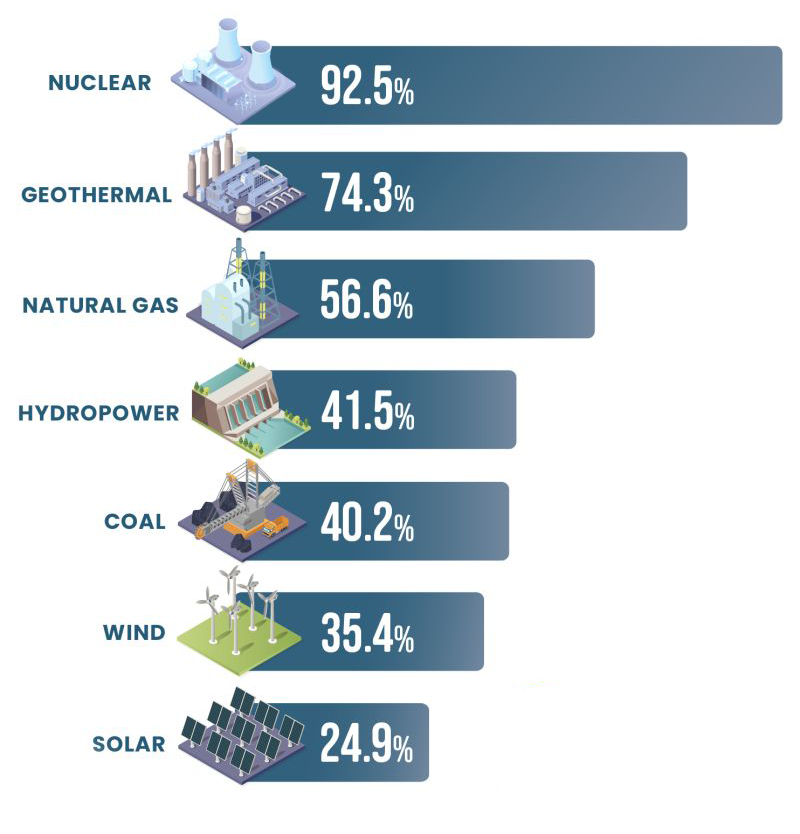 Source: US Energy Information Administration
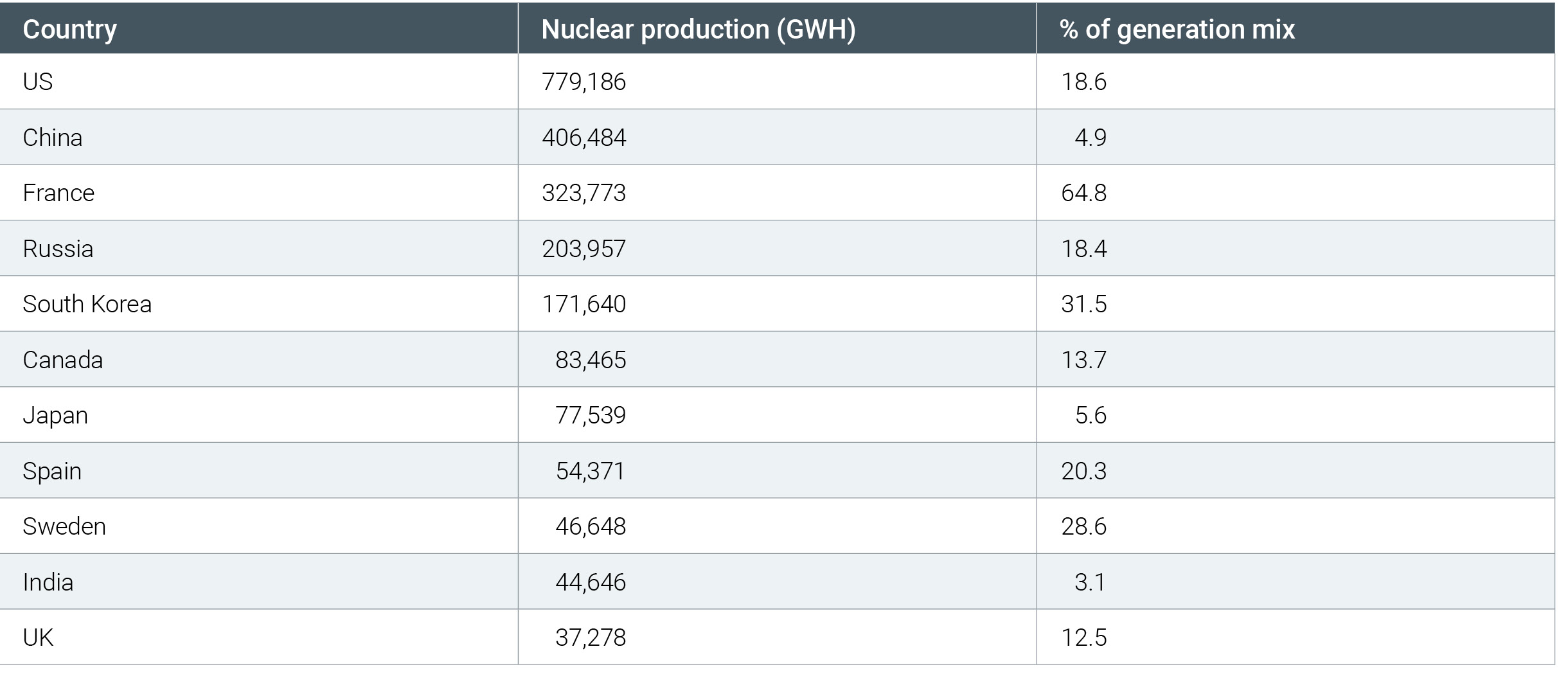 Source: NEI, IAEA-PRIS 2
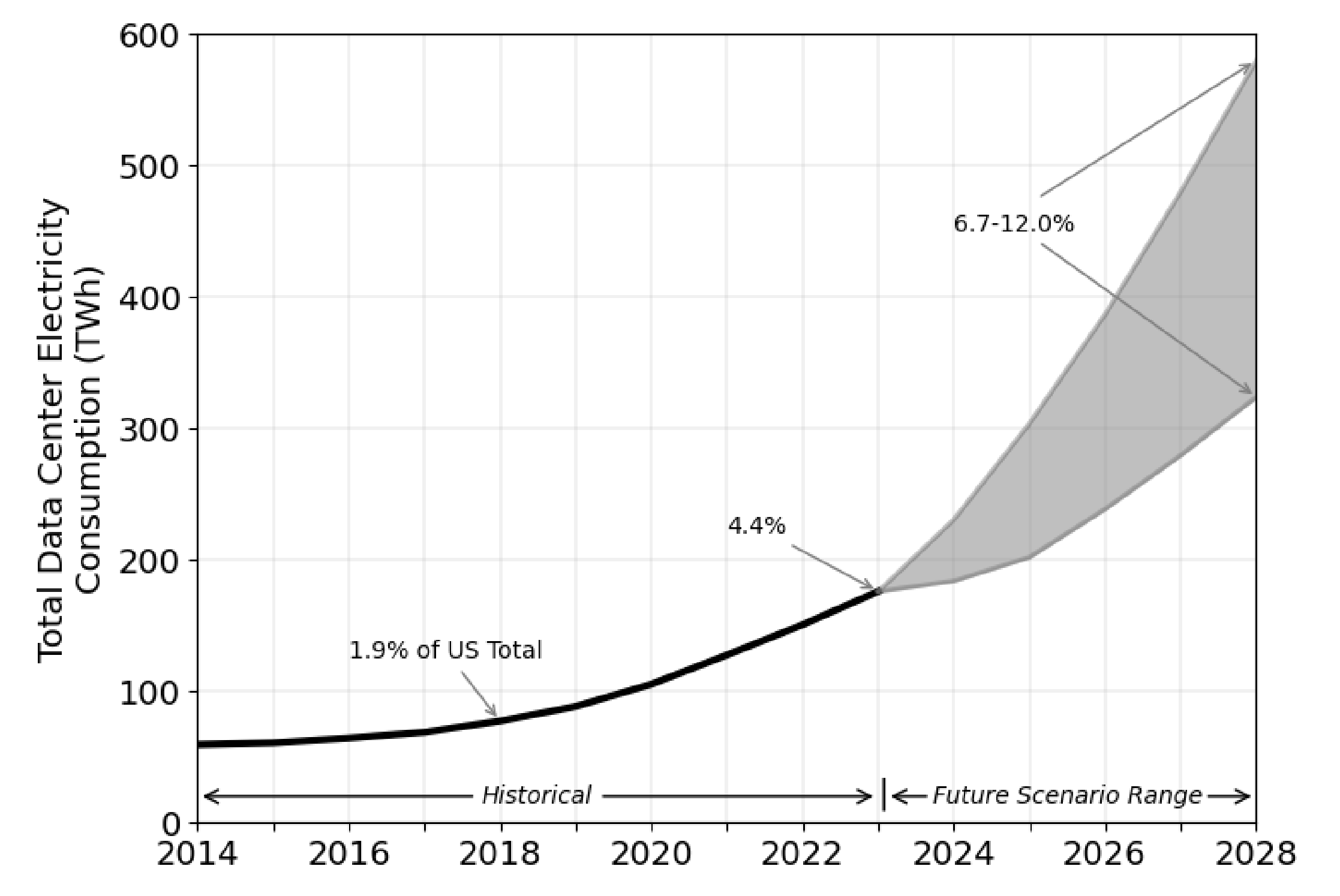 Source: Berkeley Lab - 2024 United States Data Center - Energy Usage Report
 Source: U.S. Department of Energy