|
For some reason Hedge Clippings is not feeling as perky as usual. This is no doubt due to the resurgence of COVID-19, although looking back at our previous prognostications in this regard we could be excused for saying "I told you so!". There was never going to be a quick fix to the mess the world is in, although to be fair, by global standards the outbreak in Victoria is minute, and the one in NSW is miniscule. The issue of course is that, unless drastic measures are taken, that will no longer be the case.
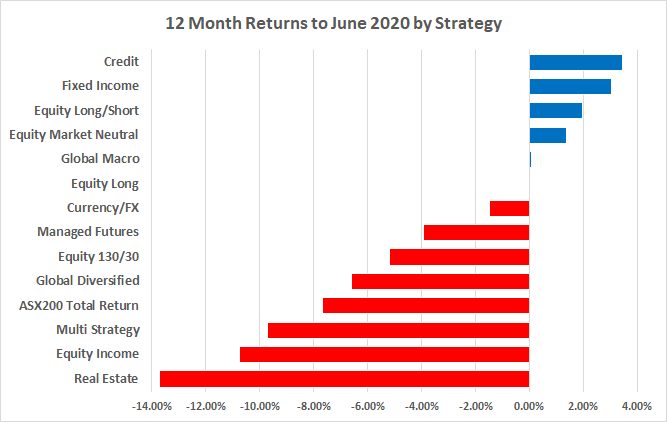
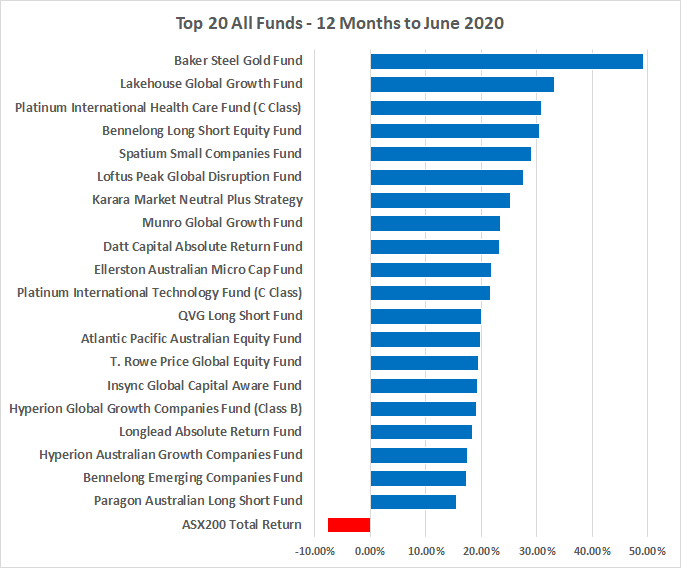
So on to brighter subjects, although that might be relative subject to where you might identify your fund investments. In the graphs below we cover the performance of strategies, funds and the ASX200 over the past financial year to June 2020.
To put things in perspective to start with, the "market" - namely the ASX200 Total Return Index (i.e. including reinvestment of dividends etc.) recorded a pretty dismal negative return of -7.68% for the FY 2020. Against this, the average of all equity-based funds in AFM's database fell fractionally by -0.13%, and while that number is negative, it's still 7.5% better than being invested in the market overall, or an ASX200 Index based ETF.
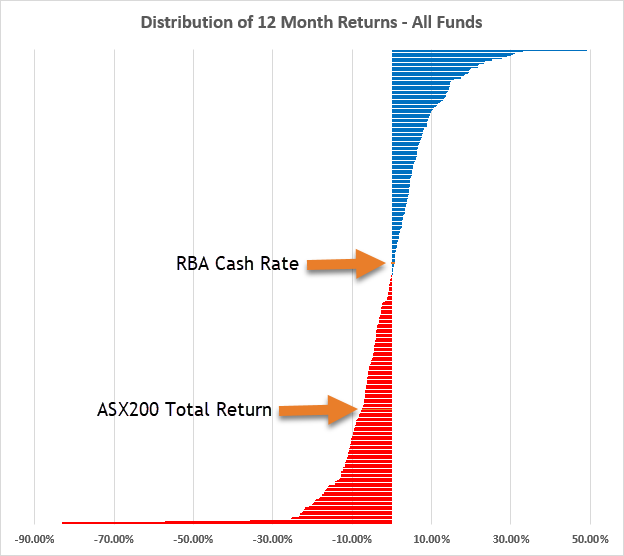
However, as the chart below shows, averages can be deceptive, as shareholders in Australian banks, and Afterpay, would be aware. Over the past 12 months, 84% of funds covered by AFM outperformed the "market" and 61% produced a positive return after fees, and while the RBA cash rate is yet to go into negative territory, it's not far off it.
The challenge - for investors in direct equities and managed funds - is to avoid the losers and pick the winners. No easy task both for investors and professional fund managers, with fund performances ranging from -80% through to +50%.
|