


NEWS

12 Jan 2021 - President Biden and the Share Market
11 Jan 2021 - Equities: I can't live with you, I can't live without you

10 Jan 2021 - 3 market myths that threaten to derail investors' long-term wealth
|
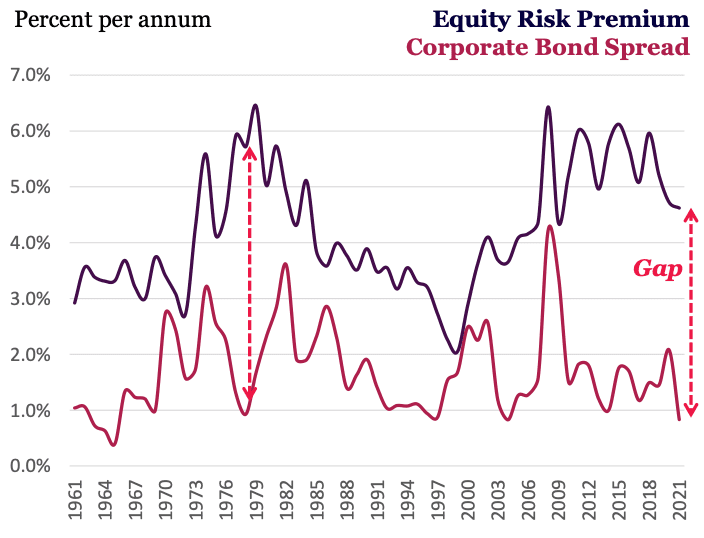
3 market myths that threaten to derail investors' long-term wealth Montaka Global Investments 10 January 2021 The US stock market recently hit fresh all-time highs. But then we learnt that US inflation in the month of October was 6.2%, the highest annual rate in 31 years. Many investors are naturally now fearing three 'facts' have emerged from the current situation: equities as an asset class are stretched and this is 'as good as it gets'; that likely interest rate rises will crunch stocks; and finally, that there are no undervalued stocks providing buying opportunities in the market today. But for strong, though perhaps counterintuitive, financial and economic reasons, these three fears are likely myths. We believe that equities continue to represent attractive, long-term value; structural deflationary forces will keep rates relatively low; and there are great companies available today at cheap prices. There is a danger that if investors fall for these myths they will bail out of equities and miss out on their long-term wealth-building potential. Myth 1: Equities are overvaluedWhile investors fear that equities are overvalued, the fact is that equities are better value than other asset classes. Investors are being paid unusually high returns for taking on equity risk compared with the likes of bonds. A good measure of the value of equities is the 'gap' between the equity risk premium (ERP) and the bond spread (how much corporate bonds yield above government bonds). The ERP is the extra return investors get for owning stocks, rather than risk-free government bonds. Historically, the gap between the ERP and bond spread has averaged around 2%. The gap has been as wide as 5% percent when equities were relatively cheap. It has also fallen close to zero when equities were expensive, such as during the 1999 tech bubble. (During this 20-year period of the gap closing, equities compounded at 18 percent per annum!) The 'Gap' between ERP and Corporate bond spread
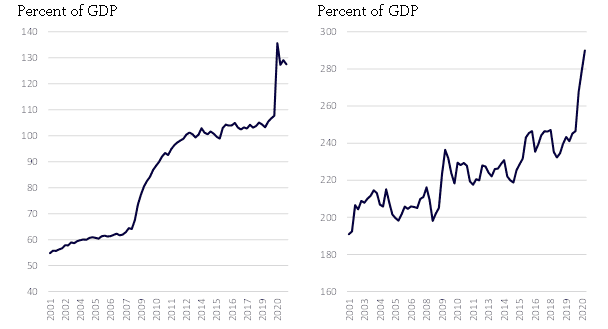
Source: NYU Stern (Damodaran); Bloomberg; Montaka Global The gap today is around 4%, so well above average. As equity prices have soared since the depths of the pandemic, the ERP has reduced. But spreads in other asset classes, such as bonds, have also reduced. On a relative basis, therefore, equities remain just as attractive as they did in 2019 when the S&P 500 was lower by one-third. Myth 2: We have entered a structural inflationary cycleThe second fear is that interest rates will keep rising and slam the breaks on equities. But equity prices are actually more likely to keep rising in the long term. For the gap between the equity and bond spread to normalise from 4% today to the long-term average of 2%, equities must perform better than bonds going forward. Despite the current inflation worries, equity prices are more likely to rise because higher bond yields (resulting lower bond prices) are unsustainable, in our view. Strong, long-term, structural disinflationary forces will continue to pressure interest rates to much lower levels than we've observed historically. For a start, populations are aging across the world. The working-age cohort in major economies, such as China and Europe, are shrinking as more people retire, which will logically reduce economic growth over time. Governments will also have to ramp up spending on pensions and healthcare. That lower economic growth will push down interest rates. The soaring power of compute and big data is also creating of an increasing array of intelligent applications which require few, if any, humans to operate. Less demand for labour over time is disinflationary. US Federal public debt Global, non-financial corporate debt
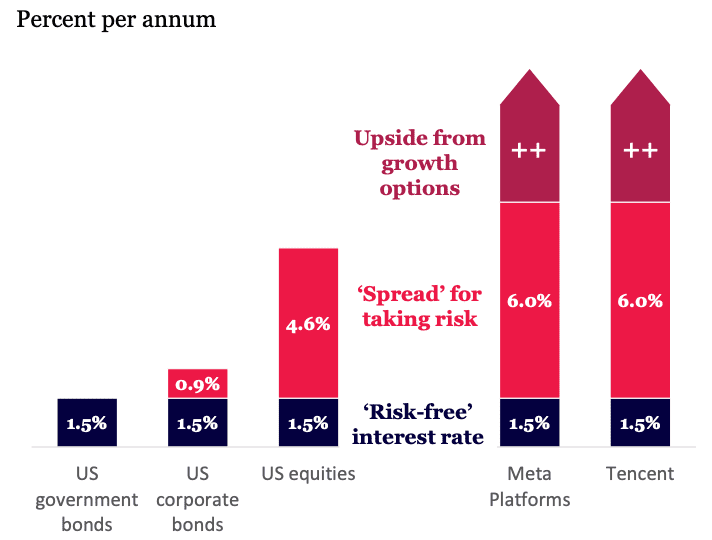
Source: Bank of International Settlements; Federal Reserve Bank of St. Louis And the huge debt loads of governments and corporates, which has surged post-pandemic, means interest rates cannot increase materially and sustainably. If rates do rise, consumers, corporates and governments will spend less - all at the same time - to meet higher interest costs, which in turn cuts economic growth and forces interest rates back down. So, notwithstanding short periods of slightly higher bond yields to reflect the economic cycle, a long-term regime of historically low interest rates appears likely. And if that is so, then the longer-term prospects for equities remain attractive. Myth 3: It feels like most stocks are overvalued todayDespite the positive outlook for equities, some investors will still argue that many stocks are overvalued. But while that is true, a subset of stocks are materially undervalued, including Meta Platforms (formerly Facebook) and China's Tencent. Even if you only considered their existing core businesses, both Meta and Tencent are cheap. Based on 2022 earnings, the earnings yield of both Meta and Tencent's core business is around 4.5%. If you subtract a risk-free rate of, say, 1.5% you get a spread of 3.0%. Not so attractive, you might suggest. But by 2025, that same spread has increased to more than 6.0% due to earnings growing organically over this time. Compensation for taking risk - comparison
Source: Bloomberg; Montaka Global estimates What's more, both Meta and Tencent have large, high-probability growth options tied to the 'metaverse', e-commerce, artificial intelligence and cloud computing. As these growth options are monetised, the 'spread' of the shares of these companies increases even further. On this basis, Meta and Tencent appear to be highly attractive investment opportunities. Hold the line on equitiesThe message to investors is to remain selective based on clear-minded, fact-based analysis. We continue to believe that equities offer materially better value than bonds, in general today. And this belief is based on detailed, 'first-principles' analysis. Of course, not all equity investments are created equal. Many stocks are overvalued today - but some are materially undervalued. If investors can patiently accumulate and own these undervalued businesses, it will steadily drive their compounding higher. And over the long-term, compounding in equities at rates of return well above those in cash or bonds, will lead to dramatically outsized wealth accumulation. Maintaining high exposure to equities is the key element to building wealth through investments. Don't fall for these 3 myths and give up on the remarkable long-term wealth building power of equities. Note: Montaka is invested in Meta & Tencent. Written By Lachlan Mackay Funds operated by this manager: |

8 Jan 2021 - Performance Report: Bennelong Twenty20 Australian Equities Fund
| Report Date | |
| Manager | |
| Fund Name | |
| Strategy | |
| Latest Return Date | |
| Latest Return | |
| Latest 6 Months | |
| Latest 12 Months | |
| Latest 24 Months (pa) | |
| Annualised Since Inception | |
| Inception Date | |
| FUM (millions) | |
| Fund Overview | The Fund is managed as one portfolio but comprises and combines two separately managed exposures: 1. An investment in the top 20 stocks of the markets, which the Fund achieves by taking an indexed position in the S&P/ASX 20 Index; and 2. An investment in the stocks beyond the S&P/ASX 20 Index. This exposure is managed on an active basis using a fundamental core approach. The Fund may also invest in securities expected to be listed on the ASX, securities listed or expected to be listed on other exchanges where such securities relate to ASX-listed securities.Derivative instruments may be used to replicate underlying positions and hedge market and company specific risks. The companies within the portfolio are primarily selected from, but not limited to, the S&P/ASX 300 Accumulation Index. The Fund typically holds between 40-55 stocks and thus is considered to be highly concentrated. This means that investors should expect to see high short-term volatility. The Fund seeks to achieve growth over the long-term, therefore the minimum suggested investment timeframe is 5 years. |
| Manager Comments | As at the end of November, the portfolio's weightings had been increased in the Discretionary, Energy and Financials sectors, and decreased in the IT, Consumer Staples, Health Care, Industrials, Materials and REIT's sectors. Together with positions in the top 20 stocks, the Fund is selectively invested in a group of high quality growth stocks, providing opportunity for the Fund to outperform over time. The portfolio is significantly overweight the Discretionary sector; Fund Weight: 34.5%, Benchmark Weight: 7.7%. Bennelong believe the Fund is well set up to provide enhanced index returns over the long-term. |
| More Information |

8 Jan 2021 - Performance Report: Ark Global Fund - Class B AUD Unhedged
| Report Date | |
| Manager | |
| Fund Name | |
| Strategy | |
| Latest Return Date | |
| Latest Return | |
| Latest 6 Months | |
| Latest 12 Months | |
| Latest 24 Months (pa) | |
| Annualised Since Inception | |
| Inception Date | |
| FUM (millions) | |
| Fund Overview | The investment objective of the Fund is to achieve long-term capital appreciation with low correlation to global equity markets through investment in the Underlying Fund. Fund One is a global macro fund that utilises quantitative research including machine learning techniques and fully automated trading algorithms which will aim to generate positive uncorrelated returns relative to any significant equity benchmark. The traded instruments are either major FX pairs or the most liquid exchange traded stock index, bond, and commodity futures across North America, Europe and Asia Pacific. The algorithm backtests over 10 years of tick data and in order to do so effectively requires machine learning to filter noise and identify meaningful signals, which results in statistically significant prediction of price movements. In production this processing is done in real time and the portfolio reacts to asset movements by rebalancing automatically to the desired risk exposure through the market impact optimised execution logic. Risk management layers built into the algorithm have been developed using the experience the team has gained from their decades in highly liquid fast-moving markets in the proprietary High Frequency Trading world. This allows the system to trade autonomously but safely to all trading opportunities and potential system issues, and to alert the team to any behaviour outside of strictly controlled bounds. The Fund is a 'feeder fund' which indirectly gains exposure to the underlying assets by investing all or substantially all of its assets in the Underlying Fund. The Fund may retain a certain amount of cash from the investment in the Fund for the purpose of payment of costs, fees, hedging and expenses. |
| Manager Comments | The best performance assets for the month were: Hang Seng Index (+3.13% of NAV), E-mini S&P 500 (+2.13% of NAV) and Euro Stoxx 50 (+2.06% of NAV). The worst performing assets were: Nikkei 225 (-1.06% of NAV), E-mini Russell (-2.30% of NAV) and Hang Seng China Ent. Index (-3.98% of NAV). |
| More Information |
8 Jan 2021 - ESG INSIGHT: Banks are putting the squeeze on fossil fuels
7 Jan 2021 - Performance Report: Bennelong Concentrated Australian Equities Fund
| Report Date | |
| Manager | |
| Fund Name | |
| Strategy | |
| Latest Return Date | |
| Latest Return | |
| Latest 6 Months | |
| Latest 12 Months | |
| Latest 24 Months (pa) | |
| Annualised Since Inception | |
| Inception Date | |
| FUM (millions) | |
| Fund Overview | The overriding objective of the Concentrated Australian Equities Fund is to seek investment opportunities which are under-appreciated and have the potential to deliver positive earnings, while satisfying our stringent quality criteria. Bennelong's investment process combines bottom-up fundamental analysis together with proprietary investment tools which are used to build and maintain high quality portfolios that are risk aware. The portfolio typically consists of 20-35 high-conviction stocks from the S&P/ASX 300 Index. The Fund may invest in securities listed on other exchanges where such securities relate to ASX-listed securities. Derivative instruments are mainly used to replicate underlying positions and hedge market and company specific risks. |
| Manager Comments | As at the end of November, the portfolio's weightings had been increased in the Discretionary, Industrials and Energy sectors, and decreased in the Health Care, IT, Materials and Financials sectors. The portfolio was significantly overweight the Discretionary sector (Fund weight: 40.7%, Benchmark weight: 7.7%) and underweight the Financials sector (Fund weight: 6.6%, Benchmark weight: 27.6%). |
| More Information |

7 Jan 2021 - Performance Report: Insync Global Quality Equity Fund
| Report Date | |
| Manager | |
| Fund Name | |
| Strategy | |
| Latest Return Date | |
| Latest Return | |
| Latest 6 Months | |
| Latest 12 Months | |
| Latest 24 Months (pa) | |
| Annualised Since Inception | |
| Inception Date | |
| FUM (millions) | |
| Fund Overview | Insync employs four simple screens to narrow the universe of over 40,000 listed companies globally to a focus group of high-quality companies that it believes have the potential to consistently grow their profits and dividends. These screens are: size of the company, balance sheet performance, valuation and dividend quality. Companies that pass this due diligence process are then valued using dividend discount models, free cash flow yield and proprietary implied growth and expected return models. The end result is a high conviction portfolio typically of 15-30 stocks. The principal investments will be in shares of companies listed on international stock exchanges (including the US, Europe and Asia). The Fund may also hold cash, derivatives (for example futures, options and swaps), currency contracts, American Depository Receipts and Global Depository Receipts. The Fund may also invest in various types of international pooled investment vehicles. |
| Manager Comments | The Fund's capacity to protect investors' capital in falling and volatile markets is highlighted by the following statistics (since inception): Sortino ratio of 1.99 vs the Index's 1.36, average negative monthly return of -1.76% vs the Index's -2.09%, and down-capture ratio of 69.24%. Insync noted the Fund's underperformance vs the Index's +7.52% in November was due to the very strong 'risk-on' rally which impacted the Fund's short-term results. The Fund's top holdings at month-end included Dollar General, Nintendo, Qualcomm, Domino's Pizza, PayPal, Facebook, Visa, S&P Global, Nvidia and Microsoft. The portfolio was significantly overweight the IT sector and underweight the Industrials and Financials sectors. |
| More Information |

7 Jan 2021 - Performance Report: Bennelong Kardinia Absolute Return Fund
| Report Date | |
| Manager | |
| Fund Name | |
| Strategy | |
| Latest Return Date | |
| Latest Return | |
| Latest 6 Months | |
| Latest 12 Months | |
| Latest 24 Months (pa) | |
| Annualised Since Inception | |
| Inception Date | |
| FUM (millions) | |
| Fund Overview | The Fund's discretionary investment strategy commences with a macro view of the economy and direction to establish the portfolio's desired market exposure. Following this detailed sector and company research is gathered from knowledge of the individual stocks in the Fund's universe, with widespread use of broker research. Company visits, presentations and discussions with management at CEO and CFO level are used wherever possible to assess management quality across a range of criteria. Detailed analysis of company valuations using financial statements and forecasts, particularly focusing on free cash flow, is conducted. Technical analysis is used to validate the Manager's fundamental research and valuations and to manage market timing. A significant portion of the Fund's overall performance can be attributed to the attention and importance given to the macro economic outlook and the ability and willingness to adjust the Fund's market risk. |
| Manager Comments | Key contributors in November included Commonwealth Bank, National Australia Bank, Worley, Flight Centre and Qantas. Detractors included Zip Co, Breville Group, Cleanspace, Tesserent and the Fund's Short Book. Kardinia increased their net market exposure from 30.4% to 73.0% (74.1% long and 1.1% short) with the key changes being the closure of most of their Short Book, increased weightings in 're-opener' stocks such as Flight Centre, Worley and the banks, partially offset by a reduction in 'lockdown' stocks such as Kogan and Redbubble. Kardinia maintain a bias towards stocks that benefit from a re-opening of economies scenario. |
| More Information |

6 Jan 2021 - Performance Report: Prime Value Emerging Opportunities Fund
| Report Date | |
| Manager | |
| Fund Name | |
| Strategy | |
| Latest Return Date | |
| Latest Return | |
| Latest 6 Months | |
| Latest 12 Months | |
| Latest 24 Months (pa) | |
| Annualised Since Inception | |
| Inception Date | |
| FUM (millions) | |
| Fund Overview | The Fund is comprised of a concentrated portfolio of securities outside the ASX100. The fund may invest up to 10% in global equities but for this portion typically only invests in New Zealand. Investments are primarily made in ASX listed and other exchange listed Australian securities, however, it may also invest up to 10% in unlisted Australian securities. The Fund is designed for investors seeking medium to long term capital growth who are prepared to accept fluctuations in short term returns. The suggested minimum investment time frame is 3 years. |
| Manager Comments | Key positive contributors for the month included Helloworld Travel, News Corp and Southern Cross Media. Key detractors were Bapcor, Breville Group and Collins Foods. Prime Value's view is that the outlook appears to be positive for equities; an impending global rollout of multiple vaccines with high efficacy, global economic growth likely to rebound strongly in 2021 as economies re-open, and interest rates likely to stay very low for many years - a supportive combination. They remain optimistic on the outlook for the Fund and continue to find many appealing new investments. |
| More Information |
