NEWS

10 Aug 2022 - Could a credit crunch be more important than a recession?
|
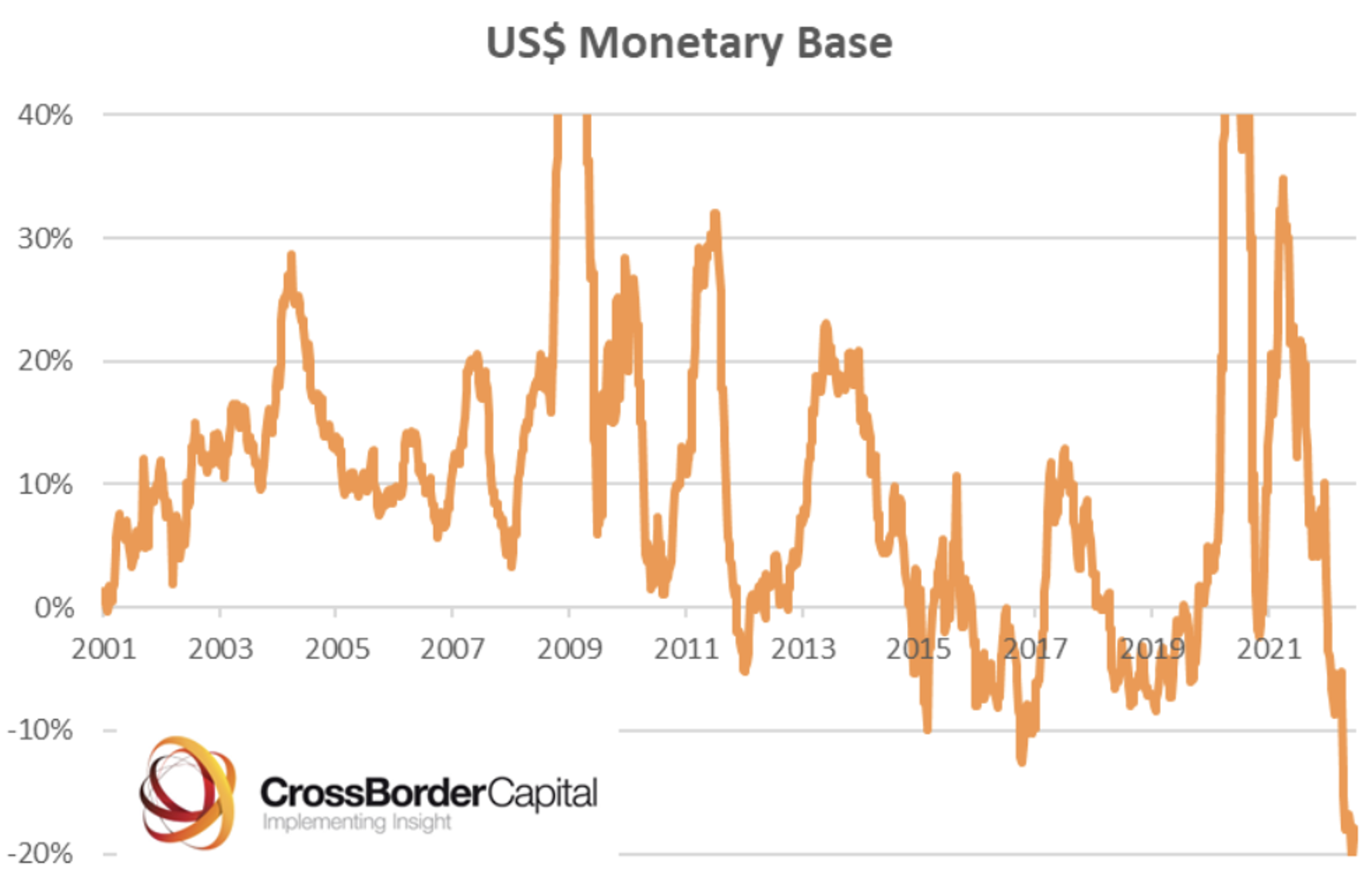
Could a credit crunch be more important than a recession? Montgomery Investment Management 20 July 2022 Some say its two quarters of negative growth. If that's the case, then the Atlanta Fed's GDPNow tool is predicting the U.S. is in a recession. Meanwhile, the U.S. National Bureau of Economic Research says a recession is a significant decline in economic activity that is spread across the economy and lasts more than a few months. If that's the case the 488,000 new jobs created in May would void any assessment of recession. Elsewhere, given inflation is at nine per cent in the U.S., and growth is a far cry from that number, the real economy is going backwards, validating the person-in-the-street's perception of recession. And finally, the U.S. yield curve has just gone negative, confirming an economic slowdown. Central banks are in a quandary Even though economies appear to be losing momentum, inflation remains unacceptably high. And even though we might be near a peak in inflation, the decline is unlikely to be fast enough to placate Central Banks. Consequently, I agree with the idea downside surprises in inflation are the outcome of recession, not an indicator we will avoid one - whatever your definition of recession actually is. The last time U.S. inflation was this high was 1981, but as analyst Ben Carlson points out the circumstances are very different. In 1981, savings accounts offered a 10 per cent yield (today they provide a one per cent yield). Mortgage rates then were 17 per cent, today they are five per cent. In 1981 U.S. treasury bond yields were 13 per cent, today they are at three per cent. And finally, Robert Shiller's Cyclically Adjusted P/E ratio was just eight times in 1981. Today it's still at 28 times. There are a multitude of differences today to any other time in history. Searching the past to discern what happens next may be a fools errand. Instead, I believe it is most important to look to liquidity. Giant swings in the availability of money, especially in modern debt-based financial systems, do more to explain the vicissitudes of markets than macroeconomics. And on that front, Crossborder Capital's chart of the liquidity cliff in the supply of the USD worldwide, including off-shore, suggests a major credit crunch is ahead.
Source: Crossborder Capital And according to Michael Howell, "The economic cost of this big liquidity squeeze is world recession" adding "Central Banks are making a major error by hammering down too hard on the brake. World recession is inevitable." Meanwhile the U.S. Treasury yield curve is seeing collapsing term premia. The term premium is the amount by which the yield on a long-term bond is greater than the yield on shorter-term bonds. Collapsing premia means short term rates are rising at a higher rate than long term rates. The mix of higher front-end rates raises cost of capital for corporates, while lower rates at the long end of the yield curve reflects meaningful demand for safe assets. In other words, no appetite for riskier corporate debt. In combination, it suggests a credit crunch is afoot. It's arguably much more important than whether we are heading for a recession - whatever your definition. Author: Roger Montgomery, Chairman and Chief Investment Officer Funds operated by this manager: Montgomery (Private) Fund, Montgomery Small Companies Fund, The Montgomery Fund |

9 Aug 2022 - Performance Report: Argonaut Natural Resources Fund
| Report Date | |
| Manager | |
| Fund Name | |
| Strategy | |
| Latest Return Date | |
| Latest Return | |
| Latest 6 Months | |
| Latest 12 Months | |
| Latest 24 Months (pa) | |
| Annualised Since Inception | |
| Inception Date | |
| FUM (millions) | |
| Fund Overview | At times, ANRF may consider holding higher levels of cash (max 30%) if valuations are full and it is difficult to find attractive investment opportunities. The Fund does not borrow for investment or any other purposes, but it may short sell securities as part of its portfolio protection strategies. |
| Manager Comments | The Argonaut Natural Resources Fund has a track record of 2 years and 7 months and therefore comparison over all market conditions and against its peers is limited. However, the fund has outperformed the ASX 200 Total Return Index since inception in January 2020, providing investors with an annualised return of 43.06% compared with the index's return of 4.93% over the same period. On a calendar year basis, the fund hasn't experienced any negative annual returns in the 2 years and 7 months since its inception. Over the past 12 months, the fund's largest drawdown was -19.06% vs the index's -11.9%, and since inception in January 2020 the fund's largest drawdown was -19.06% vs the index's maximum drawdown over the same period of -26.75%. The fund's maximum drawdown began in April 2022 and has lasted 3 months, reaching its lowest point during June 2022. During this period, the index's maximum drawdown was -11.9%. The Manager has delivered these returns with 3.92% more volatility than the index, contributing to a Sharpe ratio for performance over the past 12 months of 1.5 and for performance since inception of 1.65. The fund has provided positive monthly returns 81% of the time in rising markets and 40% of the time during periods of market decline, contributing to an up-capture ratio since inception of 196% and a down-capture ratio of 34%. |
| More Information |

9 Aug 2022 - Activism by prominent Australians

9 Aug 2022 - Will falling house prices tip Australia into a recession?
|
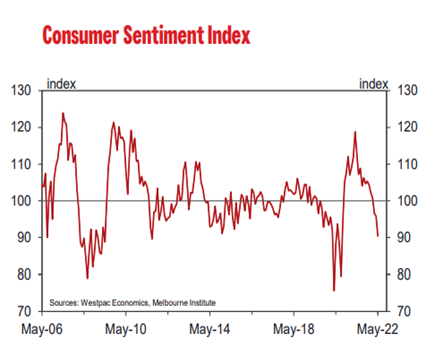
Will falling house prices tip Australia into a recession? WaveStone Capital 25 July 2022 With the RBA tightening cycle firmly underway, the impact for Australian households is only starting to be felt. Dwelling prices are falling most notably in Sydney and Melbourne where 39% of households reside but have 53% of total housing debt1. The pace of rate hikes is at levels not seen since 1994 and combined with rising energy costs and higher food prices it is not surprising that consumer sentiment has fallen sharply as shown in the chart below.
What does this mean for consumer spending and is a recession on the cards?Relative to other developed markets, Australia's economy has been strong; boosted by high commodity prices, lower relative interest rates, a weak Australian dollar and solid household balance sheets. A lower exposure to long duration technology stocks (which have been hardest hit) has also provided some insulation from the global equity sell-off. For the six months ending June 30, 2022, the total return for ASX300 is -10.4% compared to -20% for the S&P500 and -20.3% for MSCI World. Looking forward from here, vulnerabilities are apparent and none more so than in the housing market. Having spoken to bank executives, real estate businesses and developers over the past year, we expect a contraction in the housing market. The evidence is mounting even though price falls have been modest thus far.
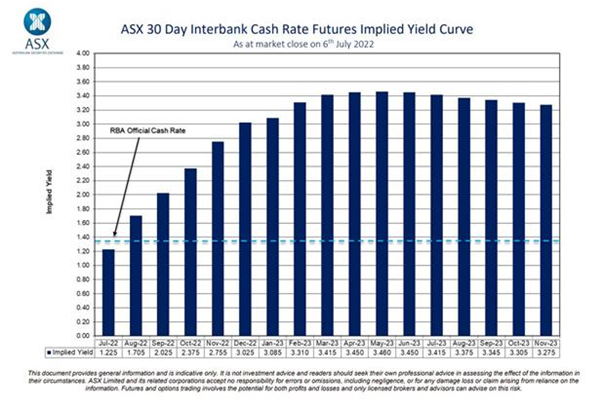
However, in our view, the outlook is not as grim as media reports would suggest with a fall of 15% likely over the next 18 months. This is due to the expected influx of immigration now that borders are open as well as the structural shortage of housing stock which puts a floor on house prices. While a 15% fall in the housing market would be material, there is also a wealth effect to consider. The magnitude of the hikes is massive at the margin. Even for those who do not face mortgage stress, higher mortgage payments dent consumer confidence and spending. The consequences are wide-reaching with impacts for the banking sector, construction, and ancillary businesses such as law firms and architects. Further, there is a significant refinancing event looming in 2023 as a large swathe of fixed rate loans roll off and many households will face a 40% increase in their repayments as they move to variable rates (based on current rates). History teaches us that tightening cycles usually lead to a de-rating of P/E multiples for the banking sector. While steady interest rate rises are seen as a positive tailwind, with every 25bps increase leading to a 1-2bps positive boost to net interest margins, the sheer pace of the current increases creates a different outlook. While the banking sector is already down by 10% since the start of June, and has underperformed the broader market, looking forward the downturn in the housing market will lead to lower credit growth, lower margins and higher bad and doubtful debts. According to Jarden Research, new home growth leads bank share prices by approximately 3 months and bank share prices lead house prices by 5 months given the lag in house price data and the forward-looking nature of markets. A de-rating of major bank share prices occurred in Australia during the 1999-2000 and 2009-2010 cycles when multiples fell by an average of 2.0x in the first three months after the first hike and 4.2x by the time of the last hike2. New Zealand, which is further ahead of Australia on rates is already experiencing a slowdown in credit growth. While Australian banks are well capitalised with very strong balance sheets, the medium-term outlook for their share prices will be negatively impacted by a housing downturn. A slump in consumer discretionary spending is expected as households tighten their belts. The question for investors is how much of this is already priced in? Many stocks in this sector have already fallen significantly as consumers have shifted their spending from goods to services and earnings have normalised. Despite this, in our view, the consensus forecasts for FY23 and FY24 are still too optimistic. We have not seen earnings downgrades yet and this could occur in the coming weeks. While reporting season is likely to show strong results on a historical basis, analysts will focus their attention on forward looking guidance for earnings - or lack thereof. For retailers, in addition to the rising cost of debt, analysts will be watching inventory levels. In many cases, inventory levels have been rising as supply chain issues ameliorate and are indicative of falling demand. The US provides a good indicator of the outlook for Australia given their rate hiking cycle and emergence from pandemic lockdowns is about 6 months ahead of Australia. What is evident is that retail is struggling with rising mortgage costs impacting consumers spending patterns. This is most evident for furniture, electronics and hardware sales which are highly correlated with housing growth. Whether or not we get a recession in Australia will depend largely on how aggressive the RBA is in raising rates. A neutral rate of 2.5% for example would dramatically impact borrowing capacity. Future inflation prints will determine whether the RBA stops there, and time will tell whether the current level of pessimism is overdone. As shown in the chart below, the market is expecting rates to peak in May 2023 with softer economic growth leading to rate cuts thereafter.
We have assessed the implications of a downturn in the housing market and falling consumer spending for investee companies on a bottom-up basis. We are underweight sectors such as financials and property trusts as well as those retailers more likely to be impacted by lower discretionary spending. We have long been overweight healthcare, which has proven to be resilient in previous downturns. |
|
Funds operated by this manager: WaveStone Australian Share Fund, WaveStone Capital Absolute Return Fund, WaveStone Dynamic Australian Equity Fund 1 Source: Macquarie, July 20222 Source: Morgan StanleyThis material has been prepared by WaveStone Capital Pty Limited (ABN 80 120 179 419 AFSL 331644) (WaveStone). It is general information only and is not intended to provide you with financial advice or take into account your objectives, financial situation or needs. To the extent permitted by law, no liability is accepted for any loss or damage as a result of any reliance on this information. Any projections are based on assumptions which we believe are reasonable but are subject to change and should not be relied upon. Past performance is not a reliable indicator of future performance. Neither any particular rate of return nor capital invested are guaranteed. |

8 Aug 2022 - Performance Report: ASCF High Yield Fund
| Report Date | |
| Manager | |
| Fund Name | |
| Strategy | |
| Latest Return Date | |
| Latest Return | |
| Latest 6 Months | |
| Latest 12 Months | |
| Latest 24 Months (pa) | |
| Annualised Since Inception | |
| Inception Date | |
| FUM (millions) | |
| Fund Overview | Does not require full valuations on loans <65% LVR. Borrowing rates are from 12% per annum on 1st mortgage loans and 16% per annum on 2nd mortgage/caveat loans. Pays investors between 5.55% - 6.25% per annum depending on their investment term. |
| Manager Comments | The ASCF High Yield Fund has a track record of 5 years and 5 months and has outperformed the Bloomberg AusBond Composite 0+ Yr Index since inception in March 2017, providing investors with an annualised return of 8.56% compared with the index's return of 1.69% over the same period. On a calendar year basis, the fund hasn't experienced any negative annual returns in the 5 years and 5 months since its inception. Over the past 12 months, the fund hasn't had any negative monthly returns and therefore hasn't experienced a drawdown. Over the same period, the index's largest drawdown was -12.13%. Since inception in March 2017, the fund's largest drawdown was 0% vs the index's maximum drawdown over the same period of -12.4%. The Manager has delivered these returns with 3.96% less volatility than the index, contributing to a Sharpe ratio which has consistently remained above 1 over the past five years and which currently sits at 22.31 since inception. The fund has provided positive monthly returns 100% of the time in rising markets and 100% of the time during periods of market decline, contributing to an up-capture ratio since inception of 79% and a down-capture ratio of -78%. |
| More Information |

8 Aug 2022 - The Rate Debate: Can the RBA thread the needle?
|
The Rate Debate - Episode 30 Can the RBA thread the needle? Yarra Capital Management 03 August 2022 After hiking for the fourth consecutive month, the RBA's tone has shifted to suggest a pause at the September meeting is possible, reflecting in part the troubling signals emanating from markets as the US teeters on the brink of recession and conditions continue to cool across the globe. As lead indicators continue to flash red - consumer confidence remains at alarming levels and housing is rolling over - can Australia's central bank successfully thread the needle and avoid an outright stalling of the Australian economy?
Speakers: |
|
Funds operated by this manager: Yarra Australian Equities Fund, Yarra Emerging Leaders Fund, Yarra Enhanced Income Fund, Yarra Income Plus Fund |

8 Aug 2022 - 2 quality stocks for when the tide goes out
|
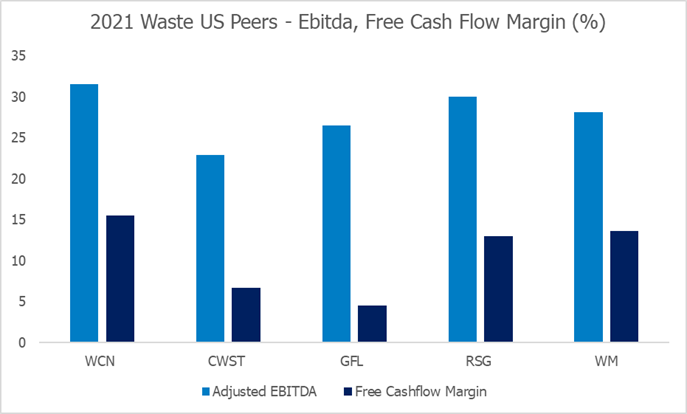
2 quality stocks for when the tide goes out Alphinity Investment Management 25 July 2022 Warren Buffett famously said that "only when the tide goes out do you discover who has been swimming naked." We have been hitting lower tides in recent months as the world of 'free money' comes to an end, which is exposing 'naked' companies and assets that have crashed. The low tide is however also highlighting great companies with strong management teams that are suited up to steer their customers - and investors - to safety during these difficult times. Great management teams can navigate challenging periods like the present and come out stronger on the other side. There are many examples of best-in-class management teams represented across our Global and Australian funds and several management teams that have specifically done a phenomenal job managing the increasing risks. Some Australian examples include Goodman Group, Super Retail Group, CBA, Medibank, and Orora Group. On the global side, we can commend the teams at McDonalds, PepsiCo, Diageo, and Waste Connections. Below we look at 2 lesser-known domestic and global management teams. 1. Waste Connections (WCN) - Pragmatic & differentiatedWaste Connections is the 3rd largest solid waste services company in North America. They provide non-hazardous waste collection, transfer, and disposal services to millions of customers across the US and Canada. WCN was founded by the current Chairman and this entrepreneurial culture runs deeply through the organization. WCN runs a decentralised structure where decisions and PNL responsibility is pushed out of HQ and down into the operating businesses around the country. You often see this type of management structure in Scandinavian capital goods companies, but we rarely see it in the US. If done well, it creates a dynamic and flexible business that can respond rapidly to a changing environment. With the challenges that the waste companies have faced over the past 6 months, this approach has been a meaningful advantage for Waste Connections. We see the outcomes of this decentralisation through their industry leading margins and cashflow generation. WCN has industry-leading profit margins
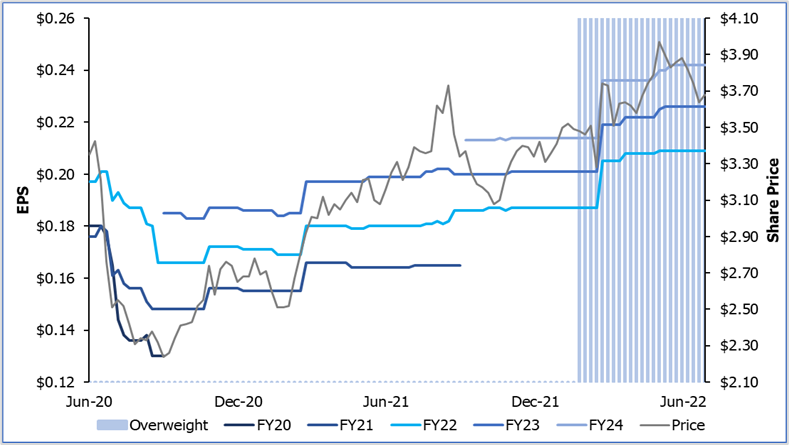
Source: Bloomberg Further, the company generally seeks to avoid highly competitive, large urban markets and instead management target markets where they can attain high market share either through exclusive contracts, vertical integration, or asset positioning. WCN defines their markets as either "competitive" or "exclusive/franchise" based. Competitive markets are markets where pricing is a function of supply & demand and WCN deliberately focus on the underserved markets, which are less competitive. This affords WCN very strong pricing power and market shares. The remaining 40% of revenues are generated from markets they serve on an exclusive/franchise model basis, where pricing for contracts is done on a CPI-like or returns based basis. Similar to its peers, WCN has faced numerous challenges of late, including input price pressures (fuel spikes), labour shortages/higher wages (with drivers and mechanics extremely sought-after) and truck shortages to name a few. Despite this, they are managing the business well and continuing to execute on their strategy. At their recent results management achieved very strong pricing outcomes, talked to building M&A momentum, and maintained their full year FCF guidance. Waste Connections is a stable, defensive grower with an enviable track record worth backing in our view. 2. Orora (ORA) - Optimise, enhance & investOrora (ORA) is an Australia-based company that provides packaging products and services. It manufactures glass bottles and beverage cans in Australia and manages a medium sized packaging distribution services in North America. From China wine tariffs to old legacy IT systems to higher input cost pressures, the ORA team has not had a shortage of challenges to deal with over the last few years. In response, they have addressed each of their challenges in a logical and systematic way and announced a clear growth strategy for the next few years. Over the last few years, ORA has done a complete SAP integration process in the US that after some significant implementation challenges are now resulting in improved operational efficiencies and management of input cost pressures. They have also implemented a mix shift towards higher product-to-package ratios (for example the recent contract with Tesla for car parts) and enhanced their digital capabilities through an e-commerce custom design platform and diversified their product portfolio. ORA -- A quality, defensive enjoying earnings upgrades
Source: Alphinity, Bloomberg, 28 June 2022 ORA has also been able to find low risk capacity expansion opportunities such as beverage cans in Australia. Following a thorough review of some poorly judged and executed acquisitions in the US by previous management the company believes they are now ready to look at new M &A opportunities. While not without risk we would back management given their conservative approach and successful management of the company since taking the reins. Finally, and importantly, ORA is pivoting investment towards more sustainable products and operations with a clear commitment and path to net zero greenhouse gas emissions by 2050. Despite the tough environment, ORA has recently reiterated their guidance for FY22 EBIT to be higher than FY21. In combination with a robust balance sheet, meaningful returns to shareholders (both dividends & buybacks) and attractive Return on Capital (25%), we view ORA as a high quality, defensive company in safe hands. Spending more time with managementWhen uncertainty increases and the environment becomes more challenging, we make a concerted effort to spend even more time with the management teams that are steering our investments, to understand their thinking and approach to ongoing and new challenges. We meet with various members of the management teams across seniority levels, responsibilities, and divisions. Our due diligence process also includes site visits and meetings with the company's suppliers, competitors, and clients. Through the ebb and flow of investment cycles, investors should continuously focus on identifying quality management teams that can perform well during high tides, but even better during low tides. Author: Elfreda Jonker, Client Portfolio Manager This information is for adviser & wholesale investors only |
|
Funds operated by this manager: Alphinity Australian Share Fund, Alphinity Concentrated Australian Share Fund, Alphinity Global Equity Fund, Alphinity Sustainable Share Fund Disclaimer |

5 Aug 2022 - Hedge Clippings |05 August 2022
|
|
|
|
Hedge Clippings | Friday, 05 August 2022 This week, to the surprise of no-one, the RBA increased interest rates by 50 bps to 1.85% in an effort to curb inflation and "to return it to the 2-3 per cent range over time, whilst keeping the economy on an even keel." The statement from the RBA's Governor, Philip Lowe was full of caution, and we'd suggest he's covering his bets when it comes to economic forecasting, and probably with good reason: Firstly, it's a pretty uncertain world, and secondly, his track record in the economic forecasting area hasn't been exactly spot on over the past couple of years. The RBA cited a variety of reasons for the widespread inflation, but omitted to mention "commercial opportunism to increase prices" which anecdotally also seems to be a contributing factor. Encouragingly (subject to his previous track record) the Governor expects inflation to peak later this year and then decline back to 2-3%, although he was careful not to put too tight a timetable on that, expecting 7.25% over 2022, falling to "a little over 4%" over 2023, and around 3% over 2004. That's mild given some forecasters are expecting UK inflation to top 15% within a year. The RBA is expecting a sharp slowdown in GDP growth from 3.25% this year, to just 1.75% over 2023 and 2024, as the effects of the rate hikes to date (plus those still in the pipeline) start to take effect. As above, given there have been calls from some economists for his resignation, Philip Lowe is covering his bets, stating the bank is "not on a pre-set path" and will be "guided by the incoming data". That's a little harsh, but it's probably a lesson in caution when predicting the economic future while the likes of Putin and Xi remain in power. Putin's foray into neighbouring Ukraine was probably unexpected. Xi's ambitions in the South China Sea seem much more clear cut and more a case of when, not if, China will move on Taiwan. Elsewhere this week, the ever ebullient and litigious Clive Palmer copped a paltry $20,000 payment to WA Premier Mark McGowan, who was ordered to pay Clive $5,000 in return in their joint defamation case. Given Palmer's reputation for having a thick skin and broad back, not to mention plenty of front, metaphorically as well as physically, he copped an equally paltry serve from Justice Lee, who "did not consider it safe to place any significant reliance upon Mr. Palmer's evidence". That would appear to indicate that he thought Clive was telling fibs, or dealing leniently with the truth, something most Australians worked out a long while ago. Most would be embarrassed to have been so described - Clive probably wears it as a badge of honour. Meanwhile, we wait to hear about costs, likely to dwarf the amount of damages, but probably not either of the litigants' egos. More importantly, and probably of more concern to Clive, was news that Environment Minister Tanya Plibersek has proposed the rejection of his Central Queensland Coal Project due to its likely damage to the Great Barrier Reef, which lies just 10 km away. Nothing is certain, as there are 10 days of further consultation and public comment. Uncharacteristically, Clive hasn't (to our knowledge) commented to date, but no doubt this will change in time based on his past history. One thing is certain however: If Tanya's rejection comes to fruition, it's going to cost Clive a motza, whatever the cost of his antics in WA's legal system, but unlikely to change his demeanour. News & Insights Australian Secure Capital Fund - Market Update | Australian Secure Capital Fund Holding your discipline | Airlie Funds Management |
|
|
July 2022 Performance News |
|
|
If you'd like to receive Hedge Clippings direct to your inbox each Friday
|

5 Aug 2022 - Fundmonitors.com Spotlight - 21/22 Financial Year Peer Group Analysis
|
Fundmonitors.com Spotlight 21/22 Financial Year Peer Group Analysis FundMonitors.com 03 August 2022 |
|
The Fundmonitors.com website includes information on over 700 actively managed investment funds, with each fund categorised into one of 15 Peer Groups based on their investment universe, strategy and process. This Spotlight article focuses on the relative, and average performance of the constituent funds within each Peer Group over 1, 5, and 10 years. Market Background: Over the five years to December 2021 markets in general, and equity markets in particular, were driven by falling or rock bottom interest rates, with only two relatively short pull-backs, the most notable being the COVID induced falls in the early part of 2020. Over 5 years the so called "risk on" assets and funds fared best, as indicated by the first chart below, although the correlation between them was relatively high. Equally obvious, particularly in hindsight, was the effect of central bank tightening in the face of inflation in late 2021, with Russia's invasion of Ukraine in February 2022 further increasing inflationary risks, and a new market "risk-off" environment. As shown by the 12 month chart below, when the S&P500 fell by 20.6% over the 6 months to June, most Peer Group averages were dragged lower. As a result, only two Peer Groups, namely Infrastructure and Debt funds, with average returns of 11.3% and 4.6% respectively, finished the financial year in positive territory. In this environment, even diversification towards these two medium to long term strategies only provided limited benefit to those (most) investors with a high allocation to equity based strategies. Peer Group average performance over the 12 months to 30 June 2022. In FY 20/21 the Global Equity Long - Small/Mid Cap Peer Group (the previous year's best performer) was down 23.8%, and down 25.9% over the last 6 months. All 14 funds in this peer group provided a negative return for the year, with the best performing fund falling -10.7%, and the worst losing -43.3%. Similarly, Australian Small and Mid Cap funds were hit hard, falling -16.5% for the Financial Year. This group includes 83 funds, so investors would expect some consistency given the size of the peer group. However, this was not the case, with the top performing fund providing a positive return of +21.2%, and the worst returning -46.5%. The peer group focused on Equity Alternatives, which includes long/short and market neutral funds, performed well indicating the benefits of being able to short stocks in a negative market environment. The exception to this was Asian Equity Alternative funds. Over the past 12 months the Alternatives Peer Group returned -1.4%, and was negatively affected by the inclusion of a number of Digital Asset or Crypto funds, making up the five worst performing funds in this peer group, providing an average return of -40.7% with the worst falling -52%). Without the influence of these crypto funds, the Alternatives Peer Group would have returned over 6% for the year. The six Managed Futures funds in the Alternatives group returned an average of 19.9% for the financial year, again showing the benefits to portfolios of diversification away from equities. While the year to June 2022 has been difficult for investors, especially those with high exposure to equities, it has to be seen in the context of some previously strong years. The heat map below shows the average performance of each Fundmonitors.com peer group over the past 10 years. Each line represents a financial year, and the colour on each line varies between the darkest green for the best performing peer group for that year and the darkest red for the worst performing. This table clearly shows the value of diversification across funds, peer groups and asset classes, and investing for the longer term. It is rare to find a fund or peer group that will perform well in all market conditions, and switching funds to invest in last year's best performer is a great way to achieve mediocre performance. |

5 Aug 2022 - Origin ramps up investment in cleaner energy sources
|
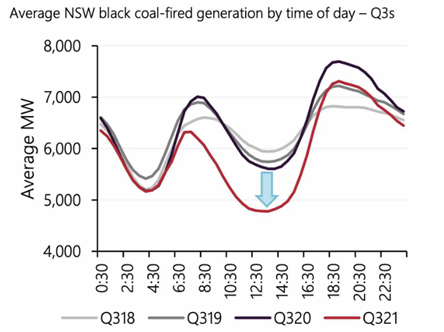
Origin ramps up investment in cleaner energy sources Tyndall Asset Management May 2022 Origin Energy recently announced the early closure of its Eraring Power Station. This will reduce Origin's carbon emissions, whilst allowing the company to focus on obtaining low or no emission sources to replace capacity. As an operator of a coal-fired electricity generator, Origin Energy is one of Australia's largest carbon emitters. While the company has long positioned itself to transition to clean electricity generation, the absence of policy direction from successive Federal Governments has seen this transition evolve more slowly than expected. As State Governments have taken the lead on energy policy, the transition is now progressing apace. Despite reducing its emissions by c16% over the FY20 and FY21, Origin remains a significant carbon emitter. Data from the Clean Energy Regulator's National Greenhouse and Energy Reporting indicates that Origin was the fourth largest carbon emitter in FY21 (on a combined scope one and two basis). Notably, the top three are other coal-fired generators. Of the company's c17mt CO2-e of scope 1&2 emissions in FY21, 86% of these emissions come from the Eraring Power Station. On February 15th, Origin Energy announced that it had informed the Australian Energy Market Operator of its intention to close Eraring in August 2025 - the earliest possible closure date given the required 3.5-year notice period. While the closure of a coal-fired generator has obvious significant environmental benefits, there are social impacts to consider. Accelerated renewable capacity undermines the economics of baseload generators. The company explained that the reason for the accelerated closure was in part attributable to the economic impact of growing renewable penetration in the National Electricity Market (NEM). Renewable generation, particularly solar, is most productive in the middle of the day. Growing volumes of generation from renewable sources have seen demand for grid electricity decline in the middle of the day. Electricity prices at these times fall to low or even negative levels. Further, the NSW Government's Electricity Infrastructure Roadmap will drive an acceleration in the supply of renewable energy that will likely drive average prices lower still.
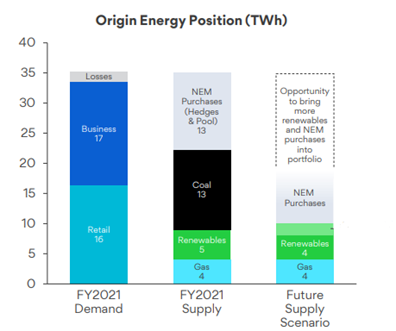
Source: AEMO, Renew Economy Increasing renewable volumes are reducing demand for coal-fired generation in the middle of the day. The low or negative prices in the middle of the day result in financial losses for baseload generators like Eraring. Baseload generators rely on higher prices during the peak and shoulder periods of the day to recoup losses and generate an adequate return. Unfortunately, the introduction of capacity from Snowy 2.0 in the latter part of this decade may also pressure these peak and shoulder prices, further undermining the financial sustainability of baseload generators. A significant reduction in Origin's emissions profile will result over time When Eraring is closed, the company's scope 1 emissions will fall by an estimated 95%. How far the combined scope 1&2 emissions fall remains to be seen and will be dependent upon the sources of energy Origin accesses to replace the Eraring volumes. The company has highlighted several potential sources of capacity that will compensate for the loss of Eraring and a number of these are low or no emission sources. These include a proposed 700MW battery at Eraring, the additional renewable assets being added to the NEM, the potential expansion of the Shoalhaven pumped hydro project, and Snowy Hydro capacity. Additionally, the ambition to orchestrate 2GW through a virtual power plant provides further flexibility in the form of additional firming and demand management.
Source: Origin Energy Ultimately, while purchases of coal-fired generation from the pool will remain a feature for some time, Tyndall expects Origin will deliver ongoing reductions in emissions intensity following the closure of Eraring. Importantly, over time we expect that this improving environmental footprint and leadership in the transition to clean energy will be reflected in Origin's share price with a progressive re-rating of the stock. Social impacts front of mind for Origin While the early closure of Eraring provides significant environmental benefits, this development will also have a material social impact on Origin's workforce and the local community. The labour force directly impacted includes 240 Origin employees as well as several independent contractors that work at Eraring from time to time. On average, there are c200 contractors on-site on any given day. The workforce includes administration workers, multi-skilled engineers, boilermakers, and electricians. We would note that many of these skills have application outside of the generation industry. Origin is highly cognisant of the implications for these workers and their families and recognises the role Origin must play in ensuring a just and equitable transition for them. Importantly, Origin intends to support its workers with reskilling and career support. The broad principles to apply here are individualised consideration of needs and preferences, in full awareness that different workers will have different priorities. The company will seek to transfer personnel within Origin where possible. Where this is not possible, Origin will assist in identifying external opportunities. Recognising the heightened impact the closure may have on apprentices, their needs will be prioritised. The company has also stated that it will continue its existing community support programs such as local sponsorships and the relocation of the Myuna Bay Sport and Recreation Centre. Further, Origin has committed to invest $5m in local community support over the decade to 2032. Our discussions with the company around these issues reinforce our belief that Origin operates with a high level of integrity. The company is acutely aware of the role it needs to play in ensuring that the energy transition is an equitable one for all the various stakeholders, including those employees that will be significantly impacted. Environmentally compelling, socially aware In conclusion, the early closure of the Eraring Power Station is a net positive for Origin shareholders in our view. We expect the market to reward the declining carbon emissions intensity over time. While the impact on the community and workforce is unfortunate, we note that Origin's intended efforts to retrain and repurpose its staff highlights the integrity with which the company behaves and the importance it attaches to its social licence to operate. Author: Tim Johnston, Deputy Head of Equities Funds operated by this manager: Tyndall Australian Share Concentrated Fund, Tyndall Australian Share Income Fund, Tyndall Australian Share Wholesale Fund Important information: This material was prepared and is issued by Yarra Capital Management Limited (formerly Nikko AM Limited) ABN 99 003 376 252 AFSL No: 237563 (YCML). The information contained in this material is of a general nature only and does not constitute personal advice, nor does it constitute an offer of any financial product. It does not take into account the objectives, financial situation or needs of any individual. For this reason, you should, before acting on this material, consider the appropriateness of the material, having regard to your objectives, financial situation, and needs. The information in this material has been prepared from what is considered to be reliable information, but the accuracy and integrity of the information is not guaranteed. Figures, charts, opinions and other data, including statistics, in this material are current as at the date of publication, unless stated otherwise. The graphs and figures contained in this material include either past or backdated data, and make no promise of future investment returns. Past performance is not an indicator of future performance. Any economic or market forecasts are not guaranteed. Any references to particular securities or sectors are for illustrative purposes only and are as at the date of publication of this material. This is not a recommendation in relation to any named securities or sectors and no warranty or guarantee is provided. |