NEWS

13 Mar 2025 - The state of the energy transition: Where are we now?
|
The state of the energy transition: Where are we now? Janus Henderson Investors February 2025 While the politics of climate are changing, the prevailing trends continue to reveal significant investment opportunities in the energy transition, as outlined by Tal Lomnitzer.
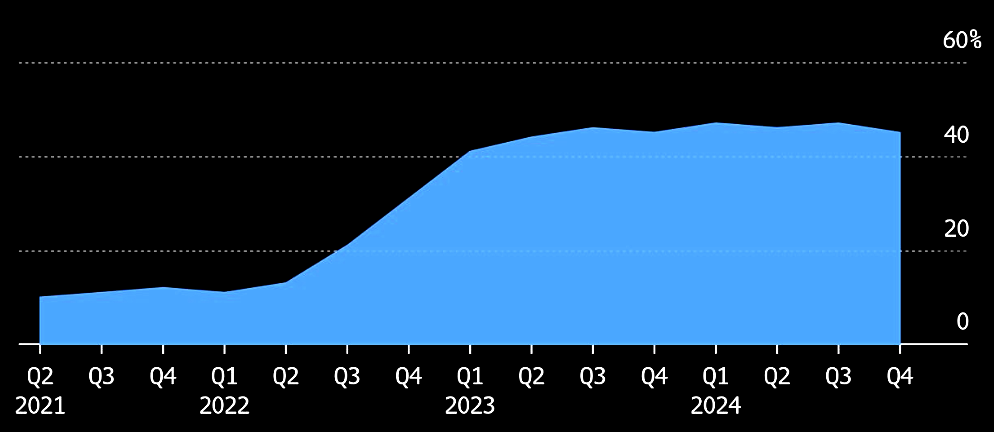
The victory of Donald Trump in the US presidential election, coupled with a lacklustre COP29 climate conference in Baku, has prompted concerns about the state of the energy transition, with some fearing progress may slow or even reverse. Such concerns are underscored by the 2024 average global temperature reaching 1.8°C above pre-industrial levels in 2024 - marking it as the first year to surpass the 1.5°C target limit. Despite rising global temperatures and the Trump administration withdrawing the US from the Paris Agreement for the second time, we still see opportunity for investors to profit from the prevailing trends underlying the energy transition. Rising corporate commitment to net zeroExhibit 1 offers a snapshot of how net zero commitments have grown over the past five years. What stands out is the notable surge in Forbes Global 2000 corporations committing to net zero over the past few years. This is significant, since these 2000 companies are responsible for approximately 20% of global embodied emissions, considering both their operations (scope 1 and 2) and supply chains (scope 3) emissions. Exhibit 1: Commitments to net zero have grown since 2020
Source: Net Zero Tracker, as at September 2024. While the nature of these companies' net zero commitments varies widely, with some aiming for carbon neutrality, some for zero emissions, and others focusing on Scope 1 (direct) and 2 (indirect) emissions but not Scope 3 (value chain), the overall trend is one of growth, both in the number of commitments and the entities making them. Further, there has been a significant rise in targets enshrined in national policy in the past few years, with 88% of global emissions, 89% of the global population and 90% of global GDP covered by some form of national commitment or net zero target. The 'glass half full' perspective is a significantly higher level of ambition, but with the average global temperature in 2024 already 1.8°C above pre-industrial levels, the need for countries to address greenhouse gas (GHG) emissions faster and deeper is mounting. As it stands the race against time to net zero is arguably being lost if we want to keep below 2°C, and many entities still lack emissions reduction targets. The triple challengeWhen we examine the state of the energy transition from both a pragmatic and investment perspective, the three axes of the 'triple challenge' need to be considered. This encompasses the challenge of enhancing competitiveness by providing cheap energy, improving the energy balance by providing more energy, and simultaneously addressing the GHG emissions present in our atmosphere. A useful analysis from Thunder Said Energy (Exhibit 2) of various energy technologies and themes within the context of decarbonisation, ranks them by how much they address the triple challenge, with those on the left side improving competitiveness and those on the right side reducing competitiveness based on current economics. Exhibit 2: Triple challenge framework
Source: Thunder Said Energy. The public statements from the Trump administration regarding renewable energy in our eyes seem less about being against decarbonisation per se and more about being pro-competitiveness. In this context, competitiveness equates to affordable energy, whereas anti-competitiveness is synonymous with expensive energy. Therefore, our investment focus favours companies that offer inexpensive energy solutions and contribute to lowering carbon emissions, such as the value chain of gas, including LNG, gas storage, and transport, along with AI, digitisation, and nuclear energy. Nuclear energy, in particular, is seen as a significant advantage for those seeking base load power with a minimal carbon footprint and self-sufficiency, especially considering that the US and Canada have abundant uranium resources or the potential for it, thus reducing dependence on potentially unfriendly suppliers such as Russia. Our investments are also directed towards grid investment, solar, energy efficiency, reforestation and other areas where we see strong returns and growth prospects that address the challenges of the energy transition. Conversely, we are currently avoiding sectors that, while potentially reducing carbon emissions, could impede competitiveness. These include green hydrogen, carbon capture storage, offshore wind, and blue hydrogen. These areas represent the more costly segments of the energy market, which we are deliberately choosing not to focus on, pivoting instead towards investments that align with improving competitiveness whilst also delivering more sustainable energy solutions. The economic case for solar energyWe were surprised to discover that during the first Trump presidency, the US experienced its fastest pace of solar installation, with Texas, an oil and gas stronghold, surpassing California in solar installations. This surge is attributed to the declining costs of solar photovoltaic (PV) systems with storage, making solar energy increasingly competitive against natural gas in the US, and even cheaper than coal-fired power in India and China on a levelised cost of energy (LCOE) basis. The reason for this cost reduction is twofold: the virtually inexhaustible nature of solar energy and the semiconductor technology it employs, which has historically seen efficiency gains and cost reductions over time. Currently, solar panels have achieved 25% efficiency in converting sunlight to electricity, a significant improvement from 5% two decades ago, with the potential to reach 50% efficiency. This improvement, alongside increased production volume, has driven down costs to approximately four to five cents per kilowatt-hour, with projections suggesting a future decrease to between one and two cents. As a result, solar energy has become the lowest-cost form of generating electrons globally. In Europe, solar production capacity is expected to triple between 2020 and 2024, outpacing both onshore and offshore wind, due to superior economics. Similarly, cost reductions are observed globally, driven by technological advancements and increased efficiency, not solely by low-cost Chinese production. The imposition of tariffs on imported solar panels could significantly benefit US solar companies that produce panels domestically by increasing their profitability due to higher margins. We anticipate further production expansion in the US as a result of these tariffs and view any additional tariffs as a highly positive development for domestic solar panel producers. Similarly domestic producers of key materials such as steel stand to benefit in a world of higher tariffs. Energy storage costs continue to fallAs utility scale solar installations increase the intermittent nature of the electricity causes power price volatility which necessitates effective energy storage solutions. The economic case for energy storage which enables energy price arbitrage becomes increasingly compelling as price volatility rises, while the costs associated with developing and deploying these technologies have significantly declined. For instance, the price of lithium-ion battery packs has plummeted from US$1,436 per kWh in 2010 to US$144 in 2023, marking a 90% decrease over approximately 13 years (Exhibit 3). Exhibit 3: Lithium-ion battery pack prices
Source: Bloomberg New Energy Finance (BNEF), as at 10 December 2024. Past performance does not predict future returns. Despite a seeming plateau in battery prices on the chart, prices continued to fall by 20% last year, with expectations for ongoing reductions. This cost reduction has catalysed a surge in battery storage installations. In 2023 alone, 60 gigawatts of energy storage were installed, enough to power 60 million homes representing a 120% increase year-on-year. Projections for 2024 estimate over 100 gigawatts of installations, with future expectations reaching up to 1 terawatt annually by 2030 and three terawatt-hours annually by 2050. By then, solar power with associated storage could contribute 43,000 terawatt-hours to the grid, driven primarily by economic feasibility rather than regulatory enforcement. Notably, in 2023, China led the world in energy storage installations, accounting for almost 50% of global capacity, with the US and the rest of the world trailing significantly. This highlights China's leadership in energy storage and underscores the need for other countries to accelerate their efforts in this domain. However, even this fast pace of energy storage deployment is arguably insufficient. To maintain alignment with the 1.5°C target, approximately 1,300 gigawatts of battery storage will be needed by 2030 according to the IEA, a goal that current estimates suggest we are unlikely to meet. Present trajectories indicate a potential global temperature increase of 2-3°C. Trump does not necessarily put a spanner in the worksWe believe that it is highly unlikely that businesses will abandon their decarbonisation efforts, as these initiatives extend beyond any single presidential term. The trend of directly sourcing clean energy is established and enduring, propelled by the economic benefits of large-scale wind and solar projects and the rising costs of grid-supplied electricity, with an added push from investments into Artificial Intelligence. Despite news of the US once again exiting the Paris Agreement and reducing subsidies, the momentum towards electrification, digitalisation, and decarbonisation is likely to continue in areas that support growth and competitiveness. As Exhibit 4 shows, clean energy capacity has grown and annual carbon emissions have fallen under both Democrat and Republican administrations in the US. Exhibit 4: US clean energy capacity vs. annual CO2 emissions
Source: ARNnet; IEA; World Economic Forum; Dean H. Barrett and Aderemi Haruna, Molecular Sciences Institute, School of Chemistry, University of the Witwatersrand; US Department of Energy; Jefferies Research, as at 30 November 2024. An increasing role for nuclear powerWe firmly believe in nuclear energy as a technology capable of providing low carbon base load power. Our current exposure to nuclear energy via uranium producers exceeds that of solar, although we plan to increase our investments in solar. However, timing is crucial, especially considering the potential negative headlines associated with solar under certain political climates. Interestingly, major corporations like Microsoft have engaged in substantial agreements with nuclear energy providers, such as the deal with Constellation Energy to restart Three Mile Island, at prices significantly higher than those of solar energy. This indicates a willingness among the world's wealthiest corporations to invest in reliable low carbon energy sources. Bottlenecks for growthFrom an investment perspective, we focus on identifying bottlenecks in energy supply chains, as these areas tend to offer excess economic returns, leading to high returns on investment and positive share price performance. One such bottleneck is the increased demand for critical metals required by nuclear and solar technologies, as well as electric vehicles, compared to traditional energy sources like coal and natural gas. This demand encompasses a variety of metals essential for the transition to green energy, including rare earth metals, zinc, graphite, nickel, lithium, and copper (Exhibit 5). Exhibit 5: Critical Minerals used in selected clean energy technologies
Source: IEA Critical Miners Report, as at December 2023. The Role of Critical Minerals in Clean Energy Transitions, IEA, Paris https://www.iea.org/reports/the-role-of-critical-minerals-in-clean-energy-transitions, License: CC BY 4.0 Further, several factors contribute to the rising demand for these metals, including the shift towards de-globalisation (onshoring) and localisation of supply chains, changes in consumer behavior, increased military spending, and the expansion of data center capacity, which alone requires significant amounts of copper. However, the mining industry is likely to face challenges in meeting this demand, unless real investment increases significantly. This suggests a need for higher commodity prices to incentivise increased production. Historical data on commodity price cycles indicate potential for significant growth in the coming decades, offering an attractive investment opportunity in the resources sector. This sector not only provides diversification and inflation protection but also trades at a valuation below the historic average compared to the broader market. Navigating the complexities of the energy transitionOur responsible resources strategy focuses on the critical enablers of the energy transition, but we also have a climate transition strategy that takes a diversified approach to capitalising on these growth dynamics, focusing on green solutions, enablers of these solutions, and improvers who apply these solutions to enhance their operations. By investing in this manner, we aim to generate returns for our investors alongside a positive impact for the planet. The journey toward net zero presents a dynamic and evolving landscape filled with opportunities for investors to contribute to a sustainable future while seeking profitable returns. By understanding the complexities of the energy transition and strategically navigating its risks and opportunities, we believe that investors can position themselves to benefit from the shift toward a cleaner, more sustainable global economy and generate good returns. |
|
Funds operated by this manager: Janus Henderson Australian Fixed Interest Fund, Janus Henderson Australian Fixed Interest Fund - Institutional, Janus Henderson Cash Fund - Institutional, Janus Henderson Conservative Fixed Interest Fund, Janus Henderson Conservative Fixed Interest Fund - Institutional, Janus Henderson Diversified Credit Fund, Janus Henderson Global Equity Income Fund, Janus Henderson Global Multi-Strategy Fund, Janus Henderson Global Natural Resources Fund, Janus Henderson Tactical Income Fund All opinions and estimates in this information are subject to change without notice and are the views of the author at the time of publication. Janus Henderson is not under any obligation to update this information to the extent that it is or becomes out of date or incorrect. The information herein shall not in any way constitute advice or an invitation to invest. It is solely for information purposes and subject to change without notice. This information does not purport to be a comprehensive statement or description of any markets or securities referred to within. Any references to individual securities do not constitute a securities recommendation. Past performance is not indicative of future performance. The value of an investment and the income from it can fall as well as rise and you may not get back the amount originally invested. Whilst Janus Henderson believe that the information is correct at the date of publication, no warranty or representation is given to this effect and no responsibility can be accepted by Janus Henderson to any end users for any action taken on the basis of this information. |

12 Mar 2025 - Fun and games in macro markets
|
Fun and games in macro markets abrdn February 2025 If you were to judge the year so far by absolute yield moves, 2025 would seem quite a sedate affair. In bond markets, we're roughly where we started in terms of yields. However, scratch beneath the surface and you'll find a whole lot of headline-driven volatility. As expected, the Bank of England (BoE) and European Central Bank (ECB) cut base rates this year, while the US Federal Reserve (Fed) stayed on hold. No prizes for getting that right. But congratulations if you also had a 12-hour UK gilt mini-crisis and then an A.I.-led risk-off rally on your 2025 bingo card. One man has been playing all the cards: US President Donald Trump. He's back to what he does best - driving the narrative. In a blizzard of executive orders, policy hints, and off-the-cuff comments, Trump has covered an array of topics in just a few weeks. The two subjects that have markets most captivated? Tariffs and Ukraine. Tariffs started off slow with Colombia in the firing line, before Mexico and Canada came hurtling into view. After giving the US's closest trading partners a one-month stay of execution, Trump moved onto a sector-specific approach targeting aluminium and steel. We've since moved onto 'reciprocal tariffs' but will have to wait until April to learn the rules of that particular Trump tariff game. What is clear is that Trump hasn't changed from his first term. He likes to play games with his rivals. However, what's less clear is how Trump solves his own US economic puzzle. It won't be easy. US - Rubik's CubeTrump's economic strategy is a lot like a Rubik's Cube. The goal of the Hungarian 3D puzzle is to align all the blocks so that each side shows the same colour. The tricky part is that each layer turns independently, so focusing on one side can throw the others out of whack. Trump's goal is to 'Make America Great Again' and oversee a thriving US economy as he heads into the 2026 mid-term elections. To achieve this, inflation needs to be under control. This was the key problem for President Biden, who saw US growth and job creation accelerate but prices outpace wages. Inflation peaked at 9.1% in the summer of 2022. Trump has two years to make the average American feel richer. Back to the Rubik's Cube. To prioritise American jobs for American people, Trump is applying tariffs and slashing immigration. That's one side of his policy cube looking complete. However, these polices, combined with mooted tax cuts, are potentially inflationary - pushing the other side of the cube out of line. Price pressures are not like they were during Trump's first term. The most recent Consumer Price Index read 3% year on year, and consumers still feel the pinch of much higher price levels. It wouldn't take much for inflation to move back into uncomfortable territory. The prospect of rate hikes would move yet another side of the Trump Rubik's Cube in the wrong direction. Keeping inflation in check is possible. Trump wants to pursue lower energy prices and, with Elon Musk's help, drastically cut government spending. But again, how will aggressive government spending cuts affect the growth side of the cube? We'll watch the data with interest. On the tariff front, we should hear what 'reciprocal tariffs' look like at the start of April. On tax cuts, we await more details and substance. Research shows that any Rubik's Cube can be solved in 20 moves. We think it will take a lot more than this to complete Trump's economic puzzle. US yields have the potential to head higher as a result. UK - dodging snakes and climbing laddersThe UK faces a game of snakes and ladders. The ultimate prize is lower interest rates. The BoE cut rates in February with the message of 'gradual and careful'. Inflation is likely to move higher in 2025, but the BoE seems comfortable with its long-term forecasts. The Bank believes any near-term rise in inflation will be temporary and that it can continue to cut base rates. The BoE's first possible ladder up the board is the continued loosening of the labour market. Most indicators show the jobs markets rapidly cooling. This will embolden the BoE to speed up rate cuts when this feeds through to the official wage data. A smaller ladder comes in March: we might see more aggressive government spending cuts if the Office of Budget Responsibility review shows Chancellor Reeves is close to breaking her own fiscal rules. Reduced government outlays would likely to inhibit growth and increase the probability of cuts. The largest, fiercest snake is inflation. Increases to the national living wage and national insurance contributions kick in from April. There's a risk many firms will pass these costs onto consumers. The BoE expects only a modest price increase as a result, yet there's still scope for an inflationary surprise. The way these policy changes feed through to the real world will determine how quickly the BoE can get to the top of the snakes and ladders board. Our view for some time has been that the BoE gets there quicker than the market expects. We think labour market weakening will outweigh the risk of inflation. We are, as a result, happy to remain long gilts. Europe - GAAAAAMBLE?!Europe, and Germany in particular, face a classic gameshow dilemma: stick with what they've won or gamble for the star prize and risk walking away with nothing? Cue the slick gameshow host turning to the crowd for advice. In Europe, the answer is gaaaamble. Former ECB Chairman Mario Draghi's recent report argued for further European investment. French President Macron said that Europe cannot remain herbivores (see our last article Fixed income: Eat meat or die...). As we write, the new Trump administration is making it abundantly clear that Europe needs to step up, particularly in defence spending. The German election might offer the opportunity for one of Europe's core economies to reset its relationship with borrowing. This would have far reaching implications for the Eurozone's future direction. From an investment perspective, we think it's inevitable that Europe will start spending, despite the previous efforts at fiscal restraint. Leading figures in the European establishment have even called for some relaxation of fiscal rules via exceptions for defence spending. This will be uncomfortable for the likes of Italy and France with their high debt-to-GDP ratios. For Germany, this could mean a new government revisiting the 'debt brake'. The ECB might prefer that Europe plays it safe. With an unclear outlook and a challenging balance between growth and inflation, the ECB is noticeably hesitant. It may well signal a slowing of rate cuts. For these reasons, we think European yields can head higher, with a bias for the yield curve to steepen. Playing the game in today's marketsMarkets are so far brushing off the policy noise. We'll need details before yields start to move in either direction on a sustained basis. For now, we expect key participants to continue playing without fully revealing their hand. In this environment, investors can see the value in actively managed funds. Making the most of short-term mispricing and careful position management offers plenty of opportunities for the nimble active investment manager. Like all games: you have to be in it to potentially win it. |
|
Funds operated by this manager: abrdn Sustainable Asian Opportunities Fund, abrdn Emerging Opportunities Fund, abrdn Global Corporate Bond Fund (Class A), abrdn International Equity Fund, abrdn Multi-Asset Income Fund, abrdn Multi-Asset Real Return Fund, abrdn Sustainable International Equities Fund |

11 Mar 2025 - DeepSeek R-1: A Game-Changer?
|
DeepSeek R-1: A Game-Changer? Insync Fund Managers February 2025 Relatively unknown Chinese Quant Fund Manager - High Flyer Capital Management's chatbot, DeepSeek, has shaken the AI industry with its new reasoning model, R-1. This open-source breakthrough delivers ChatGPT-level performance at a purported 90% lower cost, using far fewer and less powerful GPUs. The Impact: A fundamental shift in AI economics--lowering costs, reducing hardware dependency, and making AI more accessible to new entrants. Investors took note, with at one stage $1.2 trillion wiped off U.S. markets, led by Nvidia's sharp decline. Why This Matters: Historically, AI has been dominated by capital-intensive models requiring massive computational power. DeepSeek's efficiency-driven approach challenges this, showing that AI can be developed at a lower cost and lower energy consumption. This opens the market to smaller players, accelerates innovation, and could curb the dominance of AI giants like OpenAI, Google, and Meta. Three large investment implications arise; Big Tech's AI Moat Narrows. Open-source models threaten pricing power and market dominance. AI Costs Plummet & Adoption Accelerates. Expect new applications and broader AI integration. Capex Strategy Shift. Firms like Meta and Microsoft will likely double down on efficiency, and may scale back on AI investments. Funds operated by this manager: Insync Global Capital Aware Fund, Insync Global Quality Equity Fund Disclaimer |

10 Mar 2025 - Investing in Technology
|
Investing in Technology Magellan Asset Management February 2025 |
|
The technology sector is home to many dominant and well-known companies such as Apple, Google (Alphabet), Microsoft, ASML, Nvidia, Tesla, Meta, and SAP. Renowned for its innovation, this sector continually develops new products and services, driving digitalisation and enhancing productivity for consumers, companies and industries. Today, technology is indispensable not only to our daily lives but also to the operation of nearly every other industry, such as healthcare, transportation and finance. As the global population grows, digitalisation increases and artificial intelligence use cases proliferate, the demand for technology products and services is anticipated to continue rising. Why invest in technology?Investing in technology companies can offer significant growth potential due to the sector's constant innovation and development. Tech companies are at the forefront of creating new products and services that transform industries and improve everyday life. This continuous innovation can drive substantial revenue growth but comes with higher risk given the outsized opportunity. Finding quality technology companies requires thorough research to understand the financial fundamentals, competitive landscape and overall business strength. Technology - Continuous innovationThe technology sector covers a wide range of companies and industries, including software, hardware, semiconductors and platforms. Identifying and understanding the unique attributes of each company, such as their innovation capabilities and market position are critical when determining whether the company can generate sustainable and attractive returns over the long term. This is key to making informed decisions and capitalising on the dynamic growth opportunities within the higher-risk technology industry. Not all companies and industries in this sector meet the requirements to be included in Magellan's quality investment universe. Extensive research is undertaken to identify the unique attributes of a company that we believe enable it to generate sustainable attractive returns over the longer-term. Some of these industries in the Magellan universe include: Consumer platforms
With the emergence of artificial intelligence, machine learning, and cloud computing, consumer platform companies are leveraging new technology to enhance their offerings and user experiences. These innovations can create new market opportunities and revenue streams. Importantly, innovative incumbent platforms have a data advantage, whereby they can improve functionality and personalisation, increasing switching costs and barriers for new entrants. Netflix, the leader in subscription-based streaming, exemplifies a high-quality consumer platform company. The platform offers a wide variety of content, including TV series, movies, documentaries and live sports. As the largest global streaming service, Netflix has a scale advantage, providing content to millions of paid subscribers in over 190 countries. Software
These companies often benefit from high client retention and recurring revenue models, such as software subscriptions and enterprise licensing agreements. The swift pace of innovation, increased data analytics and the growing use of digital solutions in business operations drive continuous demand for new and improved software products. This ongoing demand is a key driver of innovation, pushing companies to develop cutting-edge solutions that enhance business efficiency and productivity. Artificial intelligence and cloud computing have empowered software companies to enhance their offerings, providing more sophisticated and scalable solutions. This enables companies to deliver advanced analytics, automation and personalised user experiences. SAP is a leading global provider of enterprise application software designed to streamline business processes. With over 400,000 customers in more than 180 countries, SAP has established a robust network of partners, developers and clients. The deep integration of SAP systems into company operations makes switching both time-consuming and costly, giving SAP a significant competitive advantage. Semiconductors
Semiconductors drive innovation across multiple industries by enabling the creation of faster, smaller and more efficient electronic devices. Semiconductors are fundamental to the development of emerging technologies such as artificial intelligence. Investing in semiconductors offers significant growth potential, as the demand for advanced electronic components continues to rise with the increasing digitalisation of our world. ASML is a Dutch multinational corporation founded in 1984. It specialises in the development and manufacturing of photolithography machines used to produce semiconductors. ASML has a global customer base and is the sole supplier of extreme ultraviolet lithography machines, which are crucial for producing the most advanced microchips. This unique position provides ASML with a significant competitive advantage. What are the risks?When investing in the technology sector, understanding a company's competitive environment, innovation pipeline and management's strategic vision is important and can in turn help navigate any risks identified. Forecastability: There is often a wider range of outcomes for these businesses given the higher-growth and higher-risk operating environments. As a result, they are more prone to price fluctuations. Regulatory challenges: Data privacy, cybersecurity and antitrust issues are some of the evolving regulations to which this sector is exposed. These companies need to ensure compliance; failure to do so can result in financial and reputational impacts. Technology: With the rapid evolution in technology, there are risks to incumbents that do not continue to innovate and strengthen their products and services. M&A risks: Technology companies are typically highly acquisitive, buying technology or capabilities to retain leading edge. Large M&As present risks to shareholders from capital allocation and integration perspectives. Market volatility: These companies are not immune to market volatility and can experience price fluctuations due to changes in market sentiment, technology advancements and market competition.
How do technology companies fit into a portfolio?The technology sector can play a pivotal role in a diversified investment portfolio due to its potential for high growth. Given the rapid advancement in technology and industry investment, it is critical to actively monitor companies for risks and opportunities.
There are thousands of companies listed on world exchanges. However, at Magellan we regard our eligible universe of potential investments to be only about 200 companies. These are the companies we believe to be of sufficient quality to consider for investment, companies in which we have a high degree of certainty in their ability to protect and grow earnings Sources: Company filings. |
|
Funds operated by this manager: Magellan Global Fund (Hedged), Magellan Core Infrastructure Fund, Magellan Global Fund (Open Class Units) ASX:MGOC, Magellan High Conviction Fund, Magellan Infrastructure Fund, Magellan Infrastructure Fund (Unhedged) Important Information: Important Information: This material has been delivered to you by Magellan Asset Management Limited ABN 31 120 593 946 AFS Licence No. 304 301 ('Magellan') and has been prepared for general information purposes only and must not be construed as investment advice or as an investment recommendation. This material does not take into account your investment objectives, financial situation or particular needs. This material does not constitute an offer or inducement to engage in an investment activity nor does it form part of any offer documentation, offer or invitation to purchase, sell or subscribe for interests in any type of investment product or service. You should obtain and consider the relevant Product Disclosure Statement ('PDS') and Target Market Determination ('TMD') and consider obtaining professional investment advice tailored to your specific circumstances before making a decision about whether to acquire, or continue to hold, the relevant financial product. A copy of the relevant PDS and TMD relating to a Magellan financial product may be obtained by calling +61 2 9235 4888 or by visiting www.magellangroup.com.au. Past performance is not necessarily indicative of future results and no person guarantees the future performance of any financial product or service, the amount or timing of any return from it, that asset allocations will be met, that it will be able to implement its investment strategy or that its investment objectives will be achieved. This material may contain 'forward-looking statements'. Actual events or results or the actual performance of a Magellan financial product or service may differ materially from those reflected or contemplated in such forward-looking statements. This material may include data, research and other information from third party sources. Magellan makes no guarantee that such information is accurate, complete or timely and does not provide any warranties regarding results obtained from its use. This information is subject to change at any time and no person has any responsibility to update any of the information provided in this material. Statements contained in this material that are not historical facts are based on current expectations, estimates, projections, opinions and beliefs of Magellan. Such statements involve known and unknown risks, uncertainties and other factors, and undue reliance should not be placed thereon. No representation or warranty is made with respect to the accuracy or completeness of any of the information contained in this material. Magellan will not be responsible or liable for any losses arising from your use or reliance upon any part of the information contained in this material. Any third party trademarks contained herein are the property of their respective owners and Magellan claims no ownership in, nor any affiliation with, such trademarks. Any third party trademarks that appear in this material are used for information purposes and only to identify the company names or brands of their respective owners. No affiliation, sponsorship or endorsement should be inferred from the use of these trademarks. This material and the information contained within it may not be reproduced, or disclosed, in whole or in part, without the prior written consent of Magellan. |

7 Mar 2025 - Manager Insights | East Coast Capital Management
|
Chris Gosselin, CEO of FundMonitors.com, speaks with Richard Brennan, Strategy Ambassador at East Coast Capital Management. East Coast Capital Management's trend-following futures strategy has delivered strong risk-adjusted returns by dynamically adapting to market trends across currencies, commodities, and futures. In this discussion, they explore recent market volatility, key investment trends, and the role of trend-following in portfolio diversification. The ECCM Systematic Trend Fund has a track record of 5 years and 1 month and has outperformed the SG Trend benchmark since inception in January 2020, providing investors with an annualised return of 16.49% compared with the benchmark's return of 7.64% over the same period.
|

6 Mar 2025 - 5 Essential Rules for Market Corrections
|
5 Essential Rules for Market Corrections Marcus Today February 2025 |
Sharp Corrections and Market RecoveriesSome of the best moments in the market are the runaway rallies before a correction. If you don't participate in those exuberant periods, you'll never capture the market's full returns. In other words, don't let fear hold you back. Play the game when it is "on". Laugh all the way to the top. Let the finger-waggers wag, they always do when people make a fortune with little effort. Corrections are inevitable and regular. Expect a big one every ten years (50%), and a tradeable one every three years (10-20%). And regular 5% corrections. When to Hold, When to SellYou have to be decisive. The stock market is not about certainty ahead of time. You never get that. Work on the balance of probability. If the market has gone up a lot and suddenly drops, the balance of probability suggests that that's a top. So sell. Yes, it may be wrong, but if the market is up a lot, there are more profits to be taken, and your only risk is not making money and not being a fund manager; underperformance is irrelevant. Play the odds. Sell when it could/should/might be a top. On the other hand, recoveries take much longer. In every major sell-off, it takes far longer to recover than it does to crash. After the pandemic, the market took 14 months to recover from a 23-day drop. That means you have plenty of time to buy into the recovery - there's no rush to catch the exact bottom. The market never crashes "up". So never bother catching the knife. I roll my eyes at people buying anything that's dropped a lot whilst it is dropping. Sell quickly, but buy at your leisure. The Myth of Defensive Stocks in a Sell-OffDon't bother buying into defensive stocks when a correction starts. Defensive stocks (TLS, WOW, COL, CSL, COH, ORG) will likely underperform in a bull market and, while they hold up better in a downturn, they still fall. You just lose money more slowly. So don't buy them. Don't read the articles saying "Switch into defensive stocks". Any talk about defensive stocks is aimed at fund managers, not you. You do not need to outperform. Cash is your only defence in a falling market. Not defensive stocks. Defensive stocks will not serve you unless you are an income-focused investor in a bull market. Leave defensive stocks to the fund managers who concern themselves with their own relative, not actual, performance. For an individual investor, there is almost no point at which you would want to buy a "defensive" stock. They make less money in a rising market and there is no point holding the stock that loses you less money in a correction. Why Holding Cash Is More Powerful Than You ThinkNo one in the finance industry will tell you to sell. Fund managers, financial planners, and brokers - they want you in their fund, in their product, in their system, not trading, speculating, or being active. If you want to move to cash, expect resistance. If you want to sell, you will need to be assertive. When my Mother-in-Law rang her financial adviser in January 2008 to say "Sell'" (the seven dull managed funds he had her in), he gave her every line in the book about it being time in the market. The market then fell 44%. Get it? If you want to sell, be assertive. And remember, there's nothing wrong with holding cash. Cash is always king. There is nothing wrong with cash, ever. Even if you get the timing terribly wrong, all you miss is "not making money". You can wear that. Plus cash gives you time to think. Being in cash is riskless. You have all the power. You can buy back tomorrow. Do not be fearful of going to cash. It's no biggie. It's actually very cathartic, especially when things get wild. You are going from worrying about the market falling, your wealth disappearing, and your standard of living changing for the worse to waking up hoping there's a crash! Selling is a powerful thing. It's a pressure release for the investment brain. You should try it sometimes. Author: Marcus Padley |
|
Funds operated by this manager: |

5 Mar 2025 - Why everyone should care about the California wildfires
|
Why everyone should care about the California wildfires Challenger Investment Management February 2025 The California wildfires of January 2025 were an extraordinary event. 29 people died, more than 200,000 people were forced to evacuate and over 18,000 homes were destroyed. Economists at UCLA estimated total property and capital losses could range between US$95 billion and US$164 billion with insured losses at up to US$75 billion making it the second most costly event after Hurricane Katrina (over US$100 billion in losses, over US$40 billion insured loss). They estimated a $4.6 billion hit to GDP with total wage losses of US$297 million for affected businesses. But despite the size of the losses the insurance industry has sailed through the event relatively unscathed with minimal price reason at the major P&C insurers who had limited coverage in California after previous wildfires and accessed reinsurance covered to cap potential losses. Indeed the insured losses do not provide the full picture when considering the economic impact of the California wildfires. AccuWeather has estimated that the total damage plus broader economic slowdown total between US$250 billion and US$275 billion making the wildfires the most costly natural disaster in US history, exceeding the US$200 billion total from Hurricane Katrina. But even these figures may understate the impact of the California wildfires and the reason relates to insurance coverage and ultimately house prices. The increased frequency and severity of extreme weather events is making insurance, a must have to obtain a mortgage, either extremely expensive or in some cases unavailable. Where insurance is unavailable, the government has had to step in as the insurer of last resort. As the wildfires were still ravaging parts of California the US Department of the Treasury's Federal Insurance Office (FIO) released a report which highlighted how homeowners insurance has increased 8.7% faster than the rate of inflation from 2018-2022. Some areas experienced doubling of insurance premiums over the period. This in turn led to much higher policy non-renewal rates meaning more properties were effectively uninsured. Prior to the wildfires property insurance in California was not expensive relative to other states but looks likely to increase sharply. In other parts of the United States homeowners are paying over 1.5% of their property value per annum in insurance premiums versus less than 0.5% in California. California's total housing stock is worth US$10 trillion, equivalent to one fifth of total housing stock in the United States. In 2024 S&P estimated that if insurance premiums increased by 20% annually versus 10% annually the implied impact on houses prices at a 4% discount rate would be around 10%.[1] Consider that in California State Farm, the state's largest insurance has requested a 22% average increase to insurance premiums having filed for a 30% rate increase in mid 2024.
At a more micro level residents in Laytonville, California saw insurance premiums increase by 106% over the 2018-22 period with an average premium of $3,257 in 2022 (which we estimate would be closer to US$6,000 today). In 2024, Zillow quotes the average house price in Laytonville at $344,853, having declined by over 10% over the past 12 months (compared to a national average of around 5% year on year growth). This means a resident in Laytonville California will be paying north close to 2% of the property value in home insurance up from less than 0.5% in 2018. From the perspective of an investor this is like saying that the net yield on a property has declined by 1.5% which on a cap rate basis is equivalent to around a 20% reduction in implied value. Adding to the risk on house prices are those properties where insurers refuse to provide coverage. Between 2020 and 2022 insurers declined to renew 2.8 million homeowner policies. Estimates suggest that 10% of homes in Los Angeles are uninsured. There are government programs to provide cover where private insurance refuses but these cap coverage at $3 million and come with premiums that are double private insurance costs. The California state government has also introduced legislation requiring insurers to have at least 85% of their statewide portfolio in risk areas which will result in further premium increases and inevitably even larger hits to house prices. Add further to this that these back of the envelope numbers do not include the impact of other insurance premium increases such as auto insurance and business insurance, all of which have risen by as much if not more than home insurance. Plus the fact that the costs of rebuilding a house will skyrocket. Having increased almost 70% since the lows in 2017 before levelling off in the 1 January 2025 renewals reinsurance rates will also likely increase as demand for reinsurance will increase but capacity will be limited. This further increases the likelihood of increases in the cost of primary insurance even to those not in California.
But before you thank your lucky stars you live in Australia and not California, consider that in Australia, employee households have seen their gross insurance costs increase by 50% from the end of 2017. According to the Insurance Council of Australia around 1 in 12 properties (equivalent to 1.2 million properties) have some level of flood risk with around 1 in 60 at risk of flooding every 20 years. Around 1 in 3 properties (5.6 million properties) are at risk of a bushfire.
In November 2024 researchers from the University of Technology Sydney published research showing that houses in an area with a greater than a 1 in 100 year flood risk were priced a 10.8% discount. The researchers found that the cost of insurance almost was around 0.5% per annum higher for houses in a 1 in 100 year flood zone. But perhaps the most important finding was that there was no discernible price impact where the property is located in an area with a 1 in 1000 year flood risk nor is there an impact on house prices when an area is upgraded from a 1 in 1000 year flood risk zone to a 1 in 500 year flood risk zone. This means homeowners are exposed to the risk of sharp increases in insurance premiums if climate change results in a re-categorisation of the flood risk of an area. In many respects, Australia is even more exposed to the risk of weather events impacting house prices than even California.
Property investors need to consider how insurance premiums may increase through time, reducing net returns. Property lenders need to consider how increased cost of insurance could lead to higher cancellation rates leaving lenders fully exposed in the event of a weather related catastrophe. Ultimately both investors and lenders need to start considering the risk that insurance premium become a more relevant factor in the determination of house prices. By the time the flood or fire comes, it will be too late. [1] April, 2024; The Impact of Rising Insurance Premiums on U.S. House Prices. Funds operated by this manager: Challenger IM Credit Income Fund, Challenger IM Multi-Sector Private Lending Fund For Adviser & Investors Only Disclaimer: The information contained in this publication has been prepared solely for solely for the addressee. The information has been prepared on the basis that the Client is a wholesale client within the meaning of the Corporations Act 2001 (Cth), is general in nature and is not intended to constitute advice or a securities recommendation. It should be regarded as general information only rather than advice. Because of that, the Client should, before acting on any such information, consider its appropriateness, having regard to the Client's objectives, financial situation and needs. Any information provided or conclusions made in this report, whether express or implied, do not take into account the investment objectives, financial situation and particular needs of the Client. Past performance is not a guide to future performance. Neither Fidante Partners Limited ABN 94 002 895 592 AFSL 234 668 (Fidante Partners) nor any other person guarantees the repayment of capital or any particular rate of return of the Client portfolio. Except to the extent prohibited by statute, Fidante Partners or any director, officer, employee or agent of Fidante Partners, do not accept any liability (whether in negligence or otherwise) for any errors or omissions contained in this report. |

4 Mar 2025 - 10k Words | February 2025
|
10k Words Equitable Investors February 2025 The AI theme is taking up greater share of S&P 500 market cap than previous growth "bubbles" while fund managers' cash holdings are at 15-year lows. US valuations have left Europe in the dust but sustainable high growth is scarce; and there is healthy debate over whether US valuations stack up (and on Morningstar's numbers Australian stocks are more overvalued than US peers). It is reporting season in Australia and the final week of February will be big. Be careful what you take away from it though - it seems CEO sentiment is not a reliable indicator. Meanwhile, US consumers are showing some distress in the form of credit cards 90+ days in arrears. There has been an uptick in non-performing personal loans and home mortgages as a % of bank assets in Australia too. With coffee bean prices surging, meanwhile, it is good to know the bean is only ~11.5% of the price of a cup of coffee. Market cap as % of S&P 500 for "market leadership" themes Source: Bank of America Global Research Fund Manager Survey cash level (% of Assets Under Management) Source: Bank of America Global Research European market PE multiple at record discount to US
Source: Bloomberg via @BobEUnlimited Growth in market cap of the Nasdaq Composite - historical & forecast
Source: UBS Three-year compound annual sales growth rates for US companies, 1962-2024
Source: Morgan Stanley Morningstar's bottom-up fair value estimate of the US market
Source: Morningstar Morningstar's bottom-up fair value estimate of the Australian market
Source: Morningstar No. of ASX-listed companies reporting each week of February reporting season
Source: Coppo Report S&P/ASX Small Ordinaries weighting (% of index) reporting each week of February
Source: Coppo Report CEOs bad at market timing
Source: Goldman Saches, @BrianFeroldi US consumer credit: percent of balance 90+ days delinquent by loan type
Source: New York Fed Australian banks' non-performing assets - as % of assets by type
Source: RBA Historical price of Coffee (Arabica)
Source: Financial Times Cost composition of a cup of coffee
Source: Pablo & Rusty's February 2025 Edition Funds operated by this manager: Equitable Investors Dragonfly Fund Disclaimer Past performance is not a reliable indicator of future performance. Fund returns are quoted net of all fees, expenses and accrued performance fees. Delivery of this report to a recipient should not be relied on as a representation that there has been no change since the preparation date in the affairs or financial condition of the Fund or the Trustee; or that the information contained in this report remains accurate or complete at any time after the preparation date. Equitable Investors Pty Ltd (EI) does not guarantee or make any representation or warranty as to the accuracy or completeness of the information in this report. To the extent permitted by law, EI disclaims all liability that may otherwise arise due to any information in this report being inaccurate or information being omitted. This report does not take into account the particular investment objectives, financial situation and needs of potential investors. Before making a decision to invest in the Fund the recipient should obtain professional advice. This report does not purport to contain all the information that the recipient may require to evaluate a possible investment in the Fund. The recipient should conduct their own independent analysis of the Fund and refer to the current Information Memorandum, which is available from EI. |

3 Mar 2025 - 2024 Responsible Investment and Stewardship Report

28 Feb 2025 - 2025 EM Outlook: Reading the tea leaves
|
2025 EM Outlook: Reading the tea leaves Ox Capital (Fidante Partners) February 2025 Finding Alpha in an emerging multipolar worldWe are at an inflection point for emerging market equities. In 2024, the MSCI EM index returned 18.5% (AUD) and we expect positive momentum to continue through 2025 given robust fundamentals in EM economies. Emerging markets equity have derated and despite very attractive valuations, investors remain underweight the asset class. In our view, the recent period of underperformance is an outlier as the outperformance of developed markets was boosted by aggressive fiscal spending and accommodative Central Banks. The fundamental investment backdrop is shifting. Developed economies are beset with growing public deficits. Prolong elevated inflation is causing many Central Banks to remain vigilant. In contrast, in many emerging markets, fiscal balances are healthy while debt to GDP ratios are at reasonable levels. Corporates are in healthy positions. In 2025, we are likely to see weakening of the US Dollar as momentum peaks and structural concerns re-emerge. The persistent large US federal government debt and the uncertainties in implementation of new government policies may impact economic growth and are likely to temper expectations of continue USD strength. Emerging markets returns are likely to improve. We remain optimistic companies and outlooks in 2025. • Many developing economies have endogenous growth drivers. Governments have undertaken decades of economic reform. Infrastructure and manufacturing capabilities are much improved than years past. Their growing middle class aspire to a higher standard of living. These young countries will be able to grow at a fast clip in a generally slow global economy. • Attractive stock market valuation. Many stocks offer attractive dividend yields and earnings growth. Further funds flow can drive their valuations. • Finally, there are ample opportunities in China. The perceived structural problems in China are well known and discounted by the cheap valuations of Chinese stocks. Recent policy changes have led to price increases in major cities, monetary policy has shifted from prudence to "moderately loose", and fiscal policy is expected to relax further. ![]()
Market Commentary: Volatility creates opportunity. We believe the short-term focus on protectionism and trade tensions provides an opportunity to buy quality franchises across EMs as many emerging economies are poised to grow solidly in the coming years relative to developed markets. ![]() China: Looking through the noise. The issues facing the Chinese economy are well understood and manageable. Despite geopolitical tension and correction in the property sector, the Chinese economy grew solidly (≈5%) in 2024. Noticeably, it has been over three years into the downturn and new property sales volumes have already adjusted sharply from peak. At the same time, secondary property sales remained resilient, indicating fundamental demand for better living quality in China. In our view, the domestic economy is gradually bottoming and the property market will pick up as confidence returns. In 2025, the Central government is committed to deliver solid economy growth. We expect geopolitical competition to persist in 2025. The new US government will likely impose trade tariffs on its trading partners. While no definitive polices have been announced, some economic forecasts indicate that a unilateral 60% tariff (which we believe is unlikely to be applied in full) on exports to USA will hit China GDP by ~2%. We believe this potential "headwind" to growth is manageable. We note: • The Chinese government will support the economy as needed, to deliver on its growth target of 4.5%-5% in 2025. China will actively use fiscal and monetary measures to counteract economic impacts of tariffs. We believe the recent China policy pivot is highly significant, with measures to support focused on stabilizing the housing market, fight deflation, and reflate the • China has developed other export markets. While USA remains an important trade partner to China, its importance has been declining. In 2017, USA accounted for 19% of China's exports, but it has dropped to ~15% in 2024. In contrast, ASEAN now represents ~16% of exports, up from 9% in 2011. Moreover, exports is not as big a part of the Chinese economy as most believe, it is only about 20%. So direct export to the US is only around 3% (20% export x 15%) of China's GDP. • Diversification of supply chains: Furthermore, companies in China have relocated supply chains that are more labour intensive in other regions to mitigate impacts from tariffs and to take advantage of the cheaper labour costs. In many cases, the key components may still be produced in China, with the assembly done outside. Over the last decade, Chinese companies' technological advancements have lifted the quality of the exports mix. China has become the centre of global supply chain of many key components and high value products. It is going to be highly costly to shift away from China's supply chain. ![]()
Despite the firm stance the U.S. has maintained toward China over the past eight years, recent statements from the incoming Trump administration suggests a reassessment of the relationship between the two nations is probable. We are hopeful of stabilisation of relationship between the two countries, driven by mutual interests. Finally, the funds flow problem facing the HK equity market is likely to be at least partially ameliorated by the continuation of the inflow via the China Connect program. In 2024, greater than USD100 billion dollars have flowed into the Hong Kong market, adding to the sustained inflow since the start of the program in 2013. To the extent that outflow in the Hong Kong is a drag to valuation, the rising Mainlander and local ownership offset that somewhat.
A significant portion of the global technology supply chain is concentrated in Taiwan and South Korea. The rapid push by major companies and hyperscalers worldwide to implement AI strategies has created an unexpectedly strong demand for semiconductor chips. This surge provided substantial benefits to South Korean and Taiwanese suppliers. • We anticipate that the AI technology spending is likely to continue, with ASICs (Custom AI chips) spending becoming more prominent in 2025. ![]() ASEAN: A vital region to the world. Indonesia: An economic powerhouse. The Indonesian economy is undergoing a dramatic economic transformation that is underpinned by a young and growing population, abundant natural resources, and its strategic location in the Asean region. Companies such as BYD, are building plants in Indonesia to manufacture EVs for the domestic and export markets. Indonesia has also seen increasing investment in AI infrastructure, as global hyperscalers (Microsoft, Amazon, etc) are increasing their presence in country. We believe the environment & outlook is supportive of equity market performance, which are currently on cheap valuations relative to history. • A robust economy. Real GDP is expected to grow at ~5% through 2025 per the IMF. The government is fiscally responsible (deficit of ~ 2.5% of GDP). Its external trade position is healthy thanks to resilient commodity demand and improving manufacturing capabilities. • Low indebtedness. Indonesia households are less indebted compared to many other economies, at just ~10% of GDP. For example, Australia household debt is much higher at ~116% of GDP. • Demographic Dividends. Indonesia is the world's fourth-most populous country, with ~280mn people, representing a huge domestic market. The median age is around 30 years old, a young demographic that supports both consumption and employment growth which will sustain economic expansion longer term. • Abundant natural resources. Indonesia is rich in natural resources & commodities, such as oil, gas, coal, palm oil, and minerals like nickel. These resources provide a steady stream of export revenue and attract foreign investment. In fact, There has already been infrastructure spending in this domain including large plant installations to convert the countries surface layer Nickel to be processed into battery grade nickel. Electric vehicles and batteries makers are set to invest in Indonesia to bolster their nickel supply chain. ![]()
Vietnam: The next manufacturing hub to the world. Vietnam is riding the wave of current global supply chain reconfiguration, boosting its GDP growth. Greater foreign direct investment into an ever more open and market driven economy. Unemployment rate is consistently low in the country (≈2.25%). The rising middle class is in turn demanding higher quality goods and services, in an increasingly urban setting. With a population of just under 100M people, and a urbanisation rate of under 40%, Vietnam reminds us of China ~15-20 years ago. There is substantial room for growth in the coming years. As such, we believe this backdrop provides a foundation for alpha generating opportunities. • Solid FDI growth: Vietnam has been successful in attracting foreign direct investment (FDI) into the country. Commitments have been seen across thousands of projects and recent strong FDI inflow will support Vietnam's ability to continue this journey of industrialisation, boosting exports, supporting domestic investments, whilst also creating new jobs. • Manufacturing powerhouse to the world. Vietnam's ability to continue to attract significant FDI flows, even amidst the current global environment, is proof of the increasing competitiveness of Vietnam's manufacturing sector amongst global supply chains. • Increasing production demand. We have seen announcements from companies such as Apple, and its supply chain such as Foxconn, Luxshare and Goertek, moving manufacturing to Vietnam with increasing frequency. Key production of AirPod and more complex products such as Apple Watch and iPad are planned to be increasingly offshored to Vietnam over the next 3 years. • Extensive Trade Agreements in place already. Vietnam's obvious locational benefit, in close geographic proximity to China, continues to be enhanced by greater regional and country-based partnerships and free trade agreements (FTA). Vietnam has more free trade agreements in place than any other countries globally. LATAM: Near term volatility, but long-term opportunity LATAM represents roughly 1% of the world index and ~9% of the EM index. • Strong FDI inflows. LATAM remains a prospective destination for foreign direct investment (FDI), given LATAM is a resource-rich region with a rising middle class and is short on world class infrastructure. • Key global minerals suppler. The LATAM region has an abundance of natural resources. Commodity exports make up 60-90% of the region's external trade. LATAM is a key producer of critical minerals to the world, including Silver (50%), Copper (40%), Lithium (35%), and Zinc (>20%). Importance of these metals will only grow as these minerals among other rare earth metals are essential to the alternative energy transition. As developing countries, particularly in Asia, continue to grow, demand for resources will continue to intensify. LATAM will be a key supplier and beneficiary. • Nearshoring and reconfiguration of global supply chain. Nearshoring is a significant opportunity for the LATAM region in the coming years based on their geographical proximity to North America, and relatively cheap and skilled labour. Mexico's relationship with the US is already well-established, as it is the largest exporter to the US. The country's ~15% share of US imports has now surpassed China's ~14% and China's share of imports has been in decline since its peak in 2017 with further declines post the implementation of the United States - Mexico - Canada free trade agreement (USMCA). Moreover, Mexico's domestic logistic infrastructure is well developed with over 100 airports with direct flights to-and-from the US and Canada, industrial zones that are connected by over 400km of modern highway, and extensive seaports along its coast. However, the Mexican economy is highly exposed to the US economy, its largest trading partner. Near-term, trade tension can cause uncertainties in the Mexican economy. In addition, Mexico's new president has been a proponent of constitutional reforms, which introduces uncertainties for the country. • In recent months, Brazil's central bank has turned more hawkish, raising its target interest rate (Selic rate) from 10.5% to 12.25% and targeting two more rate hikes of one percent each in the first quarter of 2025. • The central bank is hiking to dampen persistent inflationary pressures, while supporting the currency. • The rate hikes reflect a balancing act as policymakers navigate the complexities of a volatile global environment and domestic fiscal concerns. Equity valuations are now at depressed levels. • The short term outlook in Brazil is less prospective relative to other emerging markets given the counter-cycle stance of the central bank in the near-term, but we believe long-term opportunities are emerging. ![]()
India: Attractive long-term fundamentals, but economic slowdown will impact equity performance The economy in India has been going though economic reforms over the last decade. However, it took the banking system just as long to recover from the last capital expenditure boom bust cycle. India has a vast population with over 1.4bn people, but income levels are low. It is a rising power, which adroitly manages relationships between USA and China. • Recently, there are clear signs that the economy is slowing down after several years of strength post-COVID. We are seeing weak loan growth amongst banks, a worsening credit cycle in the credit card and micro-finance sectors. The sudden slowdown in economic activity caught many companies unaware. Almost 50% of companies in the market missed their quarterly earnings recently. On average, they were expected to grow earnings 9% from a year prior, but many companies reported barely flat earnings. Furthermore, many sectors were caught up, including autos, consumer stables, power generators. • Apparently, Indian consumers have exhausted their excess savings accumulated during COVID. Similar to other economies, urban consumers in India are squeezed by higher cost of living, such as rental and slowing wage growth. This round of consumption slow down coincides with tighter spending discipline by the government, as well as higher interest rate. As inflation is currently running "hot", chances of rate cuts have diminished. • Despite macro-economic uncertainty, valuation of the market remains expensive. With growth slowing down, the sky-high valuation will likely not be sustainable. The MOAT (Macro Overlay Aggregate Tracker): Our propriety quantitative model is pointing to a promising environment for EM growth in 2025 as inflation in many economies is stable to declining. We note: • Asia's outlook remains positive through the year. • The Chinese economy is putting in a bottom and outlook is improving throughout 2025. • Indonesia's and Vietnam's outlook remains positive. • Taiwan's growth profile continues to be strong and improving. • LATAM remains challenging near-term. • Both Brazil and Mexico are less prospective in 2025 • In contrast, the outlook looks challenged for US through the year .
In summary, we believe we are at an inflection point for EMs and current valuations are providing an attractive entry point. Many EM countries have strong underlying economic fundamentals. Inflation is trending lower in many EMs allowing central banks to cut rates while a slower global growth outlook is set to benefit emerging economies with endogenous growth drivers. The recent USD strength and inflationary impulse in the US has made US products and wages expensive compared to the rest of the world. The decreasing competitiveness argues for a weaker USD, which can be triggered if signs of slowing US economic growth emerges. We reiterate the persistent large federal government debt and the uncertainties in implementation of new US government policies are likely to temper expectations of continue USD strength, especially given its significant appreciation to date. Funds operated by this manager: Ox Capital Dynamic Emerging Markets Fund Important Information: This material has been prepared by Ox Capital Management Pty Ltd (Ox Cap) (ABN 60 648 887 914) Ox Cap is the holder of an Australian financial services license AFSL 533828 and is regulated under the laws of Australia. This document does not relate to any financial or investment product or service and does not constitute or form part of any offer to sell, or any solicitation of any offer to subscribe or interests and the information provided is intended to be general in nature only. This should not form the basis of, or be relied upon for the purpose of, any investment decision. This document is not available to retail investors as defined under local laws. This document has been prepared without taking into account any person's objectives, financial situation or needs. Any person receiving the information in this document should consider the appropriaten |


Consumer platform companies develop applications and platforms ranging from entertainment to social media and e-commerce solutions directly catering to users. These companies often experience high user engagement and employ recurring revenue models, such as subscriptions and in-app purchases. The rapid pace of technological advancement has led to increased demand and reliance on digital solutions in our everyday lives. This ongoing demand is a key driver of innovation, prompting companies to continually enhance the capabilities and appeal of consumer platforms.
Software companies develop applications and platforms for consumers and companies, ranging from enterprise resource planning systems to customer relationship management tools, productivity software and project management software.