


NEWS

19 Jan 2023 - Oil drops to lowest level of 2022 but supply-demand is likely to tighten over the medium term
|
Oil drops to lowest level of 2022 but supply-demand is likely to tighten over the medium term Ox Capital (Fidante Partners) December 2022 The low oil price today is a result of weak demand (global economic malaise) and increased supply (US strategic oil reserve release). These factors will likely normalise in coming quarters. Over the longer term, demand is set to pick up driven by China opening up and the secular economic growth of other emerging economies. Demand is likely to significantly outstrip supply given the lack of investment that has gone into the sector.
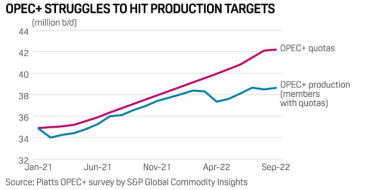
Oil price has pulled back from over US$120 per barrel in June to less than US$80 per barrel over the last week. The oil market is factoring in a short-term slowdown in demand as rising interest rates start to impact real economic activities globally. We remain optimistic about the return potential of the energy sector in the coming years. Approximately 100M barrels of oil are consumed globally each day. A surplus or deficit of 1% or ~1M barrels can lead to significant price move. At present, oil demand is artificially low and is still below pre-covid levels. In China, oil demand is ~1M barrels per day below 2021 levels because of Covid lockdown, and global jet fuel consumption is ~2M barrels per day below 2019 levels. In terms of supply, the US government has been releasing its strategic petroleum reserves, adding 0.8M barrels a day to global supply since March 2022. This will slow as we go into 2023. As a result of the short-term demand and supply distortions, OPEC+ is cutting output by 2M barrels per day by the end of 2023 to support prices, illustrating supply discipline that can be flexibly applied to uphold a quasi-price floor if required going forward. Over the longer term, it has been evident that the members of OPEC+ has been struggling to produce to their quotas over 2021 and 2022. This is likely a result of a lack of investment in oil projects over the last decade. The upside for oil price can be significant as China opens up and other emerging economies continue to grow. Supply will struggle to keep up. Major oil companies in Europe are attractively valued and are trading at a significant discount to many of the oil majors in the US. Even at an oil price of US$70, European energy companies are typically trading on 5xPE, 15% free cash flow yield, compared to 14xpe and 7.5% free cash flow yield for the Americans. Ox has selective investments in some of the leading players in this space. The current pullback in oil can create additional investment opportunities for 2023, of which we are on the lookout. Funds operated by this manager: |

18 Jan 2023 - Performance Report: 4D Global Infrastructure Fund (Unhedged)
| Report Date | |
| Manager | |
| Fund Name | |
| Strategy | |
| Latest Return Date | |
| Latest Return | |
| Latest 6 Months | |
| Latest 12 Months | |
| Latest 24 Months (pa) | |
| Annualised Since Inception | |
| Inception Date | |
| FUM (millions) | |
| Fund Overview | The fund is managed as a single portfolio including regulated utilities in gas, electricity and water, transport infrastructure such as airports, ports, road and rail, as well as communication assets such as the towers and satellite sectors. The portfolio is intended to have exposure to both developed and emerging market opportunities, with country risk assessed internally before any investment is considered. The maximum absolute position of an individual stock is 7% of the fund. |
| Manager Comments | The 4D Global Infrastructure Fund (Unhedged) has a track record of 6 years and 10 months and has outperformed the S&P Global Infrastructure TR (AUD) benchmark since inception in March 2016, providing investors with an annualised return of 8.23% compared with the benchmark's return of 8.15% over the same period. On a calendar year basis, the fund has experienced a negative annual return on 2 occasions in the 6 years and 10 months since its inception. Over the past 12 months, the fund's largest drawdown was -10.99% vs the index's -6.34%, and since inception in March 2016 the fund's largest drawdown was -19.77% vs the index's maximum drawdown over the same period of -24.67%. The fund's maximum drawdown began in February 2020 and lasted 2 years and 2 months, reaching its lowest point during September 2020. The fund had completely recovered its losses by April 2022. The Manager has delivered these returns with 0.28% less volatility than the benchmark, contributing to a Sharpe ratio which has fallen below 1 five times over the past five years and which currently sits at 0.63 since inception. The fund has provided positive monthly returns 94% of the time in rising markets and 13% of the time during periods of market decline, contributing to an up-capture ratio since inception of 98% and a down-capture ratio of 98%. |
| More Information |

18 Jan 2023 - Performance Report: Insync Global Capital Aware Fund
| Report Date | |
| Manager | |
| Fund Name | |
| Strategy | |
| Latest Return Date | |
| Latest Return | |
| Latest 6 Months | |
| Latest 12 Months | |
| Latest 24 Months (pa) | |
| Annualised Since Inception | |
| Inception Date | |
| FUM (millions) | |
| Fund Overview | Insync invests in a concentrated portfolio of high quality companies that possess long 'runways' of future growth benefitting from Megatrends. Megatrends are multiyear structural and disruptive changes that transform the way we live our daily lives and result from a convergence of different underlying trends including innovation, politics, demographics, social attitudes and lifestyles. They provide important tailwinds to individual stocks and sectors, that reside within them. Insync believe this delivers exponential earnings growth ahead of market expectations. The fund uses Put Options to help buffer the depth and duration that sharp, severe negative market impacts would otherwide have on the value of the fund during these events. Insync screens the universe of 40,000 listed global companies to just 150 that it views as superior. This includes profitability, balance sheet performance, shareholder focus and valuations. 20-40 companies are then chosen for the portfolio. These reflect the best outcomes from further analysis using a proprietary DCF valuation, implied growth modelling, and free cash flow yield; alongside management, competitor, and industry scrutiny. The Fund may hold some cash (maximum of 5%), derivatives, currency contracts for hedging purposes, and American and/or Global Depository Receipts. It is however, for all intents and purposes, a 'long-only' fund, remaining fully invested irrespective of market cycles. |
| Manager Comments | The Insync Global Capital Aware Fund has a track record of 13 years and 3 months and has underperformed the All Countries World Index benchmark since inception in October 2009, providing investors with an annualised return of 9.31% compared with the benchmark's return of 10.01% over the same period. On a calendar year basis, the fund has experienced a negative annual return on 3 occasions in the 13 years and 3 months since its inception. Over the past 12 months, the fund's largest drawdown was -24.34% vs the index's -14.06%, and since inception in October 2009 the fund's largest drawdown was -29.45% vs the index's maximum drawdown over the same period of -16.02%. The fund's maximum drawdown began in January 2022 and has so far lasted 11 months, reaching its lowest point during September 2022. The Manager has delivered these returns with 1.03% more volatility than the benchmark, contributing to a Sharpe ratio which has fallen below 1 five times over the past five years and which currently sits at 0.65 since inception. The fund has provided positive monthly returns 81% of the time in rising markets and 21% of the time during periods of market decline, contributing to an up-capture ratio since inception of 63% and a down-capture ratio of 87%. |
| More Information |

18 Jan 2023 - Performance Report: Glenmore Australian Equities Fund
| Report Date | |
| Manager | |
| Fund Name | |
| Strategy | |
| Latest Return Date | |
| Latest Return | |
| Latest 6 Months | |
| Latest 12 Months | |
| Latest 24 Months (pa) | |
| Annualised Since Inception | |
| Inception Date | |
| FUM (millions) | |
| Fund Overview | The main driver of identifying potential investments will be bottom up company analysis, however macro-economic conditions will be considered as part of the investment thesis for each stock. |
| Manager Comments | The Glenmore Australian Equities Fund has a track record of 5 years and 7 months and has outperformed the ASX 200 Total Return benchmark since inception in June 2017, providing investors with an annualised return of 20.78% compared with the benchmark's return of 7.92% over the same period. On a calendar year basis, the fund has only experienced a negative annual return once in the 5 years and 7 months since its inception. Over the past 12 months, the fund's largest drawdown was -16.18% vs the index's -11.9%, and since inception in June 2017 the fund's largest drawdown was -36.91% vs the index's maximum drawdown over the same period of -26.75%. The fund's maximum drawdown began in October 2019 and lasted 1 year and 1 month, reaching its lowest point during March 2020. The fund had completely recovered its losses by November 2020. The Manager has delivered these returns with 7.12% more volatility than the benchmark, contributing to a Sharpe ratio which has fallen below 1 five times over the past five years and which currently sits at 0.93 since inception. The fund has provided positive monthly returns 91% of the time in rising markets and 35% of the time during periods of market decline, contributing to an up-capture ratio since inception of 233% and a down-capture ratio of 103%. |
| More Information |

18 Jan 2023 - Australian Secure Capital Fund - Market Update
|
Australian Secure Capital Fund - Market Update November Australian Secure Capital Fund November 2022
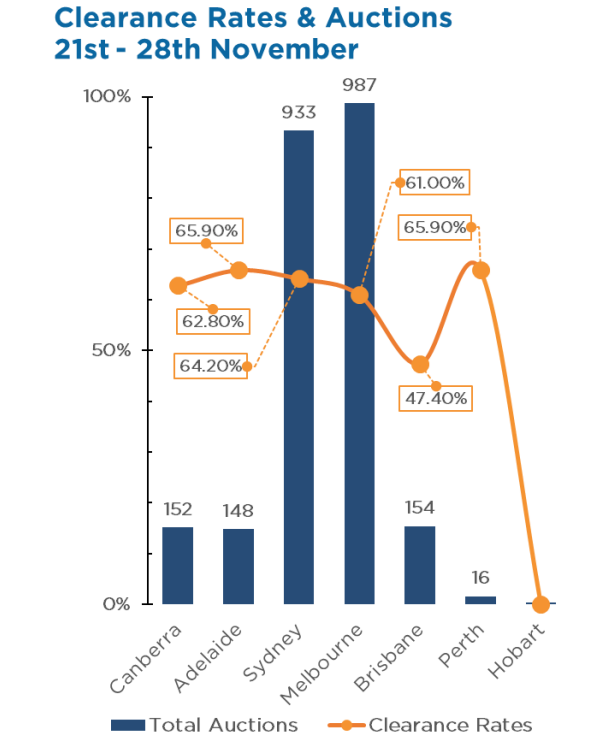
Property prices continued to fall across the nation with values declining a further 1.00% throughout November. This brings an approximate 7.00% (average of $53,400) decline since national property prices peaked in April of this year. Whilst this marks the seventh month of decline, the rate at which prices are declining is beginning to soften, with the 1.00% reduction being the smallest since the 1.60% monthly decline in August. Queensland again recorded the most significant monthly reduction, along with Tasmania with a 2.00% reduction in the Home Value Index. New South Wales, Canberra, Victoria and South Australia also experienced a reduction in value with 1.30%, 1.20%, 0.80% and 0.30% respectively. Western Australia remained stable, and the Northern Territory actually saw a small increase of 0.20% for the month. Record low vacancy rates of 1.00% have allowed unit prices continue to remain somewhat resilient, recording a 0.60% reduction for the month, bringing 4.70% reduction since prices peaked. The number of auctions held in the last weekend of November remained considerably below that of last year, with 2,393 auctions taking place as opposed to 4,251 last year. Whilst well below that of last year, the number of auctions were up 4.10% on the previous weeks results and were in fact the highest since a weekend in mid-June recorded 2,528 auctions. Clearance rates across the nation were also down on last year's figures, with only 61.50% of auctions clearing (down from 68.50% last year) indicating that vendors may not yet have responded to market conditions. Adelaide again recorded the highest clearance rate for the weekend with 65.90%, followed by Sydney (64.20%), Canberra (62.80%), Melbourne (61.00%) and Brisbane (47.40%). Source: Article, Report Funds operated by this manager: ASCF High Yield Fund, ASCF Premium Capital Fund, ASCF Select Income Fund |

17 Jan 2023 - Glenmore Asset Management - Market Commentary
|
Market Commentary - November Glenmore Asset Management December 2022 Equity markets globally were stronger in November. In the US, the S&P 500 was up +5.4%, the Nasdaq rose +4.4%, whilst in the UK, the FTSE 100 increased +6.7%, boosted by its heavy mining weighting. On the ASX, the All Ordinaries Accumulation Index rose +6.4%. Utilities were the best performing sector, boosted by the takeover bid for index heavyweight Origin Energy, which was up +41% in the month. Materials was the next best sector, driven by investor optimism around China loosening its covid lockdown measures. Telco's, financials and technology all underperformed in the month. Bond yields declined in November as investors started to become more positive that the pace of interest rate hikes from central banks will moderate along with some signs that inflation has potentially peaked. In the US, the 10 year bond yield fell -30 basis points (bp) to close at 3.74%, whilst in Australia, the 10 year rate fell -23bp to 3.53%. During the month, the RBA increased interest rates by 25bp for the seventh month in a row, taking the official cash rate to 2.85%. The A$/US$ rallied in the month, up +6.0% to close at US$0.68. Commodity prices were broadly higher. Nickel rose +23%, whilst copper, aluminium and lead also rose between +6-8%. Thermal coal rebounded +11.4% after an -18% decline in October. Also of note, iron ore was up +25.6% after falling for seven months in a row. Brent crude oil fell -10.0%. Funds operated by this manager: |

16 Jan 2023 - New Funds on Fundmonitors.com
|
New Funds on FundMonitors.com |
|
Below are some of the funds we've recently added to our database. Follow the links to view each fund's profile, where you'll have access to their offer documents, monthly reports, historical returns, performance analytics, rankings, research, platform availability, and news & insights. |
|
|
|||||||||||||||||||
| Collins St Convertible Notes Fund | |||||||||||||||||||
|
|||||||||||||||||||
 |
|||||||||||||||||||
| Capital Group Global Total Return Bond Fund (AU) | |||||||||||||||||||
|
|||||||||||||||||||
| View Profile | |||||||||||||||||||
 |
|||||||||||||||||||
|
Emit Capital Climate Finance Equity Fund |
|||||||||||||||||||
|
|||||||||||||||||||
| View Profile | |||||||||||||||||||
|
Want to see more funds? |
|||||||||||||||||||
|
Subscribe for full access to these funds and over 700 others |


16 Jan 2023 - The Investment Outlook 2023
|
The Investment Outlook 2023 abrdn December 2022 As we look back on 2022, to describe the year as eventful seems an absurd understatement. So many events have dominated the news, each individually significant, and in aggregate almost overwhelming in consequence, both politically and economically. Here's a reminder of just a few of those events:
Climate crisis uncertaintyYet all these things will be relatively short-lived in their impact (and manageable) when compared to the existential threat that continues to grow relatively unabated from our failure to make progress on constraining global warming to the agreed target of 1.5°C. COP 27, the climate change conference held this year in Egypt, largely failed to expand on commitments made a year earlier with regards to phasing out fossil fuels, despite all the strong statements made around the necessity to do so. The one major step forward was the agreement of a deal that has been sought for over 30 years to launch a fund for 'loss and damage' to support those nations most exposed to the consequences of climate change. But details and financial funding have not been agreed. We can already observe more extreme weather events - notably the recent floods in Pakistan - which have devastating effects on impacted economies and contribute to the risk of a steady but dramatically expanded flow of migrants to other countries. Don't give upBut, as the old saying goes, where there are challenges, there are also opportunities. Here's where we see them:
Reasons to be optimisticIt's easy to be overwhelmed by all the uncertainty. That said, we've also seen steady progress in many places that may offer an antidote to the gloom:
2023 may well be a pivotal year for markets amid the economic challenges that remain. While these are clearly important, we mustn't take our eyes off potentially existential long-term issues. Author: Sir Douglas Flint, Chairman of abrdn |
|
Funds operated by this manager: Aberdeen Standard Actively Hedged International Equities Fund, Aberdeen Standard Asian Opportunities Fund, Aberdeen Standard Australian Small Companies Fund, Aberdeen Standard Emerging Opportunities Fund, Aberdeen Standard Ex-20 Australian Equities Fund (Class A), Aberdeen Standard Focused Sustainable Australian Equity Fund, Aberdeen Standard Fully Hedged International Equities Fund, Aberdeen Standard Global Absolute Return Strategies Fund, Aberdeen Standard Global Corporate Bond Fund, Aberdeen Standard International Equity Fund , Aberdeen Standard Life Absolute Return Global Bond Strategies Fund, Aberdeen Standard Multi Asset Real Return Fund, Aberdeen Standard Multi-Asset Income Fund |


22 Dec 2022 - Hedge Clippings |22 December 2022
|
|
|
|
Hedge Clippings | Friday, 22 December 2022 For our final Hedge Clippings of the year, we thought we'd look back 12 months for some inspiration, namely from the last edition of 2021, when we noted that the "certainty of uncertainty persists, along with the realisation that COVID will be with us for some time." One year on, and COVID's certainly still with us, although like many things, it seems we're learning to live with it. Elsewhere our prediction of more uncertainty proved 100% correct, with the war in Ukraine sparking inflation, and in turn unexpected rate rises, and thus the inevitable collapse of the era of easy money, and with it the tech boom. We haven't heard a report of Charlie Munger's response to the rout in Bitcoin and the crypto-sphere, but we're sure it would actually be predictable. In hindsight (easy-peasy) Scomo's demise was obvious, although the Teals' success caught most (even themselves) by surprise. We're not sure if Albo's victory caught anyone by surprise, but his smooth transition and avoidance of political potholes was welcome. Maybe the uncertainties in that regard are waiting in next May's (real) budget. Less predictable in 2022 was Elon Musk's acquisition of Twitter (surely a thought bubble?) followed by his equally unpredictable self-firing, the seeming disintegration of the government in the UK, the boredom of Netflix's $100m Ginge and Whinge show, China's COVID lockdown, and the fact that the ASX was one of the better performing (albeit negative) global markets. Looking forward to 2023: The R word is likely to dominate as recession either looms (or deepens depending on location) as inflation stays stronger for longer, and interest rates follow suit - even if the pace of rate rises eases, they're unlikely to start falling until 2024. Sadly there seems no quick end in sight to the war in Ukraine unless Russian mothers tire of seeing their sons return injured - or worse as the case may be. Penny Wong has started the reconciliation process with China, and once a suitable period has passed to allow sufficient face-saving (or should that be a sufficient period to allow suitable face-saving?) we suspect normality will resume, whatever normality means. Lachlan Murdoch is intent on continuing to rescue the reputation of his, and we presume the Murdoch family's, name from the "serious harm" inflicted by Crikey, which of course leads us to the Trump saga. Will it ever end? No doubt the lawyers hope not. More immediately, Hedge Clippings is looking forward to a short break and recharging the batteries before starting all over again next year. We'll be back in the latter half of January. Meanwhile, from all the team at FundMonitors.com we would like to take this opportunity to wish you and your loved ones a Happy Christmas, and a Healthy and Prosperous New Year! |
|
|
News & Insights New Funds on FundMonitors.com Trip Insights: United States | 4D Infrastructure Investment Perspectives: The yield curve, recessions and soft landings | Quay Global Investors November 2022 Performance News Insync Global Capital Aware Fund Bennelong Long Short Equity Fund Glenmore Australian Equities Fund Bennelong Kardinia Absolute Return Fund Digital Asset Fund (Digital Opportunities Class) |
|
|
If you'd like to receive Hedge Clippings direct to your inbox each Friday
|

22 Dec 2022 - Performance Report: Equitable Investors Dragonfly Fund
| Report Date | |
| Manager | |
| Fund Name | |
| Strategy | |
| Latest Return Date | |
| Latest Return | |
| Latest 6 Months | |
| Latest 12 Months | |
| Latest 24 Months (pa) | |
| Annualised Since Inception | |
| Inception Date | |
| FUM (millions) | |
| Fund Overview | The Fund is an open ended, unlisted unit trust investing predominantly in ASX listed companies. Hybrid, debt & unlisted investments are also considered. The Fund is focused on investing in growing or strategic businesses and generating returns that, to the extent possible, are less dependent on the direction of the broader sharemarket. The Fund may at times change its cash weighting or utilise exchange traded products to manage market risk. Investments will primarily be made in micro-to-mid cap companies listed on the ASX. Larger listed businesses will also be considered for investment but are not expected to meet the manager's investment criteria as regularly as smaller peers. |
| Manager Comments | Equitable Investors noted the workload in 2022 included driving existing investments to ensure they have capital and appropriate cost structures, pushing for organisational changes, and corporate or strategic transactions - as well as sorting out which capital-needy companies are real opportunities under Equitable's 'Recap' theme. They remain fully committed and continue to look at ways to work harder and smarter to achieve the returns they seek in time. Equitable expect to continue to keep their noses to the grindstone in early CY2023 as they position the Fund to capitalise on the opportunities a torrid 2022 has created. They added that their 'FIT' universe of micro-to-midcap industrials is down a third in 2022 and there is currently a huge spread in median earnings multiples between small and large stocks. |
| More Information |
