


NEWS

17 Feb 2023 - Performance Report: Cyan C3G Fund
[Current Manager Report if available]

17 Feb 2023 - Performance Report: Bennelong Long Short Equity Fund
[Current Manager Report if available]

17 Feb 2023 - Battleground ESG issues for 2023
|
Battleground ESG issues for 2023 Yarra Capital Management January 2023
As we look forward to the year ahead, we have been reflecting on where we are likely to see the most prominent sustainability issues (sometimes called 'ESG' or environmental, social and governance issues) surface for companies in the year ahead. Our predictions include continuing to see the big issues, such as climate change, remain centre stage but shift from a conversation about disclosures and targets to issues of quality and substance. Alongside climate, we will see companies scrambling to make sense of an expanding environmental mandate to include understanding their implications on nature and biodiversity more broadly. We see a big year ahead for social topics, including industrial relations and labour rights, as well as a resurgence of issues pertaining to social license to operate. And, as ever, good governance will continue to be a key driver of value, particularly with the continuing rise of cybersecurity issues and companies having to navigate an increasingly complex landscape of material issues. Our predictions for the big battleground ESG issues for the year ahead are: Environment1. Climate change issues are evolving towards quality:
2. Nature, food and water security and biodiversity will be the newest everywhere topic:
Social3. Industrial relations and labour rights and conditions will become increasingly material:
4. Social license to operate makes a 'comeback':
Governance5. Data security and privacy evolves to include issues of data sovereignty:
6. The 'G' factor will drive corporate responses to an evolving landscape of material issues:
Beyond the E, S, and GBeyond the individual issues surfacing under the E, S, and G banners, we also see trends toward positive investment opportunities, including: 7. Scale will be the focus for the new wave of purpose driven capital:
8. Sustainability, ESG and Impact are no longer distinct approaches to investing:
Author: Dr Erin Kuo, Yarra's Chief Sustainability Officer |
|
Funds operated by this manager: Yarra Australian Equities Fund, Yarra Emerging Leaders Fund, Yarra Enhanced Income Fund, Yarra Income Plus Fund |


16 Feb 2023 - Performance Report: Bennelong Kardinia Absolute Return Fund
[Current Manager Report if available]

16 Feb 2023 - The path to clean, secure and affordable energy
|
The path to clean, secure and affordable energy Nikko Asset Management January 2023
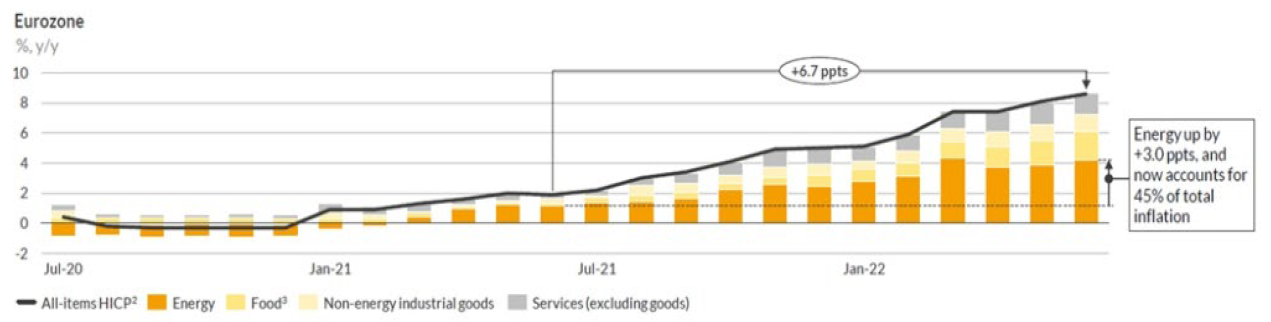
The changing seasons are nature's way of reminding us that time moves on. And it is the same in the Russell household, where my youngest is approaching 18 and his late weekend nights are his way of telling me change is arriving in our home too. There is a dawning that I am heading into a new stage of life. It is exciting, but after 20 years of bringing up a family, I also admit to being a little scared of what the next chapter will bring. In markets we often get obsessed with short-term changes but it can be the slow structural moves—such as a child leaving the home—which can have a more profound longer-term impact. Bear markets exist for a purpose. They expose the heavy misallocation of capital that in this bear market happened because finance was too easy. While capital is now more rationed, energy too can no longer be taken for granted. Of course management teams of energy companies have been aware of this for some time, as they have witnessed their own cost of capital rise as the shale revolution unwound and climate change took hold. In bear markets time horizons are compressed and dreams are often shelved as rising costs force management teams to make difficult choices. These choices impact different stakeholders, often over different time horizons, which explains why companies adopting a stakeholder approach with purpose could be better equipped to navigate their way through difficult times and eventually, when the next bull market begins, may be better placed to solve the significant challenges facing society over the coming decades. Choice One: Energy affordability versus long-term energy transitionEnergy markets and policies have changed as a result of Russia's invasion of Ukraine, not just for the time being, but likely for decades to come. The environmental case for clean energy needed no reinforcement, but the economic arguments in favour of cost-competitive and affordable clean technologies are now stronger—and so too is the energy security case. But solving for clean, secure and affordable energy is not straight forward. Energy is an input to making substantively everything in the modern world. So when we have shortages—as we do now—the rising costs of everything acts like a tax on consumption. Primary energy costs at the start of the last century were about 4% of the global GDP. Today, primary energy accounts for about 12% of total GDP, which is similar to that achieved in the two oil shocks in the 1970s.1 Direct energy makes up about 45% of European inflation (Chart 1). However, we also know that 10%-15% of all primary energy goes into making food for the world's population—which adds to the inflationary pressure. If other associated links to energy are added, we can estimate that approximately 75%2 of inflation is driven directly and indirectly by energy costs. Our current energy crisis is a core element of today's inflation and until we solve energy's supply problems, we expect inflation to remain stubbornly above most central banks' 2% targets. Chart 1: Headline inflation rate with component contributions - Eurozone
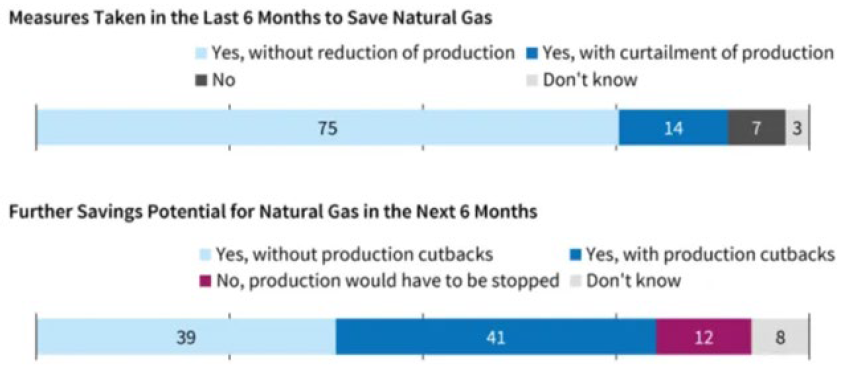
Source: Aurora Energy Research, GOV.UK, Eurostat, U.S. Bureau of Labor Statistics, MarketWatch Today, for every US dollar (USD) spent globally on fossil fuels, USD 1.5 is spent on clean energy technologies. But by 2030, under the net-zero emissions by 2050 scenario, every dollar spent on fossil fuels will be outmatched by USD 5 on clean energy supply and another USD 4 on efficiency and end-uses.3 If clean energy investment does not accelerate, higher investment in oil and gas will be needed to avoid further fuel price volatility, while also putting the 1.5 degrees Celsius goal in jeopardy. But if we accelerate clean energy today at the expense of fossil fuels, we will only exacerbate our energy shortages, given the short-term draw on valuable energy sources made by solar and wind. These are long-term versus short-term choices that even the experts have difficulty reconciling (Exhibit 1): Exhibit 1: IEA illustrates the challenge between short-term affordability and long-term energy transitionInternational Energy Agency (IEA) executive director Fatih Birol: "If governments are serious about the climate crisis, there can be no new investments in oil, gas and coal, from now - from this year". ("No new oil, gas or coal development if world is to reach net zero by 2050, says world energy body", The Guardian, 18 May 2021) IEA's 2022 outlook: "Ahuge increase inenergy investmentis essentialto reducethe risksoffutureprice spikes and volatility, and to get on track for net zero emissions by 2050… an average of almost USD 650 billion per year 'will be' spent on upstream oil and natural gas investment to 2030, a rise of more than 50% compared with recent years". (IEA "World Energy Outlook 2022", November 2022) The most suitable near-term solutions include projects with short lead times that bring oil and gas to market quickly, but also includes areas such as capturing some of the 260 billion cubic metres of gas that is wasted each year through flaring and methane leaks4 to the atmosphere—a key driver of our investment in Emerson. Reference to individual stocks is for illustration purpose only and does not guarantee their continued inclusion in the strategy's portfolio, nor constitute a recommendation to buy or sell. 1Thunder Said Energy, "Energy Shortage: fear in a handful of dust?", November 2022 Demand efficiency and productivity could also be key and in this field, there has been significant progress. A recent German IFO survey suggested that most companies—in this case 75% of those that use gas as a primary energy source in their production—have found ways to reduce gas usage in the last six months while still meeting production targets (Chart 2). Chart 2: Reduction of natural gas consumption in the production process (%)
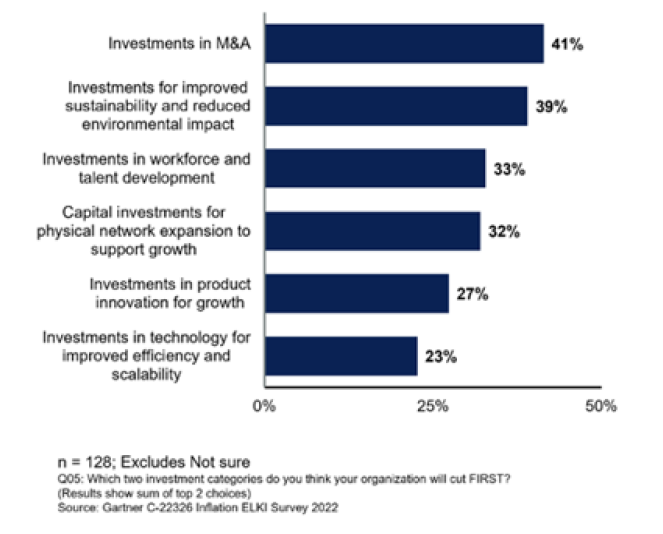
Source: IFO Business survey, October 2022 In fact energy efficiency is the number one place to look for solutions to this energy crisis. While energy costs soar, CEOs are expected to look at ways to make their businesses more resilient and reduce their energy burden. Paybacks on energy efficient investments will be very high, in our view, and are unlikely to be shelved if and when a recession starts. We see this providing tailwinds for long-term holding companies such as Schneider and opportunities within the energy services companies, where cash flow returns could accelerate to double-digit levels. This is certainly a significant part of the reason for our more recent investments in Worley & Schlumberger Choice two: ESG recession versus stakeholder capitalismRecent market history suggests that commodity prices will correct with a recession and if central banks have their way, a recession is exactly what we may get. Our own experience tells us that we should prepare for where the cuts might be. Some are obvious—such as advertising and marketing. These cuts have already started as can be seen by the demise of Google or Meta. For many others their earnings recession is just starting. Corporates are also expected to cut capital projects and the following June 2022 Gartner poll provides some insight into where these might be (Chart 3). The results are not surprising—but significant reductions in investment for improved sustainability and environmental impact is worth raising. Chart 3: Investment categories to be cut first—surveys
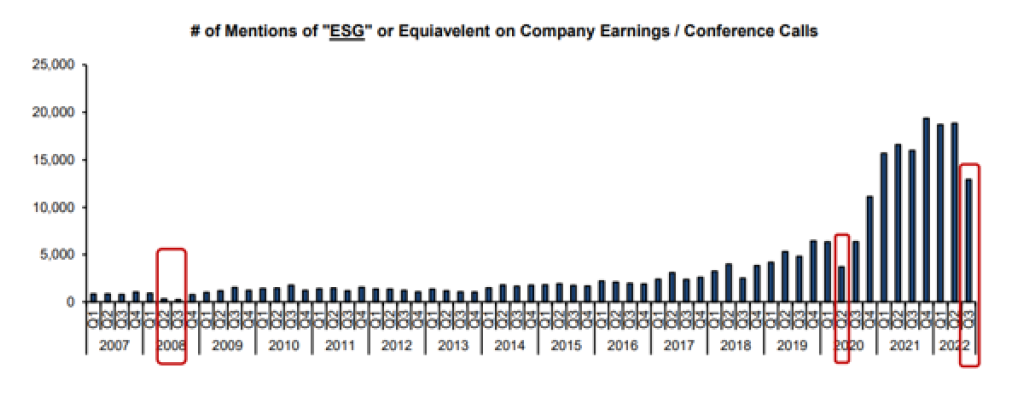
Source: Gartner, July 2022 Reference to individual stocks is for illustration purpose only and does not guarantee their continued inclusion in the strategy's portfolio, nor constitute a recommendation to buy or sell. While corporates may sharpen the knife on sustainability, what is surprising to many is the backbone behind policy changes in Europe and the US (among others) which instead of accelerating fossil energy supply, are expanding incentives and targets for alternatives, such as wind, solar and hydrogen. The REPowerEU Plan was launched by the European Commission earlier in 2022 to reduce the European Union's (EU) dependence on Russian fossil fuels in a direct response to the Ukraine invasion. The plan calls for the EU to consume 20 million tonnes (mT) of hydrogen by 2030, instead of the 5mT target previously quoted in the Fit For 55 policy announced just a few months before, as an example. If we feared a clash between decarbonisation and short-term energy needs, decarbonisation seems to remain society's number one target. The bull market for ESG data and integration has been stratospheric. Changing demographics, rising inequality, the rise in the importance of externalities such as nature and increased influence of the state through regulation all have a part to play. But as was the case in prior recessions, we should expect ESG to be less of a focus for management teams as they divert their attention to short-term challenges or for some simply staying afloat (Chart 4). In our view, expensive virtue signalling does not perform well during recessions (e.g. Tesla). Chart 4: Long-term bull market for ESG—with a few blips
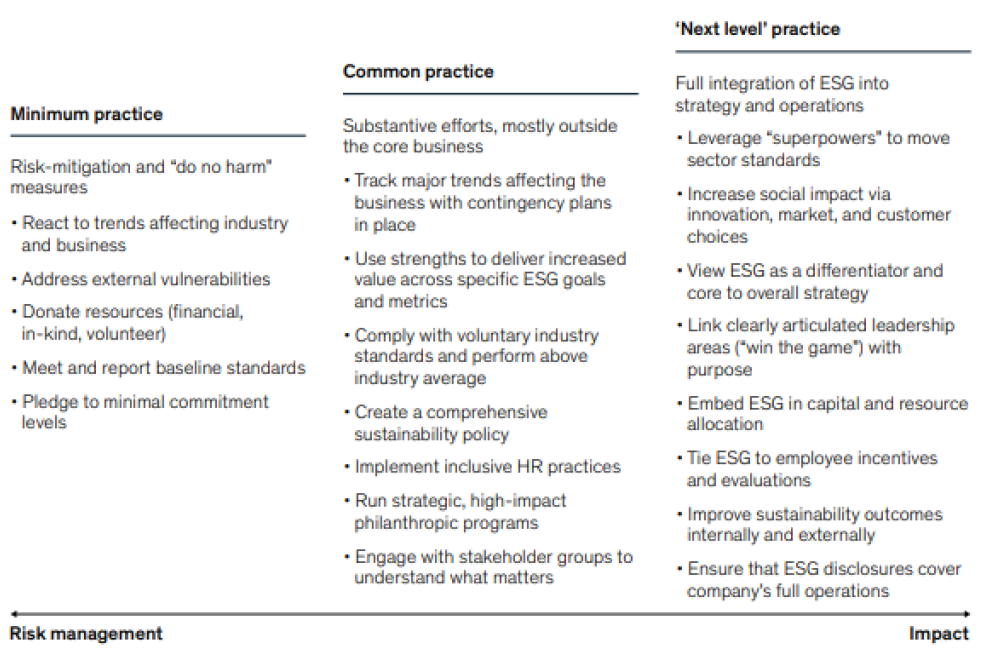
Source: Bernstein research and Bloomberg, October 2022 In terms of energy shortages, we may play out the 1970s again. We also appear to have returned to that decade to question the role of shareholder primacy, with both business leaders and politicians (e.g. business round tables and the Davos Manifesto), suggesting we are on the verge of a fundamental reshaping of society. This slow, structural change is of course not new and ESG is a key cog if stakeholder capitalism is to work. Given the shift to stakeholder capitalism is such an ideological shift, it shouldn't surprise anyone that we are now seeing an ESG backlash, the most vigorous of which is targeted at greenwashing. Survey evidence around sustainability suggests trust is low. For example, three out of four institutional investors do not trust companies to achieve their sustainability targets and commitments.5 And of course, the measurement of ESG data is fraught with difficulty; while credit ratings correlate 99%, the correlation of external ESG ratings ranges between 38% and 71%.6 For some, ESG is leading to a significant misallocation of capital and is morally bankrupt. 7 8The situation has prompted some regulators, such those in the predominantly Republican US states, to try and alter the direction of travel and ban ESG investing altogether. Yet, many companies today are making major decisions, such as discontinuing operations in Russia and protecting employees in at-risk countries. They also continue to commit to science-based targets and to define and execute plans for realising these commitments. This indicates that ESG considerations are becoming more—not less— important in companies' long term decision making. In fact, at Nikko Asset Management we believe companies should adopt a stakeholder approach. Companies must approach externalities as a core strategic challenge, not only to help future-proof their organisations but to deliver meaningful impact over the long term. Some companies that have already built purpose into their business models and are demonstrating they benefit multiple stakeholders are already showing success, such as Microsoft or lesser known companies, such as Compass Group. Reference to individual stocks is for illustration purpose only and does not guarantee their continued inclusion in the strategy's portfolio, nor constitute a recommendation to buy or sell. 5Edelman, "2021 Trust Barometer Special report: Institutional investors", November 2021 In recent years, boards of directors have become increasingly focused on corporate purpose. This is partly driven by a sense that purpose drives corporate culture, helps attract and retain talent and is increasingly a differentiator when it comes to customers and suppliers. External pressure on corporate boards to define purpose better has come from investors, who are themselves being asked to justify their own investments on the basis of ESG as well as financial considerations. A single, clearly marked path that every business should follow does not exist. Strong corporate leaders recognise that social expectations constantly evolve and we believe that it is the company's purpose that guides management, fund managers and owners through difficult times. A recent Mckinsey study developed a framework for summarising key ESG approaches. This highlights characteristics of those at the forefront of stakeholder capitalism, fully integrating ESG into strategy and operations—listed as "Next Level Practices". Companies adopting stakeholder capitalism are seen to be enhancing their company's competitive positioning. They have purpose and can articulate why stakeholder capitalism is creating a competitive edge (Exhibit 2). Exhibit 2: Corporate approach to ESG and stakeholder capitalism
Source: "How to Make ESG Real", McKinsey, August 2022 They are a more attractive place to work for their employees—retention rates are higher than peers—successfully fighting the war for talent, while some are discovering new solutions needed to solve many of our current problems, such as climate change. We can already see success in many of our own holdings—such as Danaher, Sony or John Deere to name a few. These companies are creating their very own superpowers, enhancing their franchise and management qualities and creating value (Exhibit 3). Exhibit 3: Examples of Future Quality purpose statement "Helping realize life's potential" (Danaher) "Fill the world with emotion, through the power of creativity and technology". (Sony) "We must act with urgency today to make the lives of our customers, workforce, and all those we serve better tomorrow". (John Deere) Reference to individual stocks is for illustration purpose only and does not guarantee their continued inclusion in the strategy's portfolio, nor constitute a recommendation to buy or sell. Our own experience is supported by academic research. Work by Ariel Babcock et al. titled "Walking the Talk: Valuing a multi-stakeholder strategy" links the importance of stakeholders and stronger operating performance across a number of metrics.9 These management teams are committed, empathetic and demonstrate with full and transparent disclosure of data that they are on a journey of continuous improvement. They invest with a long term investment horizon and are prepared to make difficult decisions, some with potential trade-offs across different time periods. But when backed by a clear purpose statement that creates value for all key stakeholders, these management teams can "walk the talk". Remuneration and incentive schemes are linked to measurable ESG targets and integrated reporting—such as diversity targets or emission reduction targets. And they are preparing themselves for further regulation such as the introduction of separate ESG reporting under what is known as "Double Materiality". ConclusionIn conclusion clean, secure and affordable energy is likely to be one of the major challenges of this decade. Given we need abundant energy to complete the energy transition, we believe fossil fuel companies that are actively enabling transition to low carbon society can be part of the solution. They often understand how to deliver global energy at scale and have the balance sheets capable of enabling the transition to clean energy. We also believe companies adopting a stakeholder approach will be better equipped to solve the significant challenges facing society over the coming years, and that a clearly defined purpose will help guide management teams through the challenges and choices they will have to make. After all, it is the choices made today that will define the Future Quality returns of tomorrow. 9Ariel Babcock et al., "Walking the talk: Valuing a multi-stakeholder strategy", FCLTGlobal, 17 January 2022 Author: Johnny Russell, Investment Director, Global Equity Funds operated by this manager: Nikko AM ARK Global Disruptive Innovation Fund, Nikko AM Global Share Fund, Nikko AM New Asia Fund, Important disclaimer information |


15 Feb 2023 - Performance Report: Insync Global Capital Aware Fund
[Current Manager Report if available]

15 Feb 2023 - Performance Report: Quay Global Real Estate Fund (Unhedged)
[Current Manager Report if available]

15 Feb 2023 - Performance Report: Bennelong Emerging Companies Fund
[Current Manager Report if available]

15 Feb 2023 - Is now a good time to start considering smaller companies?
|
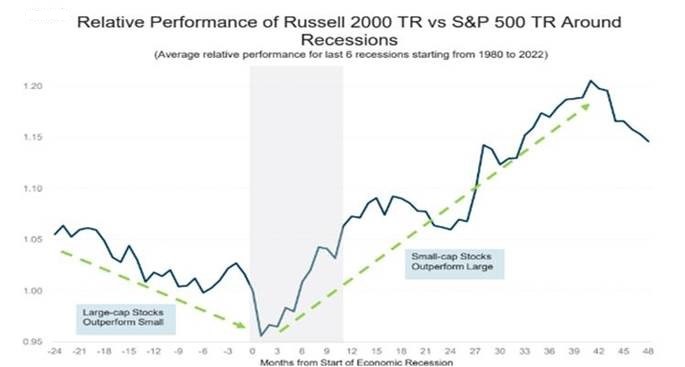
Is now a good time to start considering smaller companies? abrdn January 2023 Last year was terrible for equities. A war in Ukraine, soaring inflation, higher interest rates and weak economic growth all weighed on sentiment. Globally, both small and large caps were firmly in negative territory. Large-cap indices like the S&P 500 were dragged down as technology companies (such as Meta and Tesla) and stocks with high valuations sold off. Meanwhile, risk-averse investors shunned small caps as economic conditions deteriorated. And what about the future? Given the gloomy backdrop, investors are likely to avoid smaller companies for much of 2023. On the surface, this decision seems understandable. History shows that smaller companies tend to underperform larger ones during economic downturns. But dig a little deeper and a surprising conclusion presents itself: the time to start allocating capital to small caps might be sooner than investors think. Small caps outperform earlier than expectedThere are widely agreed assumptions about the performance of smaller and larger companies in different economic scenarios. Chart 1 shows the relative average performance of US small caps versus large caps, before, during and after recessions (dating back to the 1980s). Of course, each recession is different, with different mechanisms at play. Nonetheless, three factors stand out. Chart 1 Source: Bloomberg, William Blair Equity, December 2022 Firstly, larger companies tend to outperform their smaller rivals before, and at the start of, recessions. This makes sense. In economic slumps, risk-averse investors typically favour safer assets. In the equities space, this means more mature, well-established larger companies. Their markets are often less volatile and earnings more stable. By contrast, investors view smaller companies as riskier investments. Many businesses aren't as entrenched as bigger firms. Earnings and profit margins can therefore come under pressure in times of upheaval. Secondly, these factors are turned on their head when we exit a recession. In recovery periods, smaller companies usually outperform their larger rivals. By their very nature, small caps are nimbler and able to react faster than large caps to changes in the business environment. Smaller firms can therefore take advantage of the new opportunities a growing economy offers. The consequent rise in investor risk appetite also helps smaller companies. So far, so predictable. But the third point is not widely known: smaller companies have historically started outperforming large caps soon after a recession starts. As you can see from Chart 1, this rebound can begin as early as three-to-six months into a recession. That's because the market tends to price in an economic recovery before it happens. Yet this phenomenon is not part of the traditional small/large-cap narrative. We believe this disconnect creates opportunities for active investors. A potentially attractive entry pointSmaller companies trailed their larger peers in 2022. In Europe, it was the worst relative year since comparative data began (see Chart 2). This has had a knock-on effect on valuations. Historically, European smaller companies have traded at an average premium valuation of 21%1 above that of larger peers, thanks to superior small cap growth and earnings potential. However, at the close of last year, this difference dropped significantly and is currently at 9%. Given the potential rebound as we exit recession, this could represent an attractive entry point for long-term investors. Chart 2 A similar dynamic is at play in the US. Here, the valuation discount of small caps relative to large caps is as wide as it has been in more than 40 years (Chart 3). We believe this creates excellent long-term opportunities. Indeed, after US small caps reached a similar level of 'cheapness' in early 2001, small-cap stocks materially outperformed larger caps over the subsequent three-, five- and 10-year periods1. Chart 3 What about today's high inflation, high interest-rate environment?As we highlighted, every downturn has its own characteristics - and this time is no different. Today, elevated inflation is a major factor (although it remains benign in much of Asia). Developed market central banks have responded by aggressively hiking rates. The medicine appears to be working. Eurozone and US inflation has retreated from summer highs, recording 9.2% and 6.5% in December, respectively1. Nonetheless, it will take time for inflation to reach pre-pandemic levels. But we believe high inflation shouldn't worry small-cap investors too much. Many smaller companies operate in niche industries or areas of the market with few players. They're also often a critical link in complex supply chains or wider manufacturing processes. As a result, they can dictate higher prices despite their size, allowing them to pass on costs to protect their margins. They also have the agility to change where they source goods and materials, further helping to control costs. What about elevated interest rates? Many assume that higher rates hurt small caps more than larger caps. That's because many small caps are starting out and have weaker balance sheets and lower profit margins. This is the case for some businesses. However, as anyone watching the headlines knows, several larger companies have also been found wanting in the world of higher interest rates. In short, durability frequently comes down to the quality of the company. The importance of qualityThat's why we focus on high-quality firms, irrespective of the macroeconomic backdrop. That is, those with low leverage, strong profitability and consistent earnings. True, quality has underperformed in 2022 as many investors rotated into value stocks. But with the economy deteriorating, we believe investors will increasingly favour companies with robust business models, pricing power, healthy balance sheets and unique growth drivers. Final thoughts…So is now a good time to start considering smaller companies? The traditional answer would be a resounding 'no'. The world economy is forecast to slow further in 2023, with a recession possible in the first half of the year. However, as we have shown, smaller companies might be more resilient in the current inflationary climate than many assume. Using history as a guide, we can also see that smaller companies start to rebound quicker during economic downturns than is widely assumed. With valuations depressed, investors could therefore potentially pick up great long-term opportunities at a discount. Author: Anjli Shah, Investment Director, Smaller Companies Team, Equities |
|
Funds operated by this manager: Aberdeen Standard Actively Hedged International Equities Fund, Aberdeen Standard Asian Opportunities Fund, Aberdeen Standard Australian Small Companies Fund, Aberdeen Standard Emerging Opportunities Fund, Aberdeen Standard Ex-20 Australian Equities Fund (Class A), Aberdeen Standard Focused Sustainable Australian Equity Fund, Aberdeen Standard Fully Hedged International Equities Fund, Aberdeen Standard Global Absolute Return Strategies Fund, Aberdeen Standard Global Corporate Bond Fund, Aberdeen Standard International Equity Fund , Aberdeen Standard Life Absolute Return Global Bond Strategies Fund, Aberdeen Standard Multi Asset Real Return Fund, Aberdeen Standard Multi-Asset Income Fund 1 Bloomberg, 31 December 2023 |

14 Feb 2023 - Performance Report: DS Capital Growth Fund
[Current Manager Report if available]
