


NEWS

22 Feb 2023 - Performance Report: Delft Partners Global High Conviction Strategy
[Current Manager Report if available]

22 Feb 2023 - Performance Report: Glenmore Australian Equities Fund
[Current Manager Report if available]

22 Feb 2023 - China re-opening post COVID
|
China re-opening post COVID 4D Infrastructure February 2023
While it was always a matter of when (not if) China would reopen, the abrupt change in stance has reaffirmed and brought forward multiple domestic and global investment opportunities, and could also support a global economy that was rapidly weakening. In this article, we summarise key policy changes, the improving macro outlook, and what the reopening of the world's second biggest economy means for global listed infrastructure investors. COVID-zero policyOn December 26, 2022, China's National Health Commission (NHC) announced that its COVID prevention and control management would be downgraded from class A (covering bubonic plague and cholera) to class B (SARS, AIDS, anthrax), effective from January 8, 2023. Class B relinquishes the power of local authorities to quarantine patients and close contacts, and lock down regions. Since dismantling its zero-COVID policy, China has been grappling with what's shaping-up to be the biggest COVID outbreak ever seen. By mid-January, many local authorities had indicated that daily cases had passed the peak. However, we anticipate an uptick in cases following the Lunar New Year holiday, particularly in country and rural areas. It remains unclear just how severe and widespread the outbreak is, given the government stopped universal testing and changed how it defines COVID mortality. Additionally, the abrupt policy change caught many domestic operators off guard, preventing immediate normalisation of business activity to pre-COVID activity levels. These impediments include labour disruptions (either through infection or re-training requirements), capacity and/or services shortages, entry restrictions imposed by other countries, and passport renewals/visa applications. While this may weigh on sentiment and economic activity in the near term, we expect pent-up demand, willingness to spend and policy support measures to continue to reduce bottlenecks and drive a consumption-led rebound in economic activity relatively quickly. The Chinese roadmap to reopening post-congress
Improving macro outlook - in country and globalChina held its annual Central Economic Conference in late December 2022. Emerging from the conference, policymakers set sights on growth in 2023. Officials called for targeted and forceful monetary policy and strengthened fiscal policy. The aim is to expand domestic demand, with priority given to employment, and boosting consumption. Despite no official nationwide economic growth target being set, most provinces, municipalities and autonomous regions have unveiled their GDP growth targets for 2023, with rates ranging from 4.0-9.5% and an average of 5.95%. Consumption, investment, stimuli and policy are core pillars of the rebound. Most targets remain above the forecasts by foreign institutions and agencies, which range between 4.5-5.5%, although we have recently seen upward revisions to these following the re-opening. (Notably, IMF increased its growth forecast to 5.2% in late January-23 from 4.6% earlier projected in November-22). At 4D, we look for the underlying data and other proxies that support the headline growth numbers. Specific to infrastructure, these include expressway traffic, railway patronage, airline passengers, gas & electricity consumption, port throughput data and plant utilisation rates. Outside of infrastructure, data includes retail sales, new car sales, new property development and sales. We accumulate and amalgamate this data as a thermometer to gauge economic activity. The re-opening of China could also benefit a world anticipating its own domestic slowdown. For example:
Xinhua News Agency - Passengers crowded at the North Railway Station, Shenzhen waiting to cross into Hong Kong as cross-border services resumed for the first time since January 2020 Infrastructure sectorInvestment in infrastructure has been a key pillar of China's stimulus plan for decades, supporting and boosting economic growth in times of need, such as post the GFC and, more recently, throughout the pandemic. Fixed asset investment increased 5.1% to CNY57.2 trillion in 2022, up from 4.9% in 2021 and 2.9% in 2020. The table below summarises the opportunities across the key infrastructure sub-sectors from re-opening and related policy/stimuli at both a domestic and international level. The Chinese roadmap to reopening post-congress |
|
Funds operated by this manager: 4D Global Infrastructure Fund, 4D Emerging Markets Infrastructure FundThe content contained in this article represents the opinions of the authors. This commentary in no way constitutes a solicitation of business or investment advice. It is intended solely as an avenue for the authors to express their personal views on investing and for the entertainment of the reader. |





21 Feb 2023 - Performance Report: Insync Global Quality Equity Fund
[Current Manager Report if available]

21 Feb 2023 - Performance Report: Digital Asset Fund (Digital Opportunities Class)
[Current Manager Report if available]

21 Feb 2023 - Will Australia survive or thrive? What to expect in 2023
|
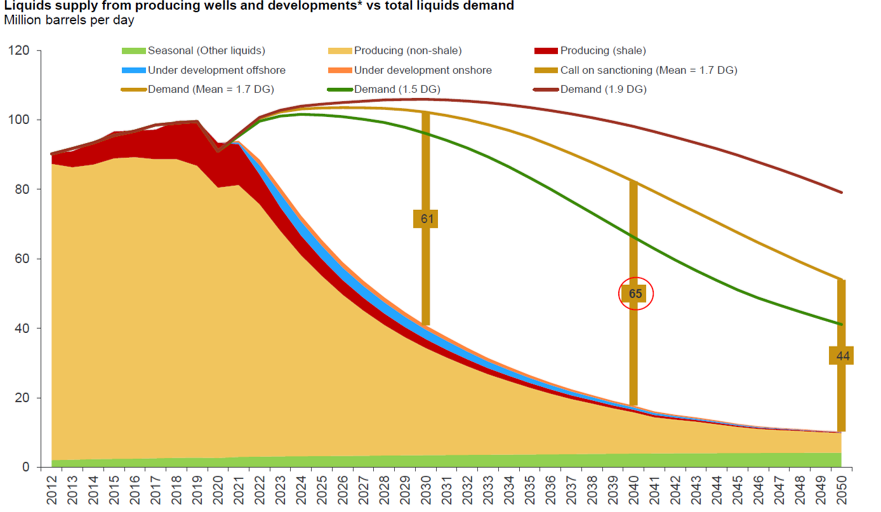
Will Australia survive or thrive? What to expect in 2023 Tyndall Asset Management December 2022 Strange Bedfellows - Super cycle in renewables and oil & gas The super cycle in renewables is in full flow and, perversely, oil and natural gas will remain a beneficiary until sufficient new renewable capacity is created. The current renewable energy solutions of solar and wind are estimated to be some 10 times more metals intensive then the fossil fuel plants they are replacing. The life cycle of the current renewable solutions are substantially less than a typical coal or nuclear power station which last 30-50 years. The critical minerals required for global decarbonisation include rare earths, lithium, cobalt, copper and nickel. The world currently does not have sufficient reserves to fulfill the net-zero aspiration. Therefore, we expect prices will remain elevated, with Australia in a pivotal position given our resources inventory to help deliver on the energy transition (refer Tyndall's ESG Insights: The value in securing critical minerals). Oil development is down substantially, with cashflow from the major integrated oil and gas companies spent on buybacks, natural gas and renewable projects like solar, wind and hydrogen. Shareholder activism and government pressure have contributed to oil producers reducing capex and development spend. Traditionally, there has been a tight relationship between oil prices and drilling/development. This relationship appears to be broken, and even in the short cycle unconventional prospects onshore in the USA, companies are drilling less despite the attractive economics. Given oil reservoir production typically depletes by 10-15% p.a., there appears to be a substantial supply gap going forward, despite demand decreasing. Norwegian oil and gas consultant - Rystad, estimate that 61m barrels of oil per day need to be developed by 2030 when using the 1.7-degree scenario (refer Figure 1). Figure 1: Demand for oil outstrips supply
Source: Rystad The three horseman of the apocalypse — energy, interest rates and labour cost Increasing energy, interest rates and labour costs are substantial headwinds for many companies and as margins continue to come under pressure, we expect downgrades throughout 2023. Labour pressures are being felt in both wages and from the global impact of apparent labour shortages. Given this is felt across various sectors, it is difficult to envisage a short-term fix outside of a substantial economic downturn. The impact of monetary policy tends to lag by 12-18 months, meaning the Australian economy is yet to feel the full impact of tightening monetary policy. Full employment and an above-average savings rates have softened the impact. The wealth impact of housing weakening further in 2023 will eventually put the brakes on consumption. The canary in the coal mine during slowdowns driven by interest rates is normally a discretionary consumer pullback. Consumer discretionary sales currently remain high with little evidence of pain felt by retailers. We expect commentary in the February 2023 reporting season may provide some early signs of both margin and top line growth pressures. The combined impact of the materially higher cost inputs of energy, interest rates and labour should become clear over 1Q 2023. Margins are currently at high levels, and we expect pressure, particularly in companies and industries that have little pricing power to fight the inflationary forces. We see little respite in energy and labour outside of government intervention, whereas interest rates may roll over when Central Banks consider they have the inflation under control. Be prepared for the profit downgrades. China — exiting COVID Zero The changes observed over the past 20 years of visiting China have been incredible given the combination of a growing middle class and high annual GDP growth. The Chinese Communist Party (CCP) is cautious to not upset the mass population. This is in contrast to an outsider's view which tends to believe China's people are frightened of the CCP. The catalyst for the recent COVID pivot from the CCP over COVID restrictions were the large demonstrations, often violent across China, from citizens frustrated by the restrictions. Interestingly, western governments ignored and, at times, violently pushed back on similar demonstrations. The CCP has now relented and recently announced 10 optimisation measures that mark the tipping point of the country's economy reopening. Therefore, in 2023 we are likely to see China go through a typical reopening phase similar to what we have observed across most western countries, resulting in consumption and GDP increasing. Australia may be a beneficiary of China reopening as consumption and demand increase. Both services and materials demand will rise, with oil and natural gas being a notable beneficiary. Recession risk rears its ugly head The aggressive tightening of global monetary policy aimed at slowing the economy is likely to move many countries into recession territory. It appears to be a fait accompli that Europe and the UK will dive into recession, and the debate is still ongoing on whether the USA will dip into negative GDP growth. Australia has the benefit of the world desiring its resources and agricultural products, and thus the probability of a recession appears lower, albeit in many ways this is just semantics given a slowdown is coming. Inflation and interest rates — the return of the "old normal" Inflation will reduce as COVID supply chain issues and the Ukraine war impacts alleviate. However, inflation will remain stubbornly higher compared to the past 10 years given obvious structural changes including labour shortages, persistent supply chain disruption and constrained supply of some goods. Technology innovation and productivity will need to accelerate to offset these pressures. Demographics, meanwhile, are negative for many countries, with a slowing population, particularly within advanced countries including China. Australia benefited prior to COVID with strong immigration but, overall, the combination of increasing demand (consumers) and decreasing supply (workers) is not great arithmetic. Global demand for labour currently is high. We hope central bankers have learnt their lesson, given they kept monetary policy too low for too long and entered COVID with very low interest rates. It is difficult to envisage interest rates being that low outside of an emergency, meaning higher interest rates are here to stay. The net result is that higher interest rates and inflation imply that long duration assets should further derate. Getting deglobalisation right
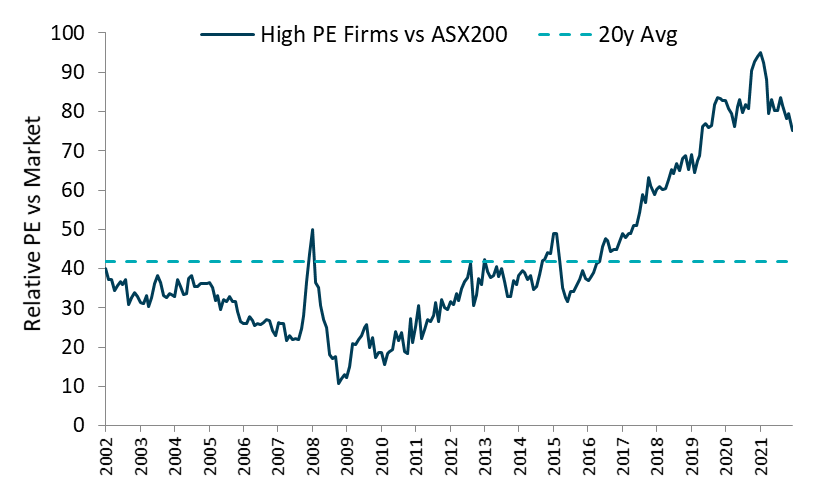
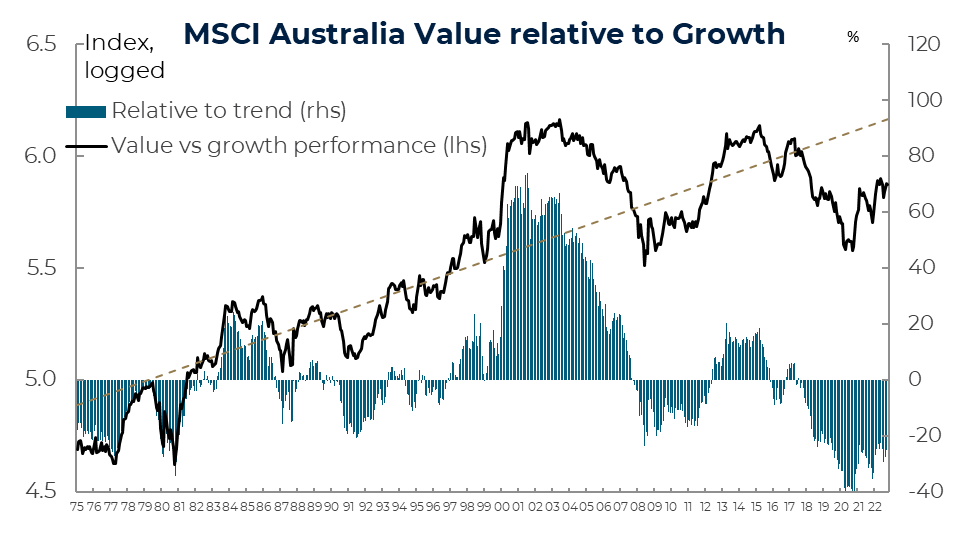
Globalisation, together with China essentially selling deflation to the world over the past 20 years, will pause and perhaps even retreat. Companies and countries have recognised that relying on single supply chains or countries is risky. COVID and the Ukraine War have illustrated these risks, and we are starting to see governments develop plans to mitigate these risks. In one example, new chip manufacturing plants are being built in the US and governments are helping to fund the critical minerals required for the pathway to net zero. Additionally, the Australian Government provided an AU$1.2b non-recourse debt facility to Iluka Resources to help fund their rare earths processing facility in West Australia. This was unprecedented for the Federal Government and illustrates how countries are viewing the access to reliable and secure supplies of critical minerals. Most recently, the US passed the Inflation Reduction Act of 2022 (IRA), which directs nearly US$400b in federal funding to clean energy, with the goal of lowering carbon emissions by the end of the decade. There are strings attached, with many of the IRA tax incentives requiring domestic production, domestic procurement requirements or from a country with a free-trade agreement. Australia could be a beneficiary of this given our relationship with the US, which includes a Free Trade Agreement. The bottom line is that deglobalisation is inflationary and will continue placing pressure on inflation for many years to come. Value investing makes a big comeback Tyndall has always viewed value investing as a philosophy rather than a factor. Our process has always aligned with the approach from Benjamin Graham, the father of value investing. Tyndall values companies based on their sustainable earnings capacity. We determine the intrinsic value by capitalising the sustainable or mid-cycle earnings of every stock under coverage. At its core, value investing is buying companies that are trading below their assessed net worth, maintaining a disciplined and patient approach. The valuation gap between growth and value remains at extraordinarily high levels despite a recent narrowing (refer Figure 2 & 3). The tailwinds for growth post the GFC are unlikely to return anytime soon. Higher inflation and interest rates are here to stay, and thus we expect the elevated valuations still being priced for growth will derate further. A disciplined and bottom-up valuation approach will deliver alpha during these times. Figure 2: High PE firms trade at a 75% premium to the market - well above historical averages. US LNG capacity forecasts
Source: Goldman Sachs Figure 3: Value on track to outperform over the next few years
Source: MSCI Author: Brad Potter, Head of Australian Equities Funds operated by this manager: Tyndall Australian Share Concentrated Fund, Tyndall Australian Share Income Fund, Tyndall Australian Share Wholesale Fund Important information: This material was prepared and is issued by Yarra Capital Management Limited (formerly Nikko AM Limited) ABN 99 003 376 252 AFSL No: 237563 (YCML). The information contained in this material is of a general nature only and does not constitute personal advice, nor does it constitute an offer of any financial product. It does not take into account the objectives, financial situation or needs of any individual. For this reason, you should, before acting on this material, consider the appropriateness of the material, having regard to your objectives, financial situation, and needs. The information in this material has been prepared from what is considered to be reliable information, but the accuracy and integrity of the information is not guaranteed. Figures, charts, opinions and other data, including statistics, in this material are current as at the date of publication, unless stated otherwise. The graphs and figures contained in this material include either past or backdated data, and make no promise of future investment returns. Past performance is not an indicator of future performance. Any economic or market forecasts are not guaranteed. Any references to particular securities or sectors are for illustrative purposes only and are as at the date of publication of this material. This is not a recommendation in relation to any named securities or sectors and no warranty or guarantee is provided. |

20 Feb 2023 - Performance Report: Skerryvore Global Emerging Markets All-Cap Equity Fund
[Current Manager Report if available]

20 Feb 2023 - Performance Report: Bennelong Twenty20 Australian Equities Fund
[Current Manager Report if available]

20 Feb 2023 - Australian Secure Capital Fund - Market Update
|
Australian Secure Capital Fund - Market Update January Australian Secure Capital Fund February 2023 January saw property prices fall nationally by 1%, which was less than December and the smallest month to month decline since mid last year according to CoreLogic's national Home Value Index. Prices fell across all capitals by an average of 1.1%, however regional housing values continued to record a milder rate of decline at -0.8%. Hobart saw the largest reduction (-1.7%), followed by Brisbane (-1.4%), Sydney (-1.2%), Melbourne (-1.1%), Canberra (-1.0%), Adelaide (-0.8%) while the falls in Perth and Darwin were less significant at (-0.3%) and (-0.1%) respectively. The quarterly trend however is pointing to a reduction of the in the pace of decline, and despite the falls every capital city and region is still recording home values above pre-pandemic levels. Contributing to the reduction of dwelling values, is the fall in demand. Capital city dwelling sales were down -29.4% on previous year figures, with listings -22.2% below the same time last year meaning that most home owners who are considering selling are sitting things out with no pressure to sell into this market. Weekly auction activity has begun to increase in 2023, with 706 auctions taking place across capital cities last weekend achieving a 67.9% clearance rate which we consider positive. Melbourne recorded the most auctions with 259 auctions taking place at a clearance rate of 68.3% (67.5% last year), followed by Sydney with 202 auctions and a strong clearance rate of 71.6% (66.3% last year). Adelaide achieved the best clearance rate for the weekend with 76.8% (81.8% last year) for their 105 auctions whilst Brisbane and Canberra were lower with clearance rates of 59.6% (80.1% last year) and 52.2% (85.5% last year) respectively. Whilst property prices will undoubtedly be linked to the movement in interest rates we do believe we are nearing the end of the rate rise cycle, with some banks already beginning to reduce the fixed rates for 3 and 5 year terms. The resurgence in overseas student migration will also see the rental market remain tight and help support yields across the residential property market. As a result we do believe housing values will stabilise over the coming months as some level of confidence returns to the market.
Funds operated by this manager: ASCF High Yield Fund, ASCF Premium Capital Fund, ASCF Select Income Fund Source: Australian Financial Review
|
||||||||||||||||||||||

17 Feb 2023 - Hedge Clippings |17 February 2023
|
|
|
|
Hedge Clippings | 17 February 2023 This week Hedge Clippings thought we'd give inflation, interest rates, and RBA Governor bashing a rest. After all, it's been front page news for a couple of weeks (or should that be months) and culminated in Philip Lowe appearing before a Senate Committee grilling today for the second time this week. For the record, he's sticking to the script that inflation is the number one problem, that unemployment could reach 8.5% if it wasn't fixed, and the only way to fix it is to keep on raising rates even at the risk of recession. He acknowledged, as we suggested last week, that increased interest rates hurt the vulnerable most, and the impact "is being felt very unevenly across the community". Being in the sights of politicians asking some plainly uneducated questions (surprise, surprise), he did have a dig back, saying that he could make decisions that politicians couldn't, or wouldn't, with this comment: "It's hard for the political class to take the short-term decisions to manage the cycle." Ouch! Moving right along... If ever there was a year to reinforce the twin benefits of diversification, and taking a long-term view when investing in managed funds, 2022 would be it. Surprisingly, given the well publicised, painful, and costly examples of ignoring each, (or both) they're two of the standout lessons from an analysis of 2022 fund performances. Against a backdrop where few anticipated the sudden outbreak of inflation, or the speed and extent of central banks' reaction, overall the market had a shocker. The 12 month returns of 16 Peer Groups to December 2022 shows that only Debt (+5.11%) and Hybrid Credit (+4.20%), and to a lesser degree Infrastructure (+0.94%) provided investors any comfort. Equity funds, particularly Small/Mid Cap, both in Australia and globally, bore the brunt at -19.34% and -23.31% respectively. On a relative basis, Australian Small/Mid Cap funds underperformed their overseas peers with the average fund (-19.34%) underperforming the broader ASX200 T/R index (-1.08%) by over 18%. By comparison, while Global Small/Mid Cap funds averaged a negative return of -23.31%, this was "only" 5% below the S&P500 total return of -18.11%. While one can therefore argue that small caps weren't the place to be in 2022, taking a longer view - as recommended in every offer document for a managed fund we've ever seen - provides a more balanced view. In the three prior years, 2019-2021, Australian Small/Mid Cap funds returned 27%, 18%, and 21% p.a. respectively, and over the prior 10 years this group had only one negative year (-6.5% in 2018) and no less than six years of +20% returns. Taking it back even further to 1995, this Peer Group has returned an average of over 15% p.a. with an up capture ratio of 137% (in other words, 37% above the market's return when it is positive) and a down capture ratio of 95% (showing when the market falls, they fall almost as much). For the record, not all small/mid cap managers suffered as badly, but consistency across the cycle is difficult. Over 3 and 5 years only two - Anacacia Wattle Fund (+16.79% and 16.73%) and Glenmore Australian Equities (+16.37% and 17.42%) beat the long-term (25 year) peer group average of 15% and outperformed the ASX200 in 2022. And while some investors in Small/Mid Cap funds may be nursing losses in FY2022 (average -17.58%) that had reversed by FY January 2023 to +12.18% since July last year. There lies Lesson #1: Investing in managed funds requires a long term view. Lesson #2: Diversification, and distribution of funds' and indices' returns. Diversification is a two edged sword: Over diversification can flatten performance. Concentration - such as investing in a single fund or product - can lead to significant under-performance. While still on the small mid cap peer group - although this runs true across the board - the spread of performance is significant, particularly in market sell-offs. 2022 saw small/mid cap managers' performance range from +3.53% through to -43%. The dilemma, for investors and advisors alike, is how much to diversify, and how to avoid long-term underperformers, or worse still, the likes of Mayfair 101. |
|
|
News & Insights 10k Words | Equitable Investors Magellan Global Strategy Update | Magellan Asset Management January 2023 Performance News Argonaut Natural Resources Fund Bennelong Concentrated Australian Equities Fund Quay Global Real Estate Fund (Unhedged) Skerryvore Global Emerging Markets All-Cap Equity Fund |
|
|
If you'd like to receive Hedge Clippings direct to your inbox each Friday
|
