


NEWS

22 Aug 2023 - Performance Report: Bennelong Emerging Companies Fund
[Current Manager Report if available]

21 Aug 2023 - Performance Report: Altor AltFi Income Fund
[Current Manager Report if available]

21 Aug 2023 - Australian Secure Capital Fund - Market Update July
|
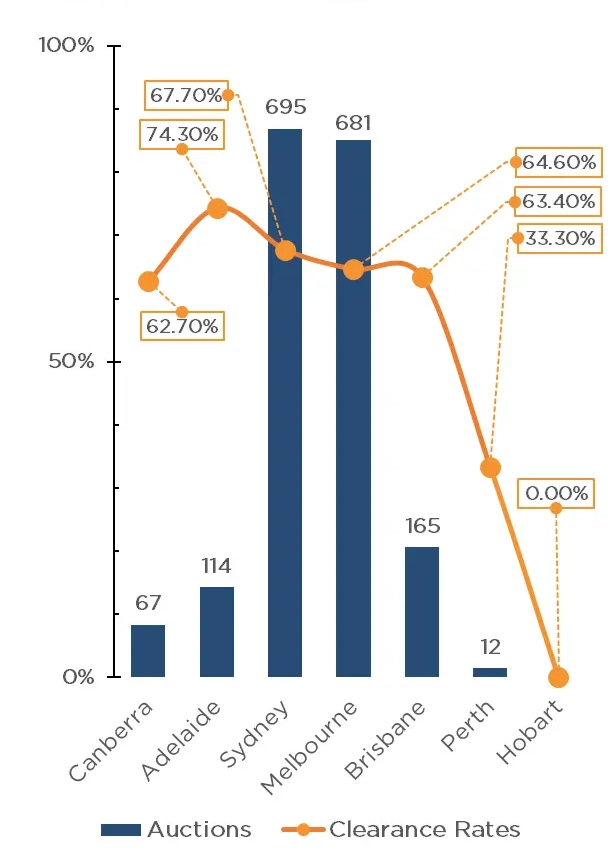
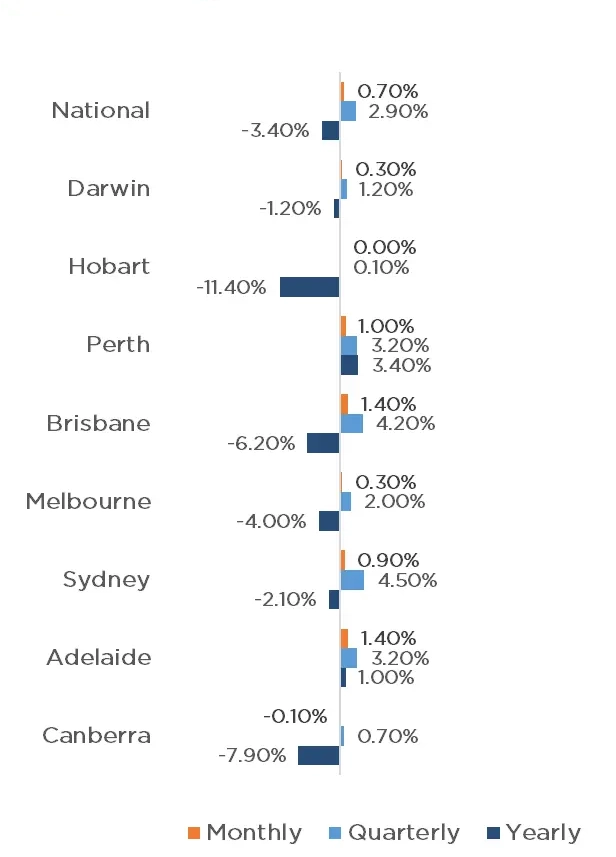
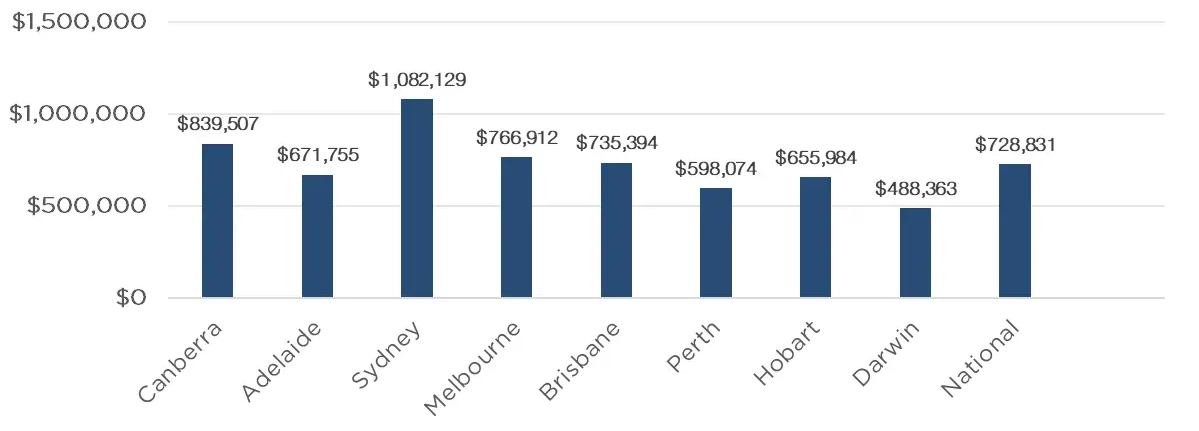
Australian Secure Capital Fund - Market Update July Australian Secure Capital Fund August 2023 In a positive sign for Australian property prices, the RBA has elected to keep the cash rate on hold for the second consecutive month, suggesting that interest rates may have peaked, or at a minimum, are close to peaking. The CoreLogic Home Value Index shows that property values experienced growth across all capital cities except for Canberra (-0.1%) for the month of July, with Brisbane and Adelaide performing strongest with 1.4% monthly growth. Perth (1%), Sydney (0.9%) Melbourne (0.3%) and Darwin (0.3%) also received strong monthly growth. These strong monthly results have lead to all capital cities now recording positive growth for the quarter. The regions have not performed as strongly, with only regional South Australia (1.1%) and Queensland (0.7%, primarily driven by strong growth on the Gold Coast) recording growth for the month, with Victoria (-0.4%), Western Australia (-0.3%) and Tasmania (-0.1%) experiencing a reduction in value. In a sign of slowly increasing supply, Auction numbers for the last weekend of July were above those of the same weekend last year, with 1,961 auctions taking place, up from 1,913 in 2022. This was predominantly due to strong auction numbers in Melbourne (846, up from 809) and Sydney (760, up from 624), however Brisbane (174), Adelaide (113), Canberra (53) and Perth (14) were not far off last year's results. Despite the number of auctions increasing, clearance rates remain strong, suggesting buyers and sellers are "on the same page" in regards to property price expectations. Adelaide (82.8%) leads the way, followed by Sydney (72.4%), Canberra (70.6%), Melbourne (69.9%) Brisbane (58.3%), contributing to a weighted average clearance rate of 70.2% for the weekend, well above the 54% result of the previous year. Clearance Rates & Auctions 17th June - 23rd of July 2023
Property Values as at 1st of August 2023
Median Dwelling Values as at 1st of August 2023
Quick InsightsWay High WestpacAccording to Westpac's latest forecast, Sydney house prices are expected to rise as much as 10% this year, propelled by surging migration, a tight rental market and scant housing supply. Sydney prices are anticipated to gain another 6% in 2024, and 4% in 2025. Perth is expected to achieve the second strongest growth, with an 8% gain this year, followed by Brisbane with 6% and Melbourne prices at 4%, said Westpac senior economist Matthew Hassan. Source: Australian Financial Review The Harborside HomeDavid Waterhouse, the estranged member of the famous racing clan, has sold his iconic harborside home Villa Biscaya for about $28 million. Designed by prominent architect Alan Edgecliff Stafford in 1929, the three-bedroom home features a grand stone staircase flanked by wrought-iron balustrades. The sale comes just three years after the former art dealer and options trader paid $10.25 million, almost tripling the purchase price. Source: Australian Financial Review Author: Filippo Sciacca, Director - Investor Relations, Asset Management and Compliance Funds operated by this manager: ASCF High Yield Fund, ASCF Premium Capital Fund, ASCF Select Income Fund |

18 Aug 2023 - Hedge Clippings | 18 August 2023
|
|
|
|
Hedge Clippings | 18 August 2023 Chinese property dominoes are looking wobbly All is not well with the Chinese property market - and given its importance to the overall Chinese economy, and thus to our major trading partner, there are some worrying signs on the horizon. Domestically, the property sector has been a major driver of China's growth, and thus the overall economy. And for a snapshot of the importance of China's economy on global trade, China is 1st in the world by maritime trade volume, 2nd in the world by shipping capacity, 1st in the world by port foreign trade volume and container throughput, and 1st in the world in shipbuilding by completed gross tonnage. Back to the property sector itself, and the empty or partially completed high rise buildings mean that the worrying horizon is not too far away. In the past week, two of China's most visible property developers' problems have hit the headlines for all the wrong reasons. Country Garden, the largest privately owned development company in China suspended interest repayments on a small number of on-shore bonds, and Beijing-backed developer Sino-Ocean conceded it had missed almost USD 21m of interest repayments on a series of off-shore bonds. As a result, Moody cut Country Garde's rating from B1 to Caa1, and Country Garden shares fell 18% in one day in Hong Kong. Country Garden sales in H1 2003 are down 30% YoY, and according to John Browning's excellent "Letter from Shanghai" the reluctance of buyers to place large deposits - which are then used to complete projects - is causing the developers' liquidity and cash flow problems. The problems in the property sector don't end there, as Browning explains: "The market is looking at the maelstrom that circulates around Zhongrong International Trust, and its connected parent Zhongzhi Enterprise Group. Zhongzhi acts to pool the deposits of its clients to invest in real estate, equities, bonds, and commodities. The guaranteed rates offered investors head towards 8%. Zhongrong International Trust has 270 products, which in totality offer an average yield of 6.88%. Coupled with a sales team that reportedly received 2-3% of the initial deposit, if we then throw in management fees, the investment managers of these pools would have to find investment opportunities that earn in the area of 12% P.A. just to break even after costs." As Browning rather drily notes: Looking at it dispassionately, there would be at first glance a temptation to manage the pool according to the Book of Madoff. Elsewhere in China retail sales figures disappointed, with July YoY coming in at 2.5% vs. previous 3.1% and expected 4.5%, followed by Industrial Production, July YoY actual 3.7% against previous 4.4% and expectations of 4.4%. Hedge Clippings has always been wary of Chinese data being shall we say "massaged", but our concerns were not helped (or were possibly confirmed) by a report that the numbers will no longer be published for the Chinese Youth Unemployment Rate - those unemployed between the ages of 16 and 24 - which is running at 21.3%. The official reason for the non-publication was the need to "further improve and optimise labour force survey statistics." Obviously not publishing bad news won't solve the problem, but it will save having to explain it (except to those unemployed). Maybe the unemployed youth could be conscripted and used to invade Taiwan? The Chinese authorities will no doubt act to revive their slowing economy, but longer term the social and demographic issues they face (population growth fell by 0.2% in 2023, having flatlined in 2022 in spite of the end of the One Child policy) are significant. According to this report, the UN forecasts that China's population will decline from 1.426 billion this year to 1.313 billion by 2050 and below 800 million by 2100. If you're interested in receiving John Browning's daily "Letter from Shanghai" you can register using this link https://mailchi.mp/ News & Insights Market Commentary - July | Glenmore Asset Management Investment Perspectives: Thinking about the cycle | Quay Global Investors July 2023 Performance News Bennelong Australian Equities Fund Delft Partners Global High Conviction Strategy Bennelong Long Short Equity Fund |
|
|
If you'd like to receive Hedge Clippings direct to your inbox each Friday |

18 Aug 2023 - Performance Report: Glenmore Australian Equities Fund
[Current Manager Report if available]

18 Aug 2023 - How can we ensure affordable housing?
|
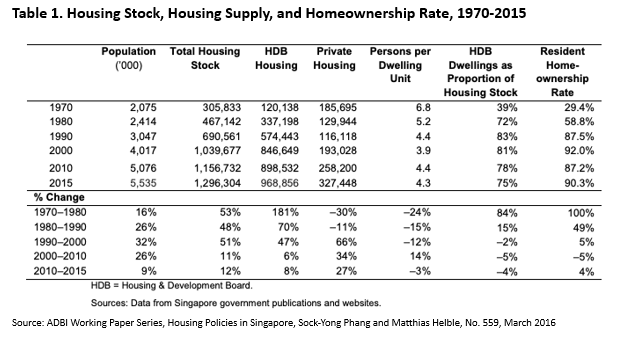
How can we ensure affordable housing? Montgomery Investment Management August 2023 As I note below, solving housing affordability won't be enough with just a massive supply of affordable dwellings rapidly built by state and federal governments. The market for these properties will have to be tightly regulated, and controlled, with continuous maintenance and updates. It's doable, as is its financing. The protected species: residential real estate owners If you've been following the blog for the last decade, you will know I have argued residential real estate owners in the country are a 'protected' species. Whether it's negative gearing, zero capital gains tax on primary places of residence, stamp duty concessions, the $25,000 homebuilder grant or the First Home Owners Grant, there isn't a government policy that does anything other than help support property prices or at least prevent any kind of crash. And if we consider our entire financial system, it's built on the back of loans to fund property purchases. That means not only has the government incentivised people to buy property (and therefore doesn't have any incentive to see prices decline), but the Reserve Bank of Australia (RBA), Australian Prudential Regulation Authority (APRA), the Council of Financial Regulators, and the banks are all aiming to maintain stability in the financial system by avoiding, at all costs, a collapse in house prices. The illusion of first homeowners grants So, if you're an economist or a commentator who believes property prices could fall 30 or 40 per cent, you've not considered the real underlying drivers. The First Home Owners Grants offered by the states is a particularly humorous attempt to make housing more affordable. In Victoria, the $10,000 grant is available to those buying or building a home valued at up to $750,000. In New South Wales, $10,000 is also available to those purchasing an existing dwelling up to $750,000, or a new build worth less than $600,001. Up north, in Queensland, $15,000 is extended to those buying or building up to $750,000, while in Western Australia, a $10,000 grant is provided for purchases up to $750,000 or $1 million, depending on location. In the Northern Territory, various incentives are available including a $10,000 grant, the First Home Guarantee, which supports eligible purchasers to buy with a deposit of as little as five per cent and as little as two per cent for eligible single parents. Meanwhile, in South Australia, $15,000 is offered for purchases up to $650,000, and finally in Tasmaia, first home buyers receive $30,000 for the acquisition of a property of any value. Consider giving everyone in Australia a First Share Portfolio Buyers Grant, or a First Car Buyers Grant; prices would surge. It's inevitable. If you give people more money to buy something, the price rises. We gave everyone money during the pandemic and are now dealing with inflation. You don't need a PhD to work that out. In the last decade, Australian state and federal governments have outlaid $20.5 billion for various first home buyers schemes. What do you think happens to a property market if an additional $20.5 billion is injected into it? It only helps to accentuate the influences already pushing property prices higher. Of course, it serves the government, the financial regulators and the banks. But it doesn't serve those who cannot afford to buy in the first place. Henry George and progress and poverty During the 19th century, American political economist Henry George made a profound revelation regarding the unprecedented surge in industrial output, which, in turn, led to an escalation in urban land prices. As landowners reaped substantial windfalls, a tumultuous wave of land speculation and real estate bubbles ensued, triggering an era of volatility and uncertainty. The Gilded Age saw the accumulation of vast fortunes by industrialists, bankers, and landowners, but it coincided with a surge in poverty, inequality, and societal unrest. Singapore's housing system: A solution to affordable housing? Sound familiar? In 1879, Henry George boldly presented his critique of the capitalist system in his seminal work, Progress and Poverty (1879). Progress and Poverty, achieved global acclaim with millions of copies sold. It delved into the perplexing paradox of rising inequality and poverty amidst remarkable economic and technological advancements. George advocated for solutions to social issues caused by extreme greed, particularly concerning the laborer's who contribute real economic value through their hard work in production. Among these remedies, George proposed implementing rent capture measures like land value taxation, where higher taxes are imposed on more valuable land. What would widely be regarded today as going too far, George's thought-provoking stance proposed a radical concept: the communal ownership of land, with society collectively benefiting from any upsurge in land rents. The daring proposition that lay at the heart of his proposal was a single tax on land values, the idea being that by taxing land values, society could recapture the value of its common inheritance, raise wages, improve land use, and eliminate the need for taxes on productive activity. The mechanics of Singapore's housing scheme While it challenged convention and is arguably anathema to capitalism, it nevertheless draws attention to the structure of our society and should still promote debate about a fairer, more equitable one. Singapore has attempted to deal with the issue, with what appears to be a nod to George. Singapore today enjoys a very high homeownership rate of 91 per cent, and the government's involvement in the housing market is extensive and unique. Despite one of the world's highest concentrations of millionaires and one of Asia's most expensive housing markets, young newlyweds can easily afford to buy a well-located property close to their place of employment. Financing Singapore's housing scheme This is possible because the Housing and Development Board (HDB), a statutory board of the Ministry of National Development, is the largest housing developer. It is important to note, however, that in Singapore, more than 75 per cent of the land belongs to Singapore Land Authority (STA), while the remaining freehold land belongs to statutory boards like HDB, JTC, PSA and other private owners. There are three land 'ownership' types: 99-year lease, 999-year lease and freehold. Established in 1960, and superseding the Singapore Improvement Trust (SIT), the Housing Development Board was tasked to solve a housing crisis by rapidly increasing the supply of homes for the poor to rent. By the middle of the decade, it had housed 400,000 people. The dual property market in Singapore In 1960, just nine per cent of Singaporeans lived in rental public housing. In 1964 the decision was made to offer subsidized flats for sale under the government's "Home Ownership for the People Scheme". By 1985, four-fifths of the resident population were living in HDB flats. Today, more than 90 per cent of HDB's housing has been sold - at below-market prices - on 99-year leases to eligible households. Singaporeans typically purchase their first home from the HDB, and buyers can sell their HDB flats in an active secondary market at market prices only after five years. The pace of supply can be seen in Table 1. Table 1. Housing Stock, Housing Supply, and Homeownership Rate, 1970-2015
Applying lessons from Singapore to Australia A quick look at www.propertyguru.com.sg reveals genuinely well-located (everything is close to the city in Singapore) HDB flats for sale for S$550,000, alongside opulent S$30 million penthouses and colonial-era homes that have sold for as much as S$220 million. And remember Singapore's HDB was set up in 1960. Even after 63 years, inner-city apartments are still available for S$550,000. It's also worth noting the buyers of affordable HDB flats don't treat them like slums, they take great pride in property ownership, often renovating with the assistance of professional interior designers. HDB apartment blocks are meticulously designed. Each cluster of buildings are communities, with essential amenities such as playgrounds, food centers, and local shops. More recent developments include health clinics, community centers and libraries. Importantly, the management of these estates is integrated into comprehensive servicing policies that incorporate the city's transport system and racial integration. Perhaps in its appreciation of George's 1879 trestise Progress and Poverty, Singapore acknowledges that HDB homes represent the most significant stake its citizens have in the country's prosperity. Consequently, the HDB maintains its buildings and grounds and periodically upgrades them. Residents and businesses pay for maintenance, maintenance is carried out by Town Councils and their funding comes from government grants. At the end of the 99-year lease, the dwelling is practically worth S$0 and the resident (usually a second-generation occupant who didn't pay for the apartment) is no longer given the right to continue living in the apartment and can apply to buy it or another. Typically, after an HDB apartment turns 39 (with 60 years left), buyers tend not consider the unit, because Central Provident Fund (CPF) usage to pay for the house is restricted, and bank loans are tightened. While Singapore is yet to see any HDB units' leases expire, it is expected interventions, such as a renewing of the lease for a fee, will occur. In 2020, Singapore had more than a million HDB flats, sold at least 16,600 new apartments and had another, almost 70,000, under construction. Financing the scheme in Singapore To finance the scheme, the HDB provides up to 25-year mortgage loans, at an interest rate of 2.6 per cent. Homeownership is financed through CPF savings. Most public housing in Singapore is lessee-occupied. Under Singapore's housing leasehold ownership program, housing units are sold on a 99-year leasehold to applicants who meet certain income, citizenship and property leasehold ownership requirements. The estate's land and common areas continue to be owned by the government. HDB prices are below market prices, and buyers enjoy additional discounts in the form of housing grants calibrated to incomes. Subsequent sales of HDB flats in the private market originally had to be to buyers who satisfied the requirements for purchasing new flats. Since 1978 a resale levy was implemented. The HDB also provides public housing for rental, mainly for lower-income households and households waiting for their purchased flats. Rental public housing has lower income requirements than lessee-occupied public housing. Meanwhile, the government also sells land to the HDB, and fully finances its annual deficit. Within Singapore's housing sector, there is a high degree of progressive taxation. Higher-income households, foreigners, and investors pay market prices, implicitly higher land taxes, higher stamp duties, and are subject to higher rates of property taxes. And for those who might immediately recoil at the thought of higher taxes, they haven't prevented some properties commanding the highest prices in the world. Challenges and future plans The system isn't perfect - property prices continue to rise and solving the end of the 99-lease issue appears pending. According to Wikipedia "On 4 October 2022, The Minister of National Development, Desmond Lee, elaborated further on the government's policies to intervene to keep public housing relatively affordable and available. In hopes of cooling the housing market, the government plans to implement a fifteen-month waiting period before homeowners can buy an HDB resale flat, continued supply of significant grants for first-time buyers, and tightened maximum loan price limits. Likewise, to keep providing a counter to the resale market, the HDB ramped up its Build-to-Order supply, which is on track to place 23,000 apartments on the market between 2022 and 2023." Whatever your views, it is clear, however, a dual property market exists in Singapore. If Australia's government is serious about making housing affordable, it needs to stop handing out grants for buyers to meet market prices, which only fuel further increases. It must consider a dual market approach with one market supplied, controlled and regulated by the government. As an aside, there is no First Home Buyers Grant offered in the Australian Capital Territory, and coincidentally, it has been the worst-performing real estate market during the latest sell-off in prices and has recovered the least in the more recent recovery. Does that make Australian Capital Territory property more affordable? Maybe Victoria thinks so. That state is considering following the Australian Capital Territory and scrapping its First Home Owners Grant scheme. Before doing so, it should think about working with the other states and the Federal Government on a wholesale review of their role in the property market, perhaps with a working group visiting Singapore (who doesn't love a Junket?) to understand what is working there. Of course, one of the biggest incentives for people to buy property is to make money, or at least to avoid being left behind. Whatever system replaces the various governments' current involvement, it will need to consider this aspect (which Singapore seems to have preserved) while satisfying the other reason people buy; to provide security for themselves and their family, and a roof over their heads. Author: Roger Montgomery Funds operated by this manager: Montgomery (Private) Fund, Montgomery Small Companies Fund, The Montgomery Fund |
17 Aug 2023 - Performance Report: Bennelong Twenty20 Australian Equities Fund
[Current Manager Report if available]

17 Aug 2023 - Global equities: The more AI grows, the smaller the market could be
|
Global equities: The more AI grows, the smaller the market could be Pendal August 2023 |
|
HOW should investors think about AI? There is little doubt that advances in artificial intelligence technology promise to fundamentally disrupt how business is conducted, says Pendal's Samir Mehta. But the question investors should ask is not whether the transformation will occur, but when and at what cost -- and who might benefit, he says. "People have been overly excited by AI. But the reality is that it is not going to be instant. We are talking years before the full benefits start to materialise," says Mehta, who manages Pendal Asian Share Fund. AI stocks have been on a tear in 2023. Microsoft's US$10 billion investment in OpenAI, the high-profile creator of ChatGPT, has sent its shares up 40 per cent this year. Taiwan Semiconductor Manufacturing Company -- which makes silicon chips for companies like AI giant Nvidia Corp -- is up more than 20 per cent this year as investors back its exposure to the AI boom. But the market's excitement is divorced from reality. Speculative fervourMicrosoft disappointed investors last month when it cautioned that revenue growth from AI would be gradual, but spending would be aggressive. At TSMC, AI accounts for just 6 per cent of revenue, with the balance of sales coming from making chips for laptops and phones -- a market that is not growing, says Mehta. "There are many other examples -- companies like Quanta Computer and Wistron Corp make the servers that mostly go into data centres for the operations of cloud businesses. "Only a small part of it is being used for AI-related services. But just that association has meant that even though growth is negative in 2023 -- and expectations for 2024 and the perception that demand for AI-related servers is high -- some of these stocks have doubled in the last two or three months. That's a speculative fervour." Mehta says one factor counting against investors in AI is that the technology's very success could curtail demand. Many AI services are priced on a per-user licence, leading analysts to create long term industry revenue forecasts by assuming a take-up rate among employed people. But if AI succeeds in its promise of making business more productive, companies will reduce staffing. "The effect of raising productivity is going to mean fewer people will need that software because fewer people are employed," he says. Lessons from AI maniaSo, what lessons can be taken from the AI mania gripping markets this year? Mehta says the main lesson is that the ultimate beneficiaries of technological changes like AI are not always apparent early on. "The winners are going to be quite diverse and may not turn out to be the ones that we think of intuitively," he says. But another more immediately useful lesson for investors is that rising interest rates and tightening monetary policy may not be squeezing off liquidity as quickly as conventional wisdom would suggest. "It is a truism that when you have a speculative mania or bubble, at the heart of it is always massive liquidity. "The housing bubbles in the US and China, the credit card bubble in Korea, the cryptocurrency and NFC mania, those shared scooters and bikes -- invariably they are a manifestation of tremendously loose liquidity. "So, in 2023, any perceptions that we're in a tight market environment have clearly turned out to be wrong." Author: Samir Mehta, Senior Fund Manager |
|
Funds operated by this manager: Pendal Focus Australian Share Fund, Pendal Global Select Fund - Class R, Pendal Horizon Sustainable Australian Share Fund, Pendal MicroCap Opportunities Fund, Pendal Sustainable Australian Fixed Interest Fund - Class R, Regnan Global Equity Impact Solutions Fund - Class R, Regnan Credit Impact Trust Fund |
|
This information has been prepared by Pendal Fund Services Limited (PFSL) ABN 13 161 249 332, AFSL No 431426 and is current as at December 8, 2021. PFSL is the responsible entity and issuer of units in the Pendal Multi-Asset Target Return Fund (Fund) ARSN: 623 987 968. A product disclosure statement (PDS) is available for the Fund and can be obtained by calling 1300 346 821 or visiting www.pendalgroup.com. The Target Market Determination (TMD) for the Fund is available at www.pendalgroup.com/ddo. You should obtain and consider the PDS and the TMD before deciding whether to acquire, continue to hold or dispose of units in the Fund. An investment in the Fund or any of the funds referred to in this web page is subject to investment risk, including possible delays in repayment of withdrawal proceeds and loss of income and principal invested. This information is for general purposes only, should not be considered as a comprehensive statement on any matter and should not be relied upon as such. It has been prepared without taking into account any recipient's personal objectives, financial situation or needs. Because of this, recipients should, before acting on this information, consider its appropriateness having regard to their individual objectives, financial situation and needs. This information is not to be regarded as a securities recommendation. The information may contain material provided by third parties, is given in good faith and has been derived from sources believed to be accurate as at its issue date. While such material is published with necessary permission, and while all reasonable care has been taken to ensure that the information is complete and correct, to the maximum extent permitted by law neither PFSL nor any company in the Pendal group accepts any responsibility or liability for the accuracy or completeness of this information. Performance figures are calculated in accordance with the Financial Services Council (FSC) standards. Performance data (post-fee) assumes reinvestment of distributions and is calculated using exit prices, net of management costs. Performance data (pre-fee) is calculated by adding back management costs to the post-fee performance. Past performance is not a reliable indicator of future performance. Any projections are predictive only and should not be relied upon when making an investment decision or recommendation. Whilst we have used every effort to ensure that the assumptions on which the projections are based are reasonable, the projections may be based on incorrect assumptions or may not take into account known or unknown risks and uncertainties. The actual results may differ materially from these projections. For more information, please call Customer Relations on 1300 346 821 8am to 6pm (Sydney time) or visit our website www.pendalgroup.com |

16 Aug 2023 - Performance Report: ASCF High Yield Fund
[Current Manager Report if available]
16 Aug 2023 - Glenmore Asset Management - Market Commentary
|
Market Commentary - July Glenmore Asset Management August 2023 Globally equity markets were stronger in July. The key driver was lower than expected inflation data from the US and Australia which gave investors optimism around the expected number of interest rate rises required to bring inflation to targeted levels. In the US, the S&P 500 rose +3.1%, the Nasdaq increased +4.1%, whilst in the UK, the FTSE was up +2.2%. In Australia, the All Ordinaries Accumulation index rose +3.0%. Top performing sectors were Energy (boosted by crude oil rising +16%) and Banks. Healthcare underperformed as investors sought exposure to more cyclical sectors. Interestingly on the ASX, small caps outperformed large caps in the month (Small Ords Acc Index +3.5% vs All Ords Acc Index +3.0%). August will see the vast majority of the Fund's holdings report their results for the six months to 30 June 2023. We look forward to catching up with the various management teams to see how they are trading in what is a challenging business environment. Many companies have already pre announced their results for the six months to 30 June, so commentary and outlook statements will be particularly interesting to investors. Funds operated by this manager: |
