


NEWS

10 Oct 2023 - Performance Report: Argonaut Natural Resources Fund
[Current Manager Report if available]

10 Oct 2023 - Performance Report: Skerryvore Global Emerging Markets All-Cap Equity Fund
[Current Manager Report if available]

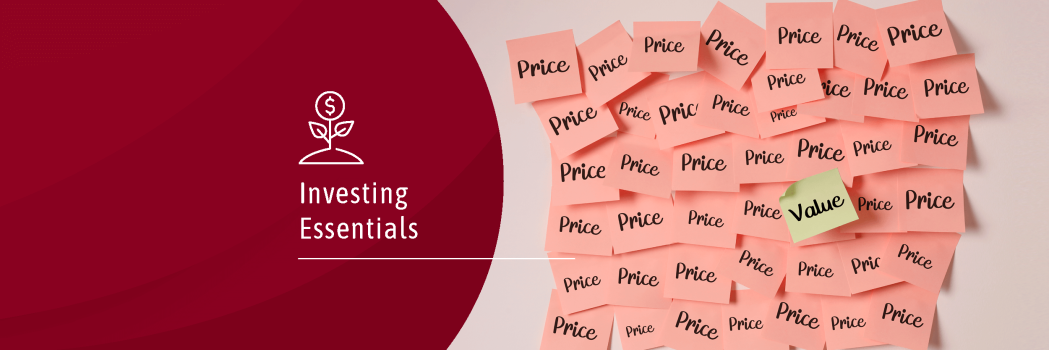
10 Oct 2023 - Investing Essentials: Understanding fund fees - price versus value
|
Investing Essentials: Understanding fund fees - price versus value Bennelong Funds Management September 2023 |
|
While understanding the price of an investment is relatively straightforward, measuring value is more difficult. Everyone has a different view of what represents value. Some people are more thrifty and therefore focused on achieving a lower price point. Others are happy to pay more if they believe they'll get better quality. Value can sometimes be hard to quantify, but when it comes to investing, fees are a good place to start. It's pretty easy to work out if an investor in one fund has obtained a greater return than an investor in a similar product with a different fee. This can give a good comparison of the price paid, provided the calculation is done after the suggested investment time frame. To effectively decide whether a fund presents good value or not, you need to understand the different types of fees in a fund.Annual management fee - this should be clear-cut and is easy to compare between two funds. Management expense ratio (MER) - this represents the management fee plus other fund expenses (such as audit costs). Again, it's usually straightforward to compare the MER of two funds. Performance fee - this, however, can be more complex. Performance fees rarely encompass the same information and can be structured differently from fund to fund, making them more difficult to compare. To help understand the interplay between different types of fees, the indirect cost ratio (ICR) can be useful. This represents the overall cost of a fund at a particular point in time, including the MER and any related performance fee that has been paid during a financial year. The ICR, however, is backwards-looking. It's usually calculated after the end of the financial year, and looks solely at that past financial year. While it's a decent indicator, and certainly a good way to compare two different funds, investors should understand that it doesn't represent what they will pay for the year ahead. Investors should particularly take into account the performance of the relevant fund during that 12-month period. The ICR may look high, but were returns also strong? Don't dismiss a fund from consideration simply because of a high ICR, without also taking into account what performance has been like - that is, making a comparison on price and not a comparison on the value that has been delivered. This also relates to the 'active versus passive" management debate. Passive funds often have lower fees on face value. Then again, the levers available to an active manager give them more flexibility in adjusting their exposure to the stocks they hold to take advantage of economic themes in the current environment. For many investors, it may be the case that a combination of both approaches will serve them best, both in terms of price and value. The important thing is understanding the different fees being paid, what those fees are paying for, and why and when the merits of one approach over the other can be most beneficial. But in the end, the decision to invest in anything should be made by considering more than just the cost. |
|
For more insights visit www.bennelongfunds.com Disclaimer The content contained in this article represents the opinions of the author/s. The author/s may hold either long or short positions in securities of various companies discussed in the article. This commentary in no way constitutes a solicitation of business or investment advice. It is intended solely as an avenue for the author/s to express their personal views on investing and for the entertainment of the reader. |
9 Oct 2023 - Performance Report: Rixon Income Fund
[Current Manager Report if available]

9 Oct 2023 - Performance Report: Bennelong Australian Equities Fund
[Current Manager Report if available]

9 Oct 2023 - New Funds on Fundmonitors.com
|
New Funds on FundMonitors.com |
|
Below are some of the funds we've recently added to our database. Follow the links to view each fund's profile, where you'll have access to their offer documents, monthly reports, historical returns, performance analytics, rankings, research, platform availability, and news & insights. |
 |
|||||||||||||||||||
| Vanguard Active Global Growth Fund | |||||||||||||||||||
|
|||||||||||||||||||
| View Profile | |||||||||||||||||||
| Vanguard Active Emerging Markets Equity Fund | |||||||||||||||||||
|
|||||||||||||||||||
| View Profile | |||||||||||||||||||
 |
|||||||||||||||||||
| Coolabah Floating-Rate High Yield Fund | |||||||||||||||||||
|
|||||||||||||||||||
| View Profile | |||||||||||||||||||
|
|
|||||||||||||||||||
| Janus Henderson Global Sustainable Equity Fund | |||||||||||||||||||
|
|||||||||||||||||||
| Janus Henderson Sustainable Credit Fund | |||||||||||||||||||
|
|||||||||||||||||||
| View Profile | |||||||||||||||||||
| Janus Henderson Net Zero Transition Resources Fund | |||||||||||||||||||
|
|||||||||||||||||||
| View Profile | |||||||||||||||||||
|
|
|||||||||||||||||||
| New Holland Capital Tactical Alpha Fund (AUD) - Class B | |||||||||||||||||||
|
|||||||||||||||||||
| View Profile | |||||||||||||||||||
|
Want to see more funds? |
|||||||||||||||||||
|
Subscribe for full access to these funds and over 700 others |


9 Oct 2023 - What are Warrants and what is a Bond/Warrant?
|
What are Warrants and what is a Bond/Warrant? PURE Asset Management September 2023 |
| Cost to acquire the warrant/option | -$0.10 |
| Cost to exercise | -$2.50 |
| Proceeds from sale of shares | +$3.00 |
| Profit | +$0.40 |
| Return on investment | 400% |
The appeal is that, compared to simply investing the shares, there is much more leverage to the rising share price. Using the same example above, but instead buying the shares, the investor would have made a 50% return.
| Cost to buy the shares | -$2.00 |
| Proceeds from sale of shares | +$3.00 |
| Profit | +$1.00 |
| Return on investment | 50% |
Therefore, although the investor is taking more risk by buying a warrant or option, because of the limited time frame until expiry, they can achieve the same profit while deploying far less capital. See below, where both scenarios yield a $5,000 profit, but the investor in the warrant/option has had to invest just 12.5% of the capital to achieve the same outcome:
| Warrant/Option | Shares | |
| Capital invested | $1,250 | $10,000 |
| Cost per security | -$0.10 | -$2.00 |
| Number of securities | 12,500 | 5,000 |
| Profit per security | +$0.40 | +$1.00 |
| Profit | $5,000 | $5,000 |
| Return on investment | 400% | 50% |
What is a Bond/Warrant?
A bond/warrant is Convertible Loan broken into its two constituent parts, being a bond (or loan to a Company), with a detached Warrant (an option to buy the shares).
Just like a convertible loan, when the warrants are exercised, the investor is effectively converting from debt into equity. This is achieved by making the cost of exercising the warrant the same as the value of the loan, so that when the Company receives the proceeds from exercise, they can be used to extinguish the loan. In turn, the investor has effectively cancelled the loan, in exchange for shares from the Company.
Just like a convertible loan, the attraction to the investor is that they prior to conversion they receive the benefits of a loan structure: interest and more protection in the capital structure, but they also have the opportunity to make an additional profit if the share price rises above the strike or conversion price.
Often a traditional convertible note does not allow the flexibility of early repayment because when the loan is repaid the investor loses the optionality of converting into shares. Convertible notes often prohibit early repayment because issuer Companies may be incentivised to repay or refinance the convertible note, just before the investor can profit from the rising share price.
Therefore, a bond/warrant structure can be attractive to the Company versus a traditional convertible loan as the Company retains the right to repay the bond whenever it chooses. Likewise, the investor is happy because if the loan is repaid early, they retain the warrant and keep the optionality to make a profit from the rising share price, but without any capital at risk i.e., they have created a free warrant.
Bond/warrants are a win-win for both the investor and the Company, but they are also a win for other shareholders. This is because the inherent attraction of the structure means the warrant strike price can justify at a material premium to the prevailing share price, therefore shareholders are less diluted, compared to raising capital via the issuance of shares. It's a win-win-win!
Funds operated by this manager:

6 Oct 2023 - Hedge Clippings | 06 October 2023
|
|
|
|
Hedge Clippings | 06 October 2023 As expected, the RBA kept rates on hold last Tuesday, and in the Governor's statement following the board meeting, incoming chair Michele Bullock stuck to her predecessor's script: While cautious, she expects inflation won't be back to the 2-3% target range until late 2025 - at least 2 years away. As always, the last sentence of RBA-speak remained consistent: "The Board remains resolute in its determination to return inflation to target and will do what is necessary to achieve that outcome." That warning provides those economists predicting one more rate rise this cycle the chance that they'll be proven correct, but based on the numbers available at present, the 12 upward steps totaling 4.0% taken to date seem to be having the intended result - although the progress is painfully slow, while the effect on mortgage holders is just painful. Things may seem steady in Australia (at least on the monetary policy front) but in spite of our comment in last week's Hedge Clippings that the outlook for US rates was broadly the same as here (i.e. steady as she goes, although "higher for longer") but with the chance of one more rate rise, that possibility seems to have been confirmed. The market was certainly not waiting for confirmation: The yield on 30-year US government bonds hit 5% on Tuesday for the first time since 2007. In the United Kingdom, the yield on 30-year bonds also reached 5% this week, the highest level in more than two decades. Yields on German long-dated bonds are back to levels last seen in 2011. Yields on Italy's 10-year bonds hit 5% on Wednesday, the highest level since 2012, when the Eurozone debt crisis was in full swing. So even though the outlook for Australian rates may be cautiously optimistic, (i.e.staying steady) the global outlook for bonds, and, as a result, equities, is causing considerable pain both globally and in Australia. News & Insights New Funds on FundMonitors.com Investment Perspectives: A big disinflation tailwind is coming | Quay Global Investors China - the re-opening trade that never quite was | 4D Infrastructure August 2023 Performance News Equitable Investors Dragonfly Fund
September 2023 Performance News |
|
|
If you'd like to receive Hedge Clippings direct to your inbox each Friday |

6 Oct 2023 - Is Tesla just another car company?
|
Is Tesla just another car company? Montgomery Investment Management September 2023 In the ever-evolving landscape of the automotive industry, few companies have captured the world's attention quite like Tesla. Thirteen years ago, electric cars were synonymous with virtue signalling rather than high-performance excitement. However, Tesla disrupted this perception, transforming electric vehicles into something thrilling and aspirational. Its journey, from a modest initial public offering (IPO) in 2010 to a valuation exceeding $1 trillion in 2019, has been nothing short of remarkable. Yet, recent stagnation in Tesla's stock price has prompted a critical question: Is Tesla still the visionary pioneer it once was, or is it merely becoming "just another car company"? A background to Tesla Thirteen years ago, in 2012, hybrid electric cars were unsexy and uninspiring. Think of the Toyota Prius here in Australia, or the Chevrolet Volt and Nissan Leaf in the U.S. These were virtue-signaling vehicles designed without mass appeal in mind. Manufacturers also had a vested interest in their legacy internal combustion engine (ICE) models and weren't tooled up for mass adoption of electric vehicles (EV). Tesla changed all that, first delivering exciting luxury cars that also happened to be fast and battery-powered, before widening the appeal by launching more affordable models that were also powerful and equally good-looking. Around thirteen years ago, a small company called Tesla Motors (NASDAQ:TSLA) launched its initial public offering (IPO) on the NASDAQ stock exchange, raising a total of U.S.$226.1 million at a (split adjusted) share price of U.S.$3.40. Three years later, in 2013/14, Tesla transitioned from being essentially a start-up with highly uncertain survival prospects to being a credible auto business, redefining public expectations around electric vehicles with its introduction of the Model S, and in 2013, generating its first quarterly profit. Excitement in the stock market for Tesla, however, was arguably greater. Between 1 January 2013 and 1 January 2014, consensus full-year earnings forecasts for Tesla were revised up sharply, with 2015 net income forecasts moving from U.S.$247 million to U.S.$432 million and 2016 net income forecasts moving from U.S.$415 million to U.S.$784 million. The less-than-doubling of earnings expectations however, resulted in a 10-fold increase in the share price as the discount associated with doubts about the company's survival unwound. Tesla's profits fell well short of those forecasts, with the company reporting a net loss in 2015 of U.S.$889 million and another net loss in 2016 of U.S.$773 million. Yet the market's excitement didn't wane. The share price gains didn't continue, but the price gains didn't reverse either. Profitable hopes were simply deferred. At the start of 2015, Tesla commanded a market valuation of close to U.S.$30 billion, well short of the value ascribed to the world's largest automakers, but still around half that of Ford and General Motors. It wasn't until 2019 that the fortunes of Tesla started to take off, with its shares jumping from U.S.$12.65 in May 2019 to a split-adjusted U.S.$409.97 on November 04, 2021, and a market capitalisation of over U.S.$1 trillion. In mid-2020, Tesla achieved four consecutive quarters of positive net income for the first time in its history, and over the prior 12 months consensus net income forecasts for Tesla increased substantially. The 2021 forecast increased to U.S.$3.15 billion from U.S.$1.72 billion, and the 2022 number rose to $5.03 billion from $3.44 billion. This less-than-doubling of earnings forecasts had driven another 10x share price move. Tesla today Today, however, the share price is roughly where it was almost three years ago. If the gas has been let out (pun intended) of the share price's ascent, it begs a question: what if Tesla is just another car company? Tesla is still the market leader in battery-powered electric car sales in the U.S., with a market share of above 60 per cent, and the company's flagship Model 3 is the best-selling EV model in the U.S.. Meanwhile, Tesla's market capitalisation today of U.S.$777 billion is more than the combined market capitalisation of the next eight biggest manufacturers, including (in descending order) Toyota, Porsche, BYD, Mercedes Benz, VinFast Auto, BMW, Volkswagen, and Ferrari. Not unlike Apple, Tesla has adopted a closed-ecosystem approach to its products, owning the cars, the servicing, and the charging directly, setting it apart from other manufacturers. But does this deserve the hefty multiple placed on the company's earnings that renders it as valuable as the world's next eight biggest manufacturers? Investors can buy Toyota for $22,000 per vehicle sold in 2022, BMW for $27,825, BYD for $53,800 per vehicle sold, or they can buy Tesla for nearly U.S.$591,000 per vehicle sold. The economics between Tesla and every other car manufacturer in the world, in the long run, might be slightly different. Still, they cannot be sufficiently dissimilar to justify such a disparity in either absolute market capitalisation terms or in relative terms. Despite a share price today that is 40 per cent below its all-time high, enthusiasm for the world-changing potential of EV technology has clearly translated to an equally transformative approach to stock market valuation for Tesla. What investors are forgetting, however is that Tesla will ultimately be a car company. As competitors catch up, the competitive advantage of Tesla will erode. Meanwhile, any differences in the economics of car manufacturing between Tesla and its rivals will also diminish as more of each brand's fleet moves to electric. In time it will be harder to justify such a disparity between Telsa's market valuation and that of its competitors. Ten reasons why the differences will narrow Increased competition: As we have written about many times, an increasing number of automobile manufacturers, including traditional giants and EV startups, are producing electric vehicles that compete directly with Tesla's lineup. Brands like Ford, Rivian, Lucid, and Chevrolet have rolled out new electric models that, in some cases, outperform Tesla in terms of range, performance, and looks (the latter being subjective of course). And while the market for EVs overall is growing, Tesla's dominance in EV market share in the U.S. has already slipped from 72 per cent to 62 per cent in just the first year of rising competition and brand choice. Meanwhile analysts believe Telsa's market share could fall to as little as 18 per cent by 2026 from 78 per cent in 2018. Ageing product line: Tesla first new passenger vehicle model in three years is the just released updated Model 3. This 'stagnation' in model releases provides competitors with an opportunity to entice potential Tesla customers with newer and potentially more advanced options resulting in Tesla losing further share. Struggles in key markets: China, the world's largest auto market, has been a significant growth engine for Tesla. However, the company has experienced a softening in demand in China. Local competitors, of which BYD Co. is the largest by no means alone, are making significant strides, offering a more diversified range of models that cater to various price points. Critics in China suggest Tesla does not fully understand the preferences of Chinese consumers. Marketing and branding issues: Tesla's decision to offer discounts to boost sales is a departure from its earlier stance, indicating potential demand challenges and lower margins. Furthermore, Elon Musk's controversial takeover of Twitter Inc. has affected Tesla's brand perception, pushing some potential buyers away. Distracted Elon Musk: Many shareholders are concerned that Elon Musk, the driving force behind Tesla, has been distracted with his acquisition and management of Twitter, now called X. Such diversions annoy analysts who believe they could impact Tesla's strategic directions and operational efficiency. Share price malaise: Tesla's share price is unchanged from almost three years ago, suggesting investors are acknowledging the challenges Tesla faces and waking up to the reality of the long-term economics of manufacturing cars. Inability to meet growth targets: Despite aggressive scaling efforts, Tesla is falling short of its annual growth targets. With a 40 per cent annual growth rate in 2022 compared to 87 per cent in 2021, the company's exponential growth might be plateauing if Elon Musk's target of two million vehicles in 2023 is not met. Shifting strategies: Elon Musk's statement back in July 2021 that the "goal is not to be a car company" suggests a broader and potentially more diffuse focus and remains a reminder for analysts who focus too closely on the company's position and growth in the automobile industry. Over-reliance on existing models: Rather than diversifying its lineup, Tesla is focused on scaling up and churning out as many of its existing models as possible. This strategy is at odds with conventional (and capex intensive) wisdom that releases new models almost annually. The traditional auto industry belief is car makers need to offer a wide range of updated and more advanced models to keep buyers interested and part of their brand 'family'. Valuation metrics: At September 2023 Tesla is trading at 63.1 times trailing twelve-month (TTM) earnings. This compares to 120 times at the end of 2021. At either measure the price-earnings (PE) is a market valuation more typical of high-growth tech companies than a car manufacturer. Conclusion If Tesla does indeed become 'just a car company', the sharp drop in PE will continue and reflect a growing realisation in Tesla's growth prospects, its position in the auto industry, and its economics are less exciting than once believed. Tesla remains a global leader in the EV market with strong fundamentals, however, there are clear signs that it faces increasing challenges from competitors, potential demand issues, and market sentiment shifts. The lofty valuations and hype surrounding the company needs to be re-evaluated considering these inescapable realities. Author: Roger Montgomery Funds operated by this manager: Montgomery (Private) Fund, Montgomery Small Companies Fund, The Montgomery Fund |

5 Oct 2023 - Performance Report: Equitable Investors Dragonfly Fund
[Current Manager Report if available]
