NEWS

2 Sep 2024 - Stock Story: Stryker
|
Stock Story: Stryker Magellan Asset Management August 2024 |
|
Stryker Corporation: transforming patient care for over 150 million patients annually. Innovation leadership is a key hallmark of a high-quality business. When we think about major innovation trends globally, the most prominent headlines usually spotlight the technology sector. Recent excitement about artificial intelligence and its many applications is a prime example. However, less visible yet equally transformative is the pace of innovation in a sector often considered more constant: healthcare. The pace of healthcare innovations has accelerated dramatically in recent decades, leading to significant advancements in healthcare services and improving quality of life. For instance, the world witnessed the rapid development of the mRNA vaccine platform, which played a crucial role in combating the covid-19 pandemic. Additionally, new GLP-1 agonists are showing potential in addressing the growing global obesity epidemic. The healthcare subsector of medical devices stands out as a vital contributor to enhanced medical treatments. This is due primarily to the adoption of new and innovative medical technologies by physicians and health systems worldwide. These technologies have been clinically proven to deliver superior patient outcomes, improved surgical techniques, and operating room efficiencies. A standout leader in the medical devices subsector is Stryker Corporation. With a diverse product portfolio spanning orthopaedics, medical and surgical equipment, and neurotechnology, Stryker's products are available in over 75 countries, affecting more than 150 million patients annually. If you have ever been treated in an operating room in a hospital, chances are you encountered one or more of Stryker's products.
Stryker's journey began in Michigan, USA, in 1941, founded by a prominent orthopaedic surgeon and medical device inventor Dr Homer Stryker - which is fitting given the company has been at the forefront of medical innovation in the orthopaedic surgical category over the past decade. Beyond continuous enhancements in knee and hip implant designs, such as cementless designs that better promote bone growth, Stryker revolutionised the field in 2017 with its Mako Robotic-Arm, assisting surgeons in performing knee and hip replacements with unprecedented precision. Clinical studies highlight that Mako Robotic procedures result in meaningfully higher patient satisfaction rates, with lower post-operative pain, faster recovery times, more accurate bone resections and implant placement and reduced soft tissue damage. This has accelerated surgeon adoption, with over 60% of knee and 30% of hip implants sold by Stryker in the US now implanted using a Mako Robot. Despite significant investments by competitors in R&D, they have struggled to dethrone Stryker's leadership. This underscores Stryker's R&D strength, driven by its unique 'bottom-up' capital allocation model and the 'innovation flywheel' effect stemming from long-standing relationships with leading surgeons and teaching hospitals. Stryker holds over 5,000 patents, 400 of which are in its digital robotics platform - a ten-fold increase in the past decade. Plans are underway to extend the Mako Robot to new surgical indications, including upper extremities (shoulder) and spine. Stryker's innovation is not limited to orthopaedics. The company is advancing surgical planning and navigational software for cranial and spine procedures with its Q Guidance System and improving surgical visualisation and fluorescence imaging for minimally invasive surgeries with its 1788 platform. The growing installed base of Stryker's systems, alongside the lack of superior alternatives from competitors, underscores the impressive nature of its advancements. Importantly, impactful innovation can lead to pricing power through a combination of patient/physician preferences and patent protection, and higher switching costs due to the invasive nature of surgical products and the growing clinical evidence of improved patient outcomes. This gives us confidence in Stryker's above-peer growth outlook, which is particularly bolstered by its ability to benefit three key stakeholders in health systems worldwide where expenditure continues to reach new heights: patients, surgeons, and hospitals. By Wilson Nghe, Investment Analyst |
|
Funds operated by this manager: Magellan Global Fund (Hedged), Magellan Global Fund (Open Class Units) ASX:MGOC, Magellan High Conviction Fund, Magellan Infrastructure Fund, Magellan Infrastructure Fund (Unhedged), MFG Core Infrastructure Fund, Magellan Core ESG Fund Important Information: This material has been delivered to you by Magellan Asset Management Limited ABN 31 120 593 946 AFS Licence No. 304 301 ('Magellan') and has been prepared for general information purposes only and must not be construed as investment advice or as an investment recommendation. This material does not take into account your investment objectives, financial situation or particular needs. This material does not constitute an offer or inducement to engage in an investment activity nor does it form part of any offer documentation, offer or invitation to purchase, sell or subscribe for interests in any type of investment product or service. You should obtain and consider the relevant Product Disclosure Statement ('PDS') and Target Market Determination ('TMD') and consider obtaining professional investment advice tailored to your specific circumstances before making a decision about whether to acquire, or continue to hold, the relevant financial product. A copy of the relevant PDS and TMD relating to a Magellan financial product may be obtained by calling +61 2 9235 4888 or by visiting www.magellangroup.com.au. Past performance is not necessarily indicative of future results and no person guarantees the future performance of any financial product or service, the amount or timing of any return from it, that asset allocations will be met, that it will be able to implement its investment strategy or that its investment objectives will be achieved. This material may contain 'forward-looking statements'. Actual events or results or the actual performance of a Magellan financial product or service may differ materially from those reflected or contemplated in such forward-looking statements. This material may include data, research and other information from third party sources. Magellan makes no guarantee that such information is accurate, complete or timely and does not provide any warranties regarding results obtained from its use. This information is subject to change at any time and no person has any responsibility to update any of the information provided in this material. Statements contained in this material that are not historical facts are based on current expectations, estimates, projections, opinions and beliefs of Magellan. Such statements involve known and unknown risks, uncertainties and other factors, and undue reliance should not be placed thereon. No representation or warranty is made with respect to the accuracy or completeness of any of the information contained in this material. Magellan will not be responsible or liable for any losses arising from your use or reliance upon any part of the information contained in this material. Any third party trademarks contained herein are the property of their respective owners and Magellan claims no ownership in, nor any affiliation with, such trademarks. Any third party trademarks that appear in this material are used for information purposes and only to identify the company names or brands of their respective owners. No affiliation, sponsorship or endorsement should be inferred from the use of these trademarks. This material and the information contained within it may not be reproduced, or disclosed, in whole or in part, without the prior written consent of Magellan. |
 The three factors driving stock returns (pdf format)

30 Aug 2024 - Hedge Clippings | 30 August 2024
|
|
|
|
Hedge Clippings | 30 August 2024 This week's July CPI figure was the first downward movement since last December, falling 0.3% to 3.5% depending on which indicator one chose - Headline (3.6%), Seasonally Adjusted (3.6%), Excluding Volatile Items (3.7%), or Trimmed Mean (3.8%). However, all fell, thanks in most part to the fall of 5.1% in electricity prices, which in turn fell thanks to a range of state and federal handouts. It seems unlikely that the improvement, while welcome, will sway the RBA at their next meeting, on 24 September, but Michele Bullock may give some clues when she's due to have a "fireside chat" next Thursday at a Women in Banking & Finance event in Sydney. In the mean-time we expect the phone lines will be running hot between Jim Chalmers and the RBA to encourage a rate fall, which is unlikely. All the Bank's prior comments and commitments suggest they won't be fooled by one-off numbers, however welcome, triggered by governments - state and federal intent on re-election. Today's flat July retail sales figures may assist somewhat, but the August CPI figure due inconveniently on 25th September, the day after the RBA's meeting and announcement, will also be impacted by further flows of government rebates. By which time of course we'll be totally focused on footy finals of one code or another, with the AFL plus the Wallabies second Bledisloe game on the 28th, and the NRL a week later. Prior to that of course, the Sydney Swans play the GWS Giants this week-end. Who would have thought that two Sydney teams playing in a final a possibility even 10 years ago? News & Insights 10k Words | Equitable Investors Market Commentary | Glenmore Asset Management July 2024 Performance News Seed Funds Management Hybrid Income Fund Bennelong Twenty20 Australian Equities Fund Insync Global Quality Equity Fund |
|
|
If you'd like to receive Hedge Clippings direct to your inbox each Friday |

30 Aug 2024 - Performance Report: Delft Partners Global High Conviction Strategy
[Current Manager Report if available]

30 Aug 2024 - Performance Report: PURE Resources Fund
[Current Manager Report if available]

30 Aug 2024 - Performance Report: Insync Global Capital Aware Fund
[Current Manager Report if available]

30 Aug 2024 - Global Investment Committee review: still positive, with downside risk caveats
|
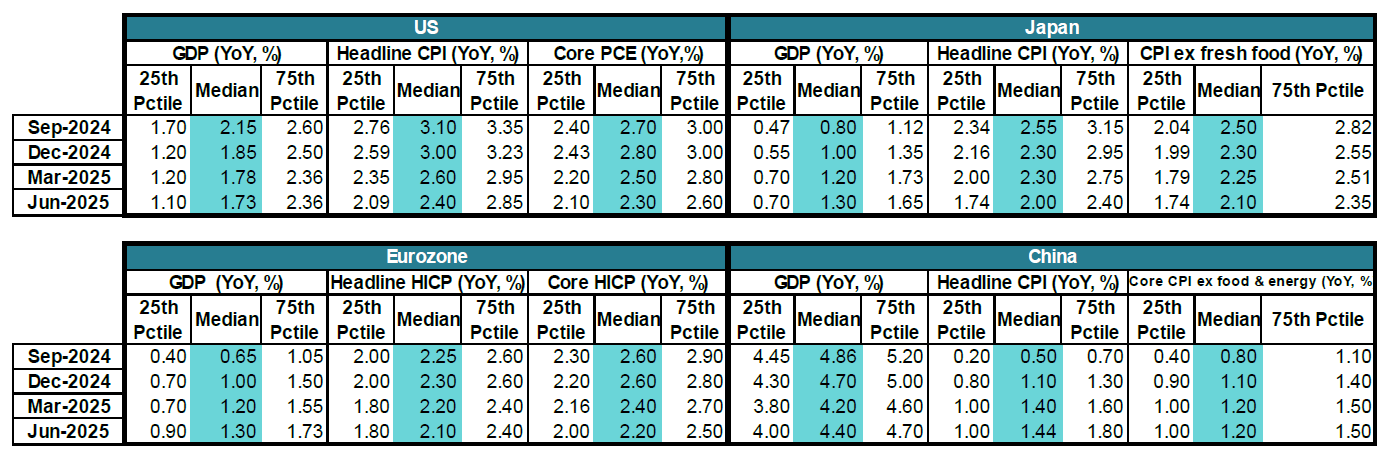
Global Investment Committee review: still positive, with downside risk caveats Nikko Asset Management August 2024 On 13 August, the Global Investment Committee (GIC) held an extraordinary session to review the impact of recent volatile market movements, as well as the growing concerns over slower US growth. In summary, our conclusions were as follows:
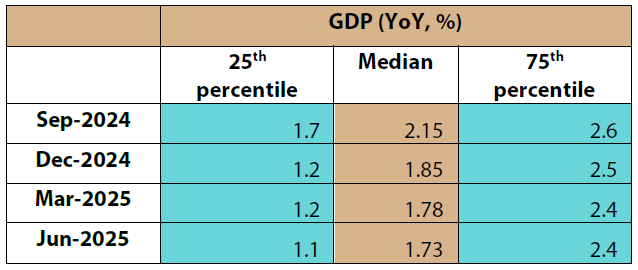
Global macro: increased downside risks to US GDP growth outlookNew developments in US GDP growth and inflation since Q2: In the US, following several substantial downward revisions to past data, the July nonfarm payrolls came in significantly softer than expected. The US unemployment rate also rose to 4.3% (although, importantly, labour participation rose). The Sahm rule1 was triggered, and some market participants began to fear that a recession was imminent, giving rise to some calls for 50 basis point (bp) Fed rate cuts within 2024. June's core CPI cooled further while US manufacturing activity contracted in July by the most in eight months, weighed by subdued orders and production in addition to the largest ISM employment drop in four years. However, there were also caveats to the weak data. Although consumer sentiment remains soft, average weekly earnings continued to expand in June, as did retail sales. Meanwhile, despite the softer June CPI print, the Fed's favoured core PCE indicator failed to decelerate as expected in June. Additionally, in spite of disclaimers by the Bureau of Labor Statistics that the weather (hurricane Beryl) had "no discernible effect" on the weak nonfarm payroll figure, the data appear to indicate otherwise. Most of the layoffs were temporary (with permanent job losses little changed) and the decline in job losses in the establishment survey was concentrated in transit and ground passenger transportation sectors, which were likely to have been influenced by the weather. Moreover, the increase in the US unemployment rate comes amid steady growth in the US labour force (thanks to immigration) and a steadily increasing labour participation rate. As such, this decrease does not owe purely to a deterioration in employment. GIC perspective: slower but positive growth trajectory intact while volatility contributes to downside risks With inflation, though showing some signals of slowing, still above the Fed's 2% target, we were reluctant to react to one month of soft US data. Meanwhile, several Fed speakers have since tempered expectations for aggressive easing, including multiple 50-bp reductions or inter-meeting cuts. That said, we note the reaction of financial markets to the softer data with the VIX spiking to highs above 60 as speculative "carry trades" were unwound. While we admit that it may be somewhat circular to reference financial market turbulence as a harbinger of slower growth, it is worth noting that financial markets have been great contributors to accommodative financial and monetary conditions. As such, we found it unwise to overlook downside risks to the economy should financial market volatility return and prove disruptive to growth. Therefore, we have downgraded our 25th percentile US growth estimates as outlined below, which also slightly impacts the median GIC estimates of US growth.
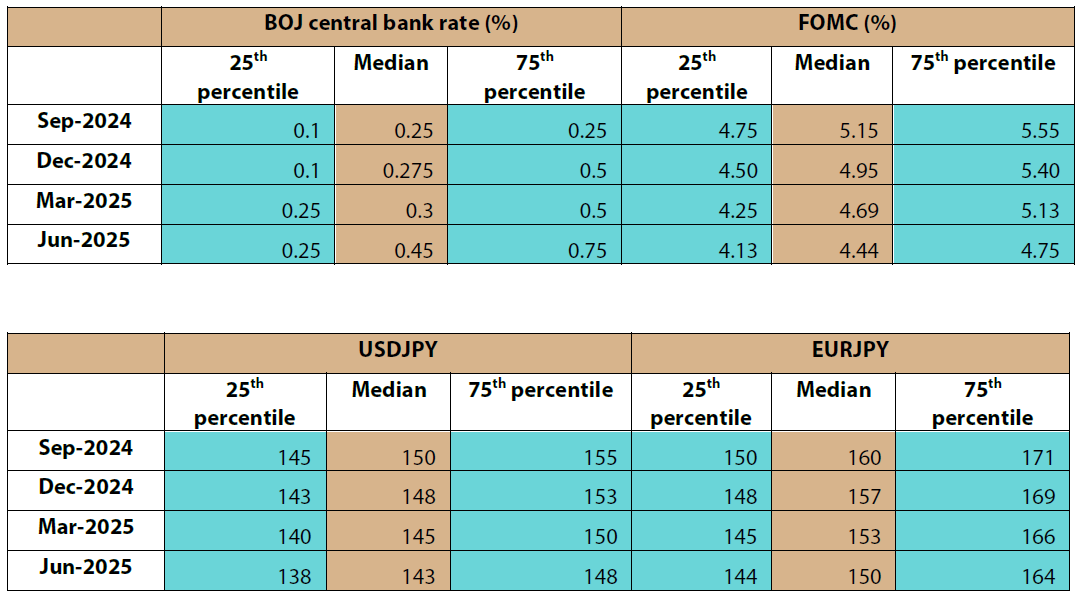
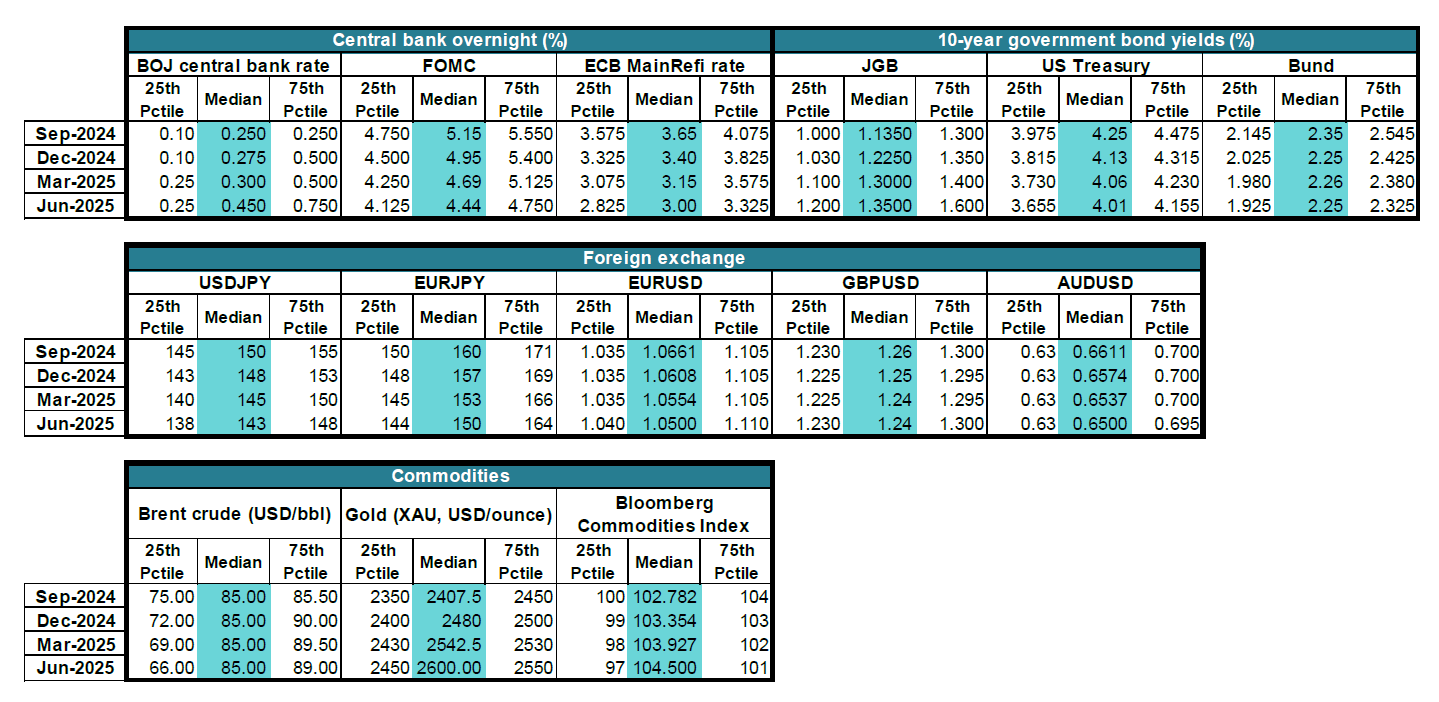
Central bank rates and forex: yen unlikely to revisit lows; downside risks to FOMCNew developments in central bank rates and forex since Q2: The BOJ surprised many market participants by hiking interest rates to 25 bps on 31 July. The BOJ's statement signalled upside risks to prices and a modest upgrade to the upper end of longer-term core inflation within the quarterly Outlook for Economic Activity and Prices. The BOJ meeting was soon followed by the July FOMC and Chair Jerome Powell's statement cemented expectations for a September rate cut. We should note that Powell, who signalled that a rate cut could come "as soon as" September, also did not rule out the possibility of "zero cuts" and indicated that any easing would depend on data. Dollar/yen meanwhile showed somewhat of a muted reaction to the 31 July BOJ decision. The market was subdued until the 2 August release of the US July nonfarm payrolls, which surprised on the downside. Subsequently, the BOJ's summary of opinions released on 8 August made a reference to a terminal interest rate of "at least" 1% (largely reflecting rising long-term inflation expectations) and was therefore perceived as hawkish. The US data disappointment combined with the BOJ's perceived hawkish stance helped to trigger a succession of events in financial markets. Large speculative yen shorts crumbled as US recession fears prompted some market speculation that the Fed was "behind the curve" or that the BOJ would engage in a series of rate hikes without ensuring that markets would successfully absorb them. Volatility has since abated somewhat, but what remains clear is that relative interest rate differentials (of late, real interest rate differentials) have been driving the carry trade. As a result, even a small narrowing of the spread caused leveraged players to bow out. Subsequent to the resurgent market volatility, BOJ Deputy Governor Shinichi Uchida offered assurance that further rate hikes would not come amid unstable markets, and with many speculative yen shorts liquidated (at least, according to the IMM Commitment of Traders report), dollar/yen stabilised above the 145 level (modestly above Japanese corporates' FY-end expectations per the BOJ's July Tankan report). That said, many current estimates of purchasing power parity puts 1 dollar at slightly less than 100 yen, which implies that "fair value" may exercise a downward pull on the currency pair given the outlook for gradually narrowing interest rate differentials. GIC perspective: dollar/yen to remain range-bound with limited downside to Q2 2025 With speculative yen shorts apparently largely cleared after building up to multi-year highs, we feel that there is limited impetus for dollar/yen to resume its sharp drop in the near term. The BOJ has been duly warned by currency volatility and it has committed itself to making its next move in calmer markets. We maintain that BOJ policy, still accommodative by most measures, will likely tighten at some point. However, we believe that there is sufficient reason for the BOJ to continue to gauge not only data (which has been positive of late, such as buoyant private demand-fuelled Q2 GDP growth and positive June real wage growth) but also overseas data and financial market conditions. We therefore maintain our BOJ outlook (we had foreseen one rate hike from the BOJ sometime between July and September) although we modestly downgraded our dollar/yen and euro/yen guidance ranges. Meanwhile, the heightened downside risks that we see to US GDP growth also correspond to higher downside risks to Fed policy rates, as follows:
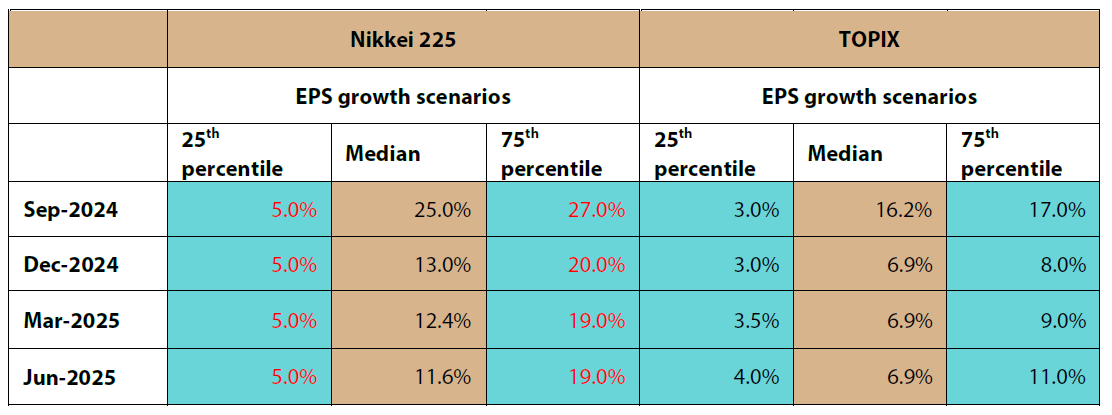
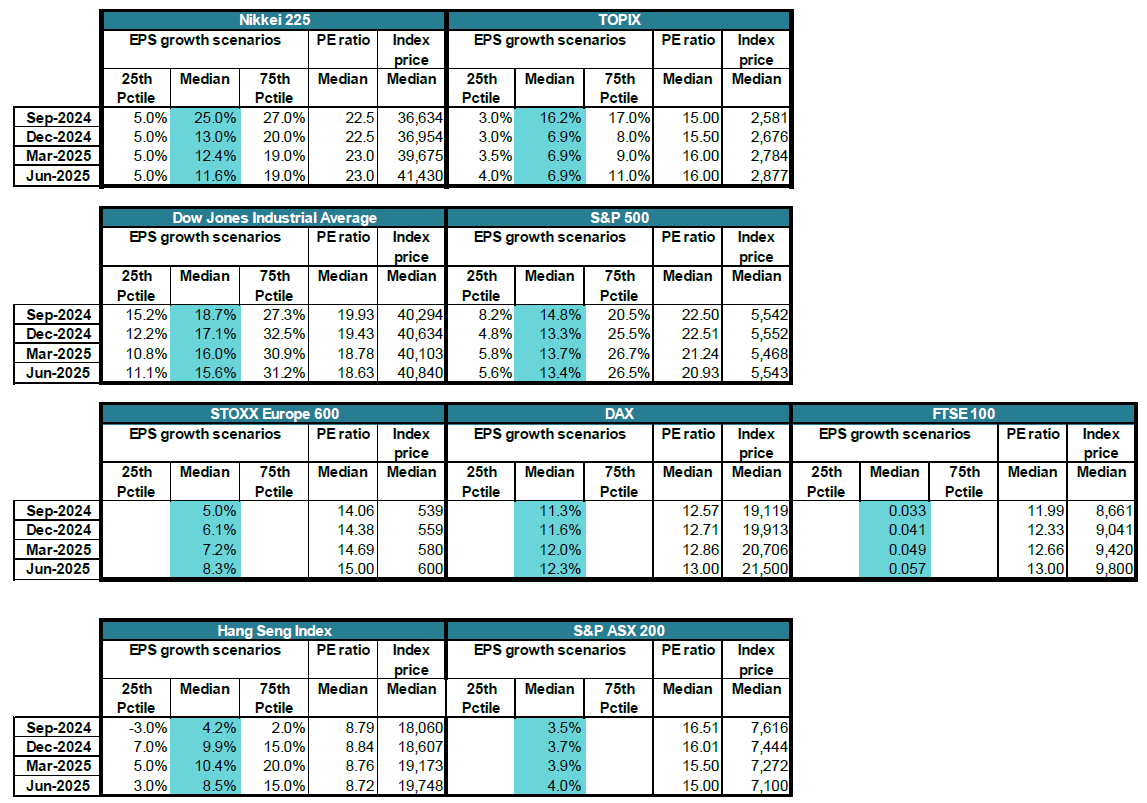
Japan equities: volatility, dollar yen impact temporary but non-negligibleNew developments in Japanese equities since Q2: As the market re-rated the "carry trade", the CBOE VIX index (a proxy for equity market risk over the next 30 days) spiked on 5 August to above 60 from below 20, after which volatility has slowly abated. The Nikkei 225, which is price-weighted and therefore volatile, saw three-month at-the-money implied volatilities (a slightly longer horizon measure than the VIX) surge above 37 on 5 August before slowly pulling back. The TOPIX, typically less volatile, also saw three-month at-the-money implied volatilities spike near 30 and then ease somewhat. Japanese stocks were oversold (with TOPIX price/earnings ratios sinking to the mid-11 handle), and the decline became a good opportunity for companies to buy back shares and institutional investors to accumulate stock. The TOPIX index subsequently staged a comeback, with price/earnings recovering to 15. Early observations by sector: Financials and trading company stocks were the hardest hit amid the sell-off but domestic demand and defensive names (e.g. medical equipment) remained more resilient. Similarly, many cash-rich stocks, as well as firms investing in human capital and consequently experiencing increased productivity, have also remained robust. Meanwhile, the sell-off significantly affected semiconductor and auto stocks. The sell-off may have undervalued high dividend yield names, which could be poised for an eventual comeback. GIC perspective: With volatility still higher than before the recent market shock, the rebound by Japanese stocks appears to be limited below prior highs. That said, earnings in the first quarter of Japan's current fiscal year (FY24) appear solid so far. Signals of domestic demand, including both consumption and investment, becoming a stronger driver of growth continue to support Japan's "virtuous circle". Firms appear to retain pricing power even as real wage growth has turned positive. The outlook appears structurally sound for the longer-term, though near-term, we suspect that the impact of stock volatility as well as a stronger yen (which would impact firms with significant overseas revenue) may exercise an interim drag on earnings in some sectors. Although we remain positive on earnings growth overall, it is possible that we may see some sector rotation, allowing for domestic demand sensitive firms that have underperformed to date to catch up with those more driven by overseas revenues. We continue to expect Japanese corporates to generate healthy single-digit earnings growth across the TOPIX, which represents the majority of our Japan equity investments. However, we foresee valuations being affected by potential ripple effects from the recent market volatility and carry trade unwinding. We estimate that the impact may last for three to six months. Additionally, there is a risk that a weaker dollar/yen could, with a lag, exert a downward pull on the earnings of large cap exporters with overseas revenues, particularly among Nikkei constituents. Although we remain firm in our conviction that Japan's structural recovery is likely to continue supporting Japanese equities, we acknowledge the possibility for an interim resurgence in equity volatility. The GIC is shifting from single valuation assumptions (P/E) in Japanese stocks to a guidance range for P/E. This is similar to our guidance range for earnings per share (EPS) guidance, with which we aim to capture probabilities between the 25th and 75th percentiles of consolidated earnings growth. We are also making modest adjustments to our EPS guidance ranges and adding 25th and 75th percentile indicators for Nikkei-listed large-caps. Earnings guidance ranges: We foresee year-on-year (YoY) earnings growth for the TOPIX ranging between 3% and 8% YoY (excluding base effects adjustments) over the second half of 2024. We expect earnings growth to recover to between 4% and 11% in the first half of 2025, once near-term volatility abates and companies have adjusted to a mildly stronger yen. We foresee the Nikkei's earnings range between 5% and 20% YoY for H2 2024 (excluding base effects adjustments) and between 5% and 19% over the first half of 2025, with a more lasting impact likely to be felt among large exporters and firms reliant on substantial overseas revenue. In the near-term, we anticipate an adjustment in YoY EPS growth in September, due mostly to the low base effects of September 2023's EPS. We believe that in the September quarter of 2024 there will be a one-off adjustment in YoY EPS growth terms in order for annual EPS to be kept on a gradually increasing trajectory. EPS growth guidance
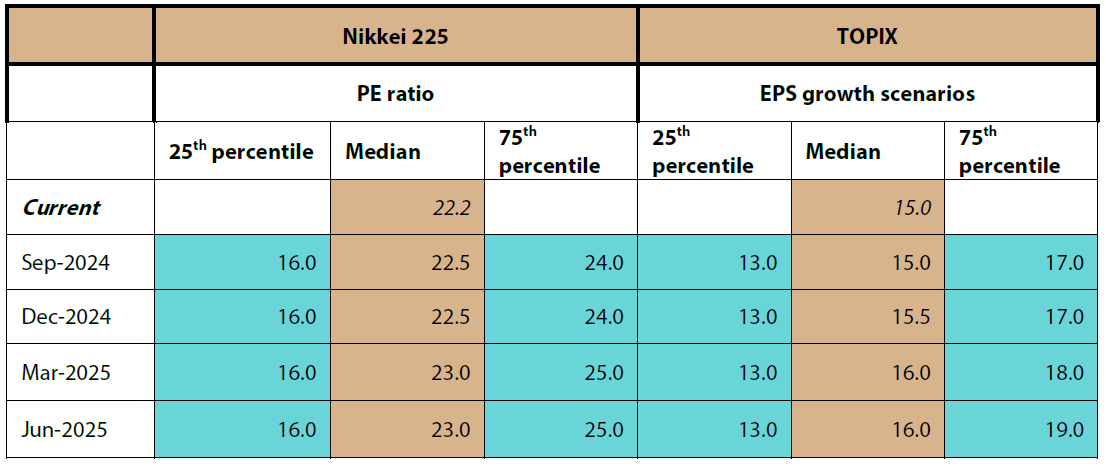
Valuation ranges: We expect price/earnings to show greater fluctuations than what we have observed very recently. This is due to the market appearing more vulnerable to swings as uncertainty over economic growth impacts markets. We are therefore expanding our P/E estimates from single assumptions to a range, estimating outcomes between the 25th to 75th percentile. We expect the Nikkei's P/E range to fluctuate between 16 and 24 in H2 2024, followed by a range of between 16 and 25 in H1 2025. We anticipate an upward bias over time given ongoing structural transformation among Japan's corporates, led by large caps. For the TOPIX, we foresee a range of 13-17x in H2 2024 and 13-19x in H1 2025, with a similar upward trend over time. P/E ratio guidance
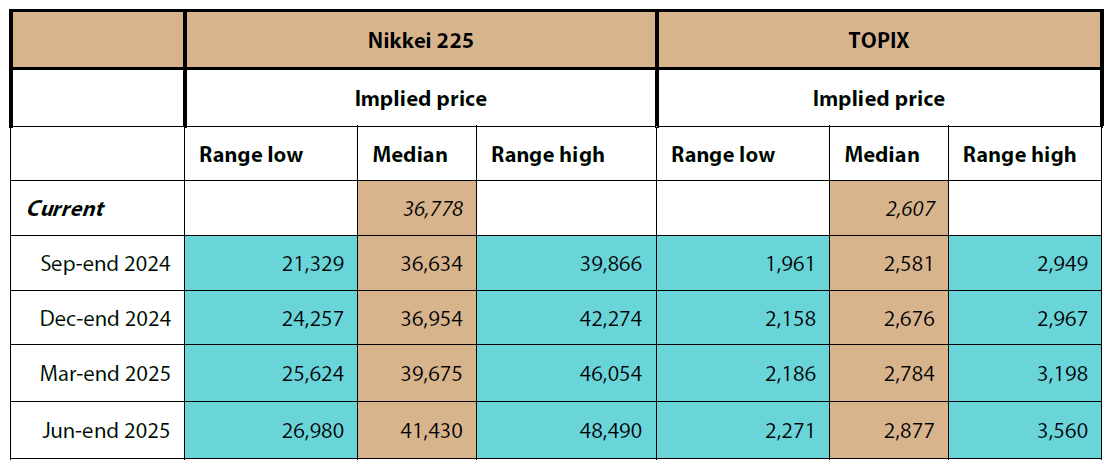
Implied price (indicative only): price trends to be driven by EPS and higher valuation over time As we noted in our Q2 GIC Outlook, we have made changes to the GIC process. This includes more closely aligning our Outlook with the views underlying our portfolio investments and therefore providing indicative guidance ranges as opposed to point forecasts of index prices for indicators and indices. As a result, we have shifted to guidance centred on variables that are of interest to us as investors, including earnings growth and valuation. For the convenience of our readership, we calculate indicative prices as implied by our EPS growth (using Bloomberg's "BEst" Earnings estimates of realised earnings per share for the base year) and price/earnings guidance ranges, for reference purposes only. Based on the guidance provided above, the implied index prices are as follows: Implied price (using 2023-2024 BEst EPS as base)
The lows within the range represent the lower end of our anticipated price fluctuations, which takes into account the combined effect of earnings impact and valuation shifts. The highs within the range represent the upper end of our anticipated price fluctuations. Appendix 1: GIC outlook guidance revisionsGlobal macro
Central bank rates, forex, fixed income and commodities
Equities
Funds operated by this manager: Nikko AM ARK Global Disruptive Innovation Fund, Nikko AM Global Share Fund Important disclaimer information 1 The Sahm rule is a heuristic measure of determining whether the economy has entered a recession using unemployment relative to recent history. The Sahm rule compares the three-month moving average of the national unemployment rate to its low over the prior twelve months (with an indicative threshold of 0.5% above the prior 12-month low). |

29 Aug 2024 - Performance Report: Cyan C3G Fund
[Current Manager Report if available]
29 Aug 2024 - Performance Report: PURE Income & Growth Fund
[Current Manager Report if available]
29 Aug 2024 - Performance Report: Insync Global Quality Equity Fund
[Current Manager Report if available]

29 Aug 2024 - What happened to the post-COVID savings buffer?
|
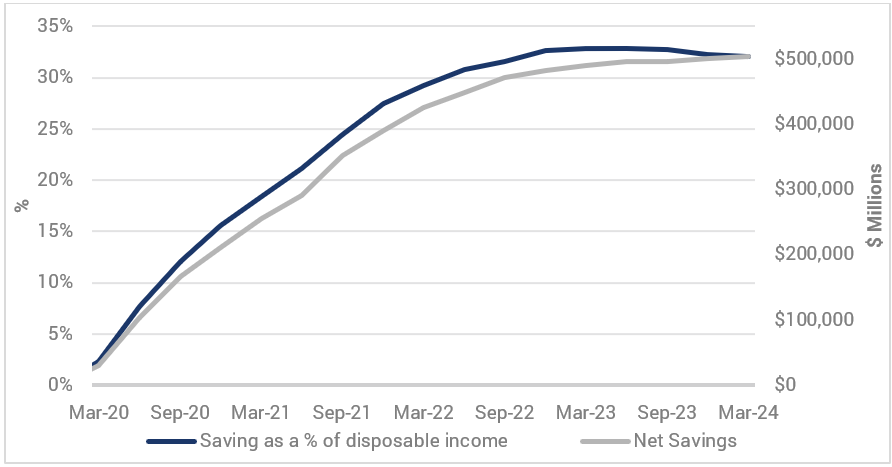
What happened to the post-COVID savings buffer? Yarra Capital Management August 2024 Remember when the RBA consistently referred to the buffer of "excess savings" accumulated during the post COVID period? Have you noticed that they have largely stopped talking about it in their public communications? In this latest note, Tim Toohey, Head of Macro and Strategy, highlights that calculations of excess saving buffer are illusionary. We show that there is no longer an excess of liquid savings accumulated since COVID, and explain why the RBA should take a more pre-emptive approach to monetary policy and commence easing late-2024. The RBA initially estimated that this excess savings buffer was $260bn, then as time progressed the estimate was revised up to over $300bn. The RBA stopped providing a running total on the estimate some time ago which is probably sensible, given the imprecision in which it is measured. Nevertheless, it was always a simple calculation, and it is worth noting that on our estimates the accumulation of excess savings recently topped a massive $500bn, or 32% of annual household disposable income. Chart 1: Estimates of excess household saving since COVID-19 are misleading
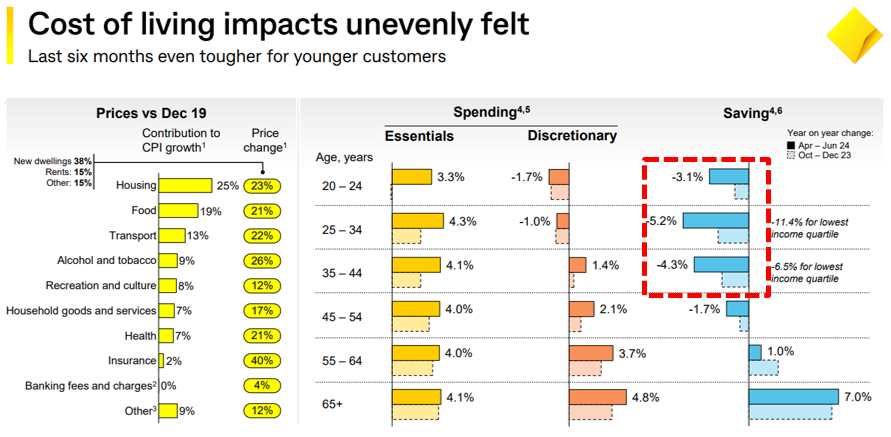
Source: ABS, YCM.Clearly, if households collectively decided to spend that excess savings Australia would have a massive consumption boom. Spending $500bn could sustain nominal private consumption growth at its 10-year average pace of 4.6% p.a. for four years in the absence of any income growth. To be clear, that is not a forecast. Indeed, the purpose of this paper is to illustrate that liquid "excess savings" are now exhausted and no longer available to smooth near-term consumption. In many ways the initial observation from the chart is to ask the question as to why the stock of savings hasn't been dipped into much earlier and in much larger scale? After all, what we can say empirically is that during periods of rising household wealth the household saving ratio normally declines and given the extent of cost-of-living pressures, it is entirely reasonable to have expected households to engage in consumption smoothing. The traditional inverse relationship between wealth and the saving ratio has indeed occurred in the past few years with the flow of household savings (i.e. the income left over post tax, interest and consumption each quarter) declining as household wealth rose. The saving rate is now proximate to zero. In theory, the household saving rate can move negative if households perceive the wealth gains to be permanent and households have few constraints to access credit. In the early 2000's this was facilitated via mortgage equity withdrawal, although other mechanisms are now possible including, as we have learnt in recent years, via early access to superannuation. That is, it is possible to sustain consuming more than you earn, for a limited period of time, at least at an individual level. But the idea that households will collectively unlock wealth gains by again using their homes as an ATM or their Super balances as piggybank to be raided and thereby drive the national saving rate collectively negative is not at present a high probability outcome. However, at the aggregate level, as more and more households commence the retirement phase, it may well be feasible that the household saving ratio to move negative for an extended period of time[1]. This would merely be due to retired households consuming at a faster rate than the returns being generated from their superannuation and other income generating assets. This is what the superannuation system was designed to do. The system was based under the assumption that the superannuation balance would be drawn down towards zero by the time of death. In practice, poorer households have struggled to build up meaningful superannuation balances and appear destined to be reliant on the pension system, while wealthier households with high superannuation balances have tended to consume less than the income generated from their superannuation holdings, seeing their balances continuing to compound during retirement. For now at least, it seems we are stuck with a two-tiered superannuation system: failing to meet its objectives for the bottom half of income earners, and remaining a great wealth accumulation device for the top 20%. Whether the household saving rate moves negative as the Baby Boomers retire is difficult to know with certainty as it will be conditional on superannuation reforms, asset returns, and confidence in the system itself. However, if nothing else changes on the policy front, it is more likely that for the next few years Super will be a force that lifts the national saving rate, both by compulsion and by compounding, even if lower income households would prefer to consume their Super now rather than at some distant point in the future. A slide from the recent CBA earnings results presentation (refer Chart 2, over page) supports this observation. Younger and more indebted households (red box) have engaged in consumption smoothing, running down their saving to fund essential spending and enabling a relatively modest decline in discretionary spending. Conversely, retirees have seen a sharp rise in their deposit savings and their discretionary spending growth has been largely unimpeded. This CBA chart matches what we suggested would occur in our note "Cashflow Pothole in the Energy Transition Journey" (Dec 2022) where we suggested in our analysis of upcoming hits to cashflow that "retail sales will slow from the rapid rate of close to 20% (y/y) to zero growth by mid-2023", despite this being the exact period the RBA was pointing to $260bn in excess saving buffers that would sustain spending growth. It was a controversial forecast at the time, but for the record, retail sales did slow to just 1% (y/y) by mid-2023 - propped up somewhat by stronger population growth and additional government subsidies. Chart 2: CBA cost of living analysis
Source: CBA Results Presentation, Aug 2024. 1. ABS, as at June 2024. 2. Reported by ABS as deposit and loan facilities (direct charges). 3. Including education, stamp duty and conveyancing, clothing and footwear, communication. 4. Per customer. For spending 13 weeks to end of quarter, for saving the average balance as at end of quarter. Consistently active card customers and CBA brand products only. 5. Spending based on consumer debit and credit card transactions data (excluding StepPay). 6. Includes all forms of deposit accounts (transaction, savings and term) and home loan offset and redraw balances. Trimmed mean excluding top and bottom 5% of customers within each age band. Income quartile calculated across all ages based on customers with income payments to CBA accounts in the 13 weeks to 30 June 2024, considering salary, wages and government benefits).
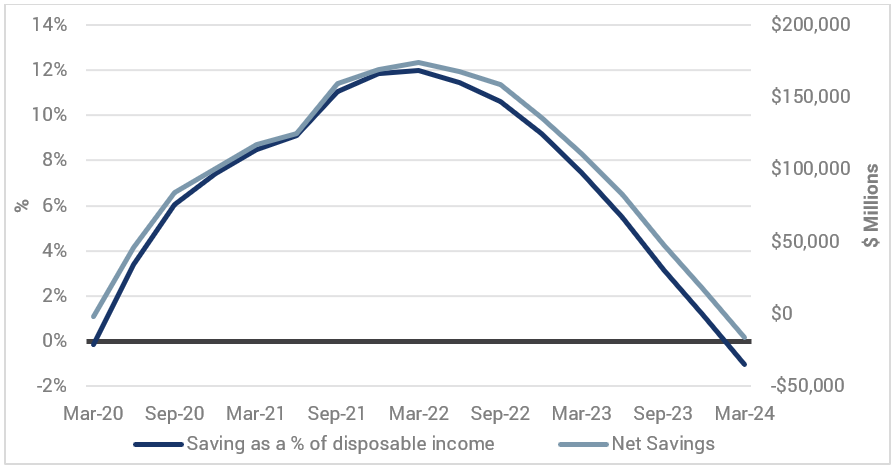
The CBA chart also accords with our note "This is Going to Hurt" (March 2023) where our analysis suggested that discretionary cashflow for the bottom 20% of households would plummet in 2023, the 35-44yo cohort had no accumulated precautionary savings post-COVID and that the vast majority of the $260bn had been accumulated by those over 45yo. As the above CBA chart shows, it has indeed been a painful period for younger and more indebted households and those with few precautionary saving buffers. It would be a mistake to assume that younger and working age households can continue to draw upon savings to fund spending growth. Chart 3 again shows the level of excess savings since the start of COVID, but this time we exclude mandatory superannuation inflows. This is a much better measure of liquid excess savings that can be drawn upon by working households, and as of the March quarter of 2024 that buffer has now been completely depleted! If the CBA data is reflective of the broader society, then given the 65+ age group has continued to expand their savings in recent years it follows that the excess savings ex-Super since COVID for those sub-65yo must currently be negative. Chart 3: Excess household saving accumulated since COVID-19 (excl. mandatory superannuation contributions)
Source: ABS, YCM.The message for policy makers is that there is no longer a liquid buffer of excess household savings to draw upon, and it's likely that most households in the sub-65yo age bracket have drawn down savings buffers to below pre-COVID levels. Deputy Governor Andrew Hauser's recent speech made it clear that the RBA are unsure of what will happen with household savings and spending in the face of recently enacted tax cuts, rising household wealth and the lagged impacts of monetary policy. That's OK, and if you believe the odds are evenly balanced then it argues for doing nothing on policy until you have a clearer picture. For our part, we have been focussed for some time on trying to disentangle the puzzle of the impact on the saving rate from the key drivers of wage income, taxes, housing, financial and superannuation wealth and the shift in the superannuation guarantee levy. In our note "Big Super's Big Impacts" (Nov 2023) we directly modelled the savings rate and found a stable and sensible relationship between the saving rate and these key drivers. One of the key conclusions of that that study was that a rising SG levy acts as a material brake on the domestic economy's near-term growth. It concerns us that 9 months on, no one else seems aware of the dynamic yet we are rapidly lifting the SG levy whilst policy makers simultaneously consider further rate hikes. On our modelling a shift in the Superannuation Guarantee (SG) levy by 100bps has just as large an impact upon spending as a 100ppts interest rate rise. That is, the 1 July 2024 rise in the SG levy of 0.5% to 11.5% is equivalent to a 50bp interest rate hike for the consumer. The same model suggested that over half of the 1 July income tax cut would likely be saved, particularly as it is skewed to higher income households. We estimated that the net impact of the simultaneous rise in the SG levy and the income tax cut is broadly neutral for the aggregate consumer. Obviously under these two policies, spending that skews to older and wealthier spending categories will be a net beneficiary, whilst working age households will be mildly worse off. That is, the model suggests the RBA need not be as concerned about a post-tax cut surge in spending for most Australians. Nor should they be concerned that, should consumers suddenly turn more optimistic, there is a large buffer of liquid excess savings that can be deployed. The RBA obviously lacks the tools to curtail the spending habits of debt-free retirees. The RBA have been clear that it wants to suppress aggregate demand, without prompting a sharp labour market deterioration, in order to return inflation to target. But the argument that the RBA needs to curtail problematic services inflation, by making room in the rest of the economy is fine until you realise that only one third of the CPI basket is in discretionary spending and just 9% of the CPI basket is discretionary services spending. Raising rates to suppress demand led inflation in just 9% of the basket is debatable in the first place, but what portion of this 9% of excess demand for discretionary services is cashed up retirees? In contrast, 37% of the CPI basket is in essential services, and rising prices for these items overwhelmingly negatively impacts lower income households. That is, excess services inflation currently has little to do with excess private demand growth of working age Australians. As the CBA chart highlights, most of the excess spending in discretionary spending is being done by those who are already in retirement and are impervious to - or even benefit from - higher interest rates. If we are looking to the RBA to curtail cashed up and retired Baby Boomers then we will end up with an unbalanced and intrinsically unfair economic system. That job clearly rests with the tax system. It is also worth noting that per capita consumption is currently contracting at -1.1% (y/y) - the same rate as the depths of the 1991 and 1983 recessions. With population growth set to slow sharply into 2025, total consumption growth will risk resembling the current per capita growth trajectory. Together with a further SG levy increase scheduled for mid-2025 acting as an additional headwind to consumption growth, waiting until mid-2025 before considering interest rate relief could prove a costly error. In other words, we know with some certainty that key non-monetary policy decisions on immigration and superannuation will constrain future consumption and lift future savings. For a central bank that says it no longer gives forward guidance, the irony of the RBA ruling out interest rate reductions in 2024 should be lost on no one. We agree with the Deputy Governor that policy making under uncertainty requires a healthy degree of humility and that is indeed lacking in some financial market commentators that proffer their strongly worded advice on a weekly basis. Where we disagree with the RBA current view is that they believe there is symmetry in potential outcomes for the saving rate. On our estimates, excess liquid saving buffers are already depleted, a saving rate around zero mutes the wealth effect on future consumption growth, the impact of the recent income tax cut will be neutered by the rise in the SG levy on 1 July 2024 and the certainty of the final rise in the levy on 1 July 2025 to 12% is, by definition, an event that lifts the household saving rate. In other words, there is a much greater chance that the savings rate will rise than fall in the year ahead. In conjunction with a policy-led decision to reduce population growth sharply in 2025, the implication is that the risk to economic growth is skewed to the downside. In the Deputy Governor's own words, in situations where there is asymmetry of potential outcomes, the Bank should take a more activist or forward-looking approach to interest rates. It is precisely because of this asymmetry why we continue to suggest that the RBA should take a forward-looking activist position and commence its easing cycle in December 2024. We conclude that there is not symmetric risk to the saving rate looking into 2025 and 2026 and this will have big implications for the outlook for economic growth, employment and inflation. The starting point is a saving rate that is already close to zero, banks are not facilitating mass access to liquidity for households to consume prior wealth gains, the superannuation system remains in a state of net inflow and the recent rapid rise in the SG levy in addition to a further rise in 2025 essentially guarantees the saving rate will rise rather than fall in the period ahead. In concert with the observations that the buffer of liquid excess savings in the post-COVID period has now been completely depleted and a clear trend rise in the unemployment rate, it is likely that a bout a precautionary saving ensues in the months ahead. It's clear from the RBA's current guidance that there are no rate cuts on the horizon until mid-2025. But a lot can change between now and the end of 2024. A shift in the RBA perception of the directional risk to the saving rate would be one key step in the RBA returning to be a pre-emptive central bank, opening the door to a late 2024 rate cut. |
|
Funds operated by this manager: Yarra Australian Equities Fund, Yarra Emerging Leaders Fund, Yarra Enhanced Income Fund, Yarra Income Plus Fund |