NEWS

29 Nov 2024 - Hedge Clippings | 29 November 2024
|
|
|
|
Hedge Clippings | 29 November 2024 RBA Governor Michele Bullock recently spoke at the Committee for Economic Development of Australia (CEDA) Annual Dinner, and her message was clear that the RBA isn't rushing to cut interest rates like some of its international counterparts. That won't please the Treasurer Jim Chalmers, who likes to quote the fact that annual inflation has now fallen from 3.8% in June, to the October rate released this week of 2.1%, the lowest rate since July 2021. Dr. Chalmers is facing an election in the first few months of the new year, and he would dearly love the RBA to start cutting rates to help his cause. The RBA's issue is that much of the reduction since June has been thanks to the Treasurer's generosity in reducing electricity and power prices via government handouts - also we suspect with an eye on the upcoming election. Electricity prices have fallen 35.6% in the past 12 months, the largest fall ever recorded. Unfortunately (for Dr. Jim) the RBA looks beyond the headline rate, preferring the "Trimmed Mean" which cuts out extremes like electricity and fuel (-11.5%), and which sits uncomfortably at 3.4%, up from 3.2% in September, due in part to rises in food and non-alcoholic beverages (+3.3%), recreation and culture ( +4.3%) and alcohol and tobacco (+6.0%). At the CEDA event, Bullock stressed the bank's focus on sustainable falls to inflation, and that the Board can clearly see through the current drop in electricity prices as being temporary. In fact, in her speech she mentioned sustainably or sustainable no less than 13 times, just in case the Treasurer didn't get the point (which we're sure he did, he probably just didn't like it). So while she conceded that other central banks are starting to ease rates as inflation drops, Bullock was clear that Australia isn't there yet. Core inflation is still too high to consider rate cuts in the near term and according to Bullock, forecasts show a sustainable (there's that word again) return of underlying inflation to target won't occur until 2026. Meanwhile, PinPoint Macro Analytics has shared their insights on the broader economic landscape, particularly around the uncertainty following President Trump's return to the White House. In their piece, "Trump & Uncertainty," (see below for a link to the full article) they pointed out how unpredictable things are right now, from trade policies to fiscal and monetary directions. Markets are holding their breath, waiting to see what happens with potential tariffs, tax cuts, and any shifts in Federal Reserve policy. While some areas like infrastructure and defence spending seem relatively stable, the takeaway from PinPoint is that investors need to stay nimble given the ongoing geopolitical and fiscal unpredictability. All these recent developments reflect a bigger theme: Uncertainty is the name of the game, both at home and globally. The RBA's cautious stance makes a lot of sense in this context—it's about maintaining stability in an unpredictable world, especially with international pressures adding more layers of complexity. Whether it's changing U.S. policies or shifting global trade dynamics, everyone—from investors to businesses to policymakers—is having to adapt on the fly. Bullock's emphasis on a steady hand is a reminder that sometimes, the smartest move is knowing when not to make a move. Chalmers and Albo have no such leeway. May is not far away. News & Insights How Co-Investments are Transforming Affordable Housing | Webinar | HOPE Housing Fund Management Global Matters: The data centre opportunity for infrastructure investors | 4D Infrastructure 10k Words | Equitable Investors Market Commentary - October | Glenmore Asset Management October 2024 Performance News Bennelong Twenty20 Australian Equities Fund Insync Global Quality Equity Fund |
|
|
If you'd like to receive Hedge Clippings direct to your inbox each Friday |

29 Nov 2024 - Trump & Uncertainty

29 Nov 2024 - Performance Report: Insync Global Quality Equity Fund
[Current Manager Report if available]
29 Nov 2024 - Performance Report: Insync Global Capital Aware Fund
[Current Manager Report if available]

29 Nov 2024 - The Trump effect on small cap stocks
|
The Trump effect on small cap stocks Montgomery Investment Management November 2024 Since 2022, we have predicted that small cap stocks, especially those representing innovative businesses with pricing power, would do well in an environment of disinflation and positive economic growth. Since the end of 2022, the U.S. Russell 2000 Index of small-cap stocks has risen 36 per cent, the U.S. S&P SmallCap 600 index is up 31 per cent, and the S&P/ASX Small Ordinaries index has risen 12 per cent. Interestingly, most of the gains in the Russell 2000 Index (23 per cent) have been recorded since April this year, and the S&P SmallCap 600 is up 21 per cent over the same period. The bulk of the gains over the last two years have occurred in the last two or three quarters. Given the disinflation/ positive gross domestic product (GDP) picture was no different before April and after April, we can put the acceleration down to something else. That something else may just be bets that a Trump election victory would be positive. If so, why have U.S. small caps done well amid a Trump victory? Answering that question may offer some insights into what happens next (for what it's worth, I believe the small caps rally, which commenced in 2022, should continue into 2025, and we should reappraise the situation towards the end of 2025. Domestic focus: Small-cap companies often derive a significant portion of their revenue from domestic operations. The last Trump administration emphasised policies that stimulated domestic economic growth, such as infrastructure spending and tax reforms, benefiting these companies. Tax cuts and jobs act of 2017: Trump last reduced the corporate tax rate from 35 per cent to 21 per cent. Small cap companies generally paid higher effective tax rates compared to larger, multinational corporations. The reduction in taxes disproportionately benefited smaller companies, improving their profitability. Deregulation efforts: The last Trump administration pursued deregulation across various sectors, reducing compliance costs and operational burdens. Due to these policy changes, small businesses, which have fewer resources to manage regulatory complexities, found it easier to expand and invest. Trade policies: The focus on renegotiating trade agreements and implementing tariffs affected multinational corporations more than domestically oriented small cap companies. Large-cap companies with extensive international operations faced uncertainties and potential losses, whereas small caps were relatively insulated. Economic growth and consumer confidence: The period saw steady economic growth and high consumer confidence levels. Increased consumer spending boosted revenues for small businesses that rely heavily on domestic markets. Stronger U.S. dollar: A stronger dollar can negatively impact multinational companies by making exports more expensive and reducing the value of overseas earnings. With limited international exposure, small-cap companies were less affected by currency fluctuations. Infrastructure initiatives: Proposed investments in infrastructure projects promised potential contracts and growth opportunities for smaller companies in construction, manufacturing, and related industries. Together, the first time around, these factors created an environment where small-cap stocks could outperform their larger counterparts. Under a second Trump term, many investors believe the same is in store, which is why the Russell 2000 Index was up five per cent the day after Trump's win. Of course, it's important to remember honeymoons never last and stock performance is influenced by a variety of factors, including global market conditions, geopolitical conflict, investor sentiment, and, most importantly, profit growth. For now, and until late 2025 (and excepting a war with China), I believe small caps will do well. Author: Roger Montgomery Funds operated by this manager: Montgomery (Private) Fund, Montgomery Small Companies Fund, The Montgomery Fund |

28 Nov 2024 - Performance Report: TAMIM Fund: Global High Conviction Unit Class
[Current Manager Report if available]

28 Nov 2024 - The market has eyes only for Trump
|
The market has eyes only for Trump Pendal November 2024 |
|
SEPTEMBER quarter wages data (the Wage Price Index) was released today and, for the third quarter in a row, sat at 0.8%. This sees a 3.2% annualised pace, though the 1.1% outcome from the 2023 December quarter keeps the annual rate at 3.5% for now. All sector WPI, quarterly and annual movement (%), seasonally adjusted (a) 
Source: Wages grow 3.5 per cent for the year | Australian Bureau of Statistics Both private and public wages rose 0.8%. A key factor was awards and minimum wage outcomes, which were set at 3.75% in June, down from 5.75% the previous year. This would be very welcome news for the RBA. Wage growth and underlying inflation are now heading back towards 3%. Given the two feed into one another, it reflects a more sustainable path for the medium term. Recent RBA forecasts have underlying inflation at 3% and wages at 3.4% by June next year. If the RBA has more confidence in reaching these levels sooner, it opens the door for rate cuts in the first half of next year. OutlookIn another time or place, this data would have seen a decent market rally. But the market has eyes only for the future of Trump's presidency. This future is viewed as one of increasing government debt and higher tariff-led inflation in the US, feeding out into the globe. As a result, markets now have only 30% chance of an RBA February rate cut and less than one cut by mid-year. On domestic factors alone, this is very cheap, but reconciling it with Trump is proving the problem. We think the Trump impact will be more mixed outside the US. Australia's trade deficit with the US should see us well down the list of targets, but key trading partners are at the top of the list. Either way, Trump's policies are unlikely to hit hard data until the back half of 2025 at the earliest, making central banks' jobs more difficult for now. We maintain the view that upcoming data leaves a February rate cut wide open. At only 30% priced in, the risk/reward is becoming attractive, and we will use the sell-off as an opportunity to enter positions. Further out the curve remains at the mercy of US bonds which, even at 4.5%, don't seem to be finding widespread support. Australia should outperform but yields may still move higher. Author: Tim Hext |
|
Funds operated by this manager: Pendal Global Select Fund - Class R, Pendal Horizon Sustainable Australian Share Fund, Pendal MicroCap Opportunities Fund, Pendal Multi-Asset Target Return Fund, Pendal Sustainable Australian Fixed Interest Fund - Class R, Pendal Sustainable Australian Share Fund, Regnan Credit Impact Trust Fund, Regnan Global Equity Impact Solutions Fund - Class R |
|
This information has been prepared by Pendal Fund Services Limited (PFSL) ABN 13 161 249 332, AFSL No 431426 and is current as at December 8, 2021. PFSL is the responsible entity and issuer of units in the Pendal Multi-Asset Target Return Fund (Fund) ARSN: 623 987 968. A product disclosure statement (PDS) is available for the Fund and can be obtained by calling 1300 346 821 or visiting www.pendalgroup.com. The Target Market Determination (TMD) for the Fund is available at www.pendalgroup.com/ddo. You should obtain and consider the PDS and the TMD before deciding whether to acquire, continue to hold or dispose of units in the Fund. An investment in the Fund or any of the funds referred to in this web page is subject to investment risk, including possible delays in repayment of withdrawal proceeds and loss of income and principal invested. This information is for general purposes only, should not be considered as a comprehensive statement on any matter and should not be relied upon as such. It has been prepared without taking into account any recipient's personal objectives, financial situation or needs. Because of this, recipients should, before acting on this information, consider its appropriateness having regard to their individual objectives, financial situation and needs. This information is not to be regarded as a securities recommendation. The information may contain material provided by third parties, is given in good faith and has been derived from sources believed to be accurate as at its issue date. While such material is published with necessary permission, and while all reasonable care has been taken to ensure that the information is complete and correct, to the maximum extent permitted by law neither PFSL nor any company in the Pendal group accepts any responsibility or liability for the accuracy or completeness of this information. Performance figures are calculated in accordance with the Financial Services Council (FSC) standards. Performance data (post-fee) assumes reinvestment of distributions and is calculated using exit prices, net of management costs. Performance data (pre-fee) is calculated by adding back management costs to the post-fee performance. Past performance is not a reliable indicator of future performance. Any projections are predictive only and should not be relied upon when making an investment decision or recommendation. Whilst we have used every effort to ensure that the assumptions on which the projections are based are reasonable, the projections may be based on incorrect assumptions or may not take into account known or unknown risks and uncertainties. The actual results may differ materially from these projections. For more information, please call Customer Relations on 1300 346 821 8am to 6pm (Sydney time) or visit our website www.pendalgroup.com |

27 Nov 2024 - Performance Report: PURE Resources Fund
[Current Manager Report if available]

27 Nov 2024 - Performance Report: Bennelong Twenty20 Australian Equities Fund
[Current Manager Report if available]

27 Nov 2024 - A new era dawns for Hybrids?
|
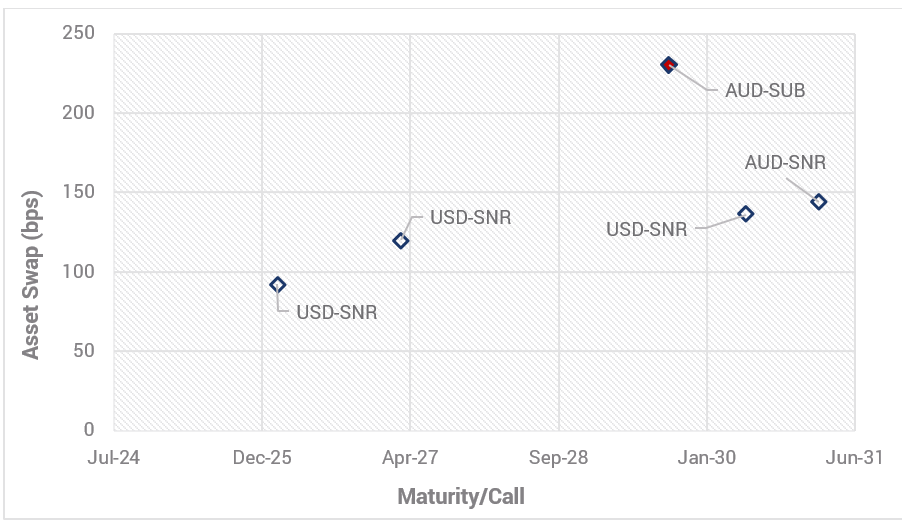
A new era dawns for Hybrids? Yarra Capital Management October 2024 As bank issuance shrinks, corporate hybrids are in the ascendent, with non-financial corporate hybrids potentially instrumental in powering Australia's energy transition. So what do they offer the fixed income investor? Australia's hybrid bond market rarely makes headlines, but in recent weeks it has been firmly back in the spotlight. The Australian Prudential Regulation Authority (APRA) recently revealed plans to phase out Australian banks' use of additional tier one (AT1) capital which APRA believes is riskier, thereby seeking to enhance the overall stability of the banking system. The announcement came on the heels of a surge in interest in corporate hybrids sparked by the successful raising for Australian Securities Exchange (ASX) listed mall operator Scentre Group. Yarra's outlook for Australia's hybrid bond market--of which bank AT1 hybrids make up around $41 billion--considers these latest proposed regulatory changes while focusing on the future potential for hybrids in funding corporate Australia's energy transition ambitions. Investors and issuers alike are now navigating a market partly in transition. More immediately it seems that in the wake of APRA's announcement, some are betting that a shrinking pool of Australian bank hybrids will drive up demand, pushing prices higher and yields lower across Australia's big four banks. Since last month's announcement, spreads for Tier 1 securities have contracted ~16bps--so retail investors are eager to bid up assets and get a larger slice of a shrinking pool. While uncertainty prevails in hybrid bank issuance for now, and short-term opportunities may arise, over the longer-term a broader set of dynamics is emerging for hybrids, particularly in sectors like energy and infrastructure. Expanding role in Australia's energy transitionThe potential scale of the energy transition in Australia offers an exciting growth opportunity for corporate hybrids. As energy transition projects such as new transmission lines and large-scale generation get underway, hybrids can and should play a role in funding the significant upfront capital costs and become a permanent feature of issuer capital structures. We estimate a total system investment of $400 billion is required by 2050 in order to decarbonise Australia's energy market with a focus on new energy generation including investment in wind farms, solar, batteries, and associated transmission assets. It is highly unlikely that equity alone will foot the bill for these expensive projects and that is why we see hybrids as an increasingly popular funding source in Australia's transition to a low-carbon economy, offering flexibility and capital efficiency. The sheer size of the capital requirement means that corporates will need to tap into multiple funding sources, and hybrids offer a lower-cost alternative to pure equity issuance. For large-scale energy transition projects, such as new transmission lines and renewable energy facilities, hybrids offer a way to fund significant upfront capital costs without putting undue strain on a company's balance sheet. For that reason, we expect large blue-chip generation companies like AGL, Origin, APA, and even Woodside and Santos along with transmission companies like Austnet and Transgrid, to tap into hybrid issuance as part of their funding strategies for energy transition plans. The recent success of Scentre's corporate hybrid raising demonstrates this growing interest from non-financial corporates looking to leverage a flexible funding tool, and we expect this interest to grow from here with further non-financial corporate issuance likely in FY2025. While APRA's move signals tighter regulatory scrutiny and a potential decline in AT1 hybrid issuance by banks, there is also the possibility that as major bank issuance retreats in APRA's suggested 2027-2032 transition period, corporate issuers may step in to fill the gap. Bringing it back to fundamentalsAs the APRA development demonstrates, assessing and pricing the inherent risks of hybrids becomes trickier with regulatory change in the mix. But these upheavals should be viewed as atypical events in a sector that is actually offering attractive returns akin to longer term equity market averages, with the 'higher for longer' rates, which are thematic for fixed income assets, here to stay. We are forecasting a new era for tactical fixed income, characterised by sustained, higher yields. In this environment, investors, particularly those focused on investment-grade assets, are increasingly comfortable holding instruments such as hybrids, viewing the attractive yields on offer as ample compensation for assumed risk. We see further opportunities for investors to access the higher yields and risk-adjusted returns that have made the hybrid instrument so popular recently. Further, with APRA's decision to phase out AT1 hybrids, there is an expected shift of a substantial pool of capital, estimated to be around $41 billion, that will be seeking new investment avenues. This development is likely to create significant opportunities for corporate hybrids to emerge as a viable alternative for retail investors who are in search of yield. Consequently, we anticipate that corporate hybrid instruments could play a crucial role in filling the gap left by the diminishing bank hybrid market. This shift could potentially lead to a resurgence of hybrid issuance on the ASX, ensuring that investors continue to have access to the attractive yields they have grown accustomed to with bank hybrids, but now through corporate issuance by larger, investment-grade companies. In addition to the rise of corporate hybrids, another area that warrants close attention as AT1 hybrids are phased out is the potential for Bank Tier 2 paper - that is, subordinated debt which provides an additional layer of protection for banks - to become more prominent on the ASX. It is conceivable that banks may opt for increased Tier 2 issuance as a strategic move to maintain access to retail capital pools and fulfill their capital requirements while they gradually wind down their AT1 hybrid instruments. This strategic shift towards Tier 2 issuance could provide banks with the necessary flexibility to navigate the changing regulatory landscape and continue to meet their capital needs effectively. Hybrids in portfolio constructionA key performance factor here is the issuer's credit strength--when dealing with investment-grade hybrids from strong issuers, the chance of conversion or extension is significantly diminished but investors still get rewarded for taking on what are essentially low-probability events. These features allow investors to effectively double the credit spread, significantly increasing returns without taking on a disproportionate increase in risk. For instance, investors in Scentre Group's recent hybrid issuance picked up a credit spread that was 1.8 to 1.9 times the spread on the company's senior debt, providing a return close to 6%. Chart 1: Scentre Group Bond Curve - 4 September 2024
|
|
Funds operated by this manager: Yarra Australian Equities Fund, Yarra Emerging Leaders Fund, Yarra Enhanced Income Fund, Yarra Income Plus Fund |